
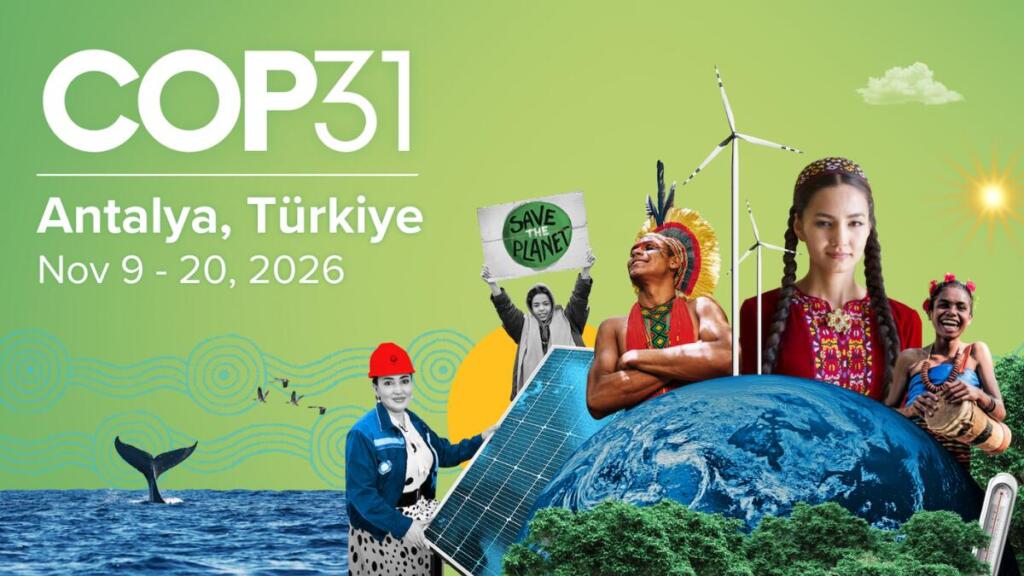
The 31st UN climate conference began on Monday in the Turkish resort city of Antalya with its first dispute over money already under way, and with the delegates carrying forward several decisions that last year’s summit in Brazil left unresolved. The talks run until November 20.
The opening ceremony began an hour and a half late, with no explanation given, and the conference opened with an early dispute over money. UN Secretary-General António Guterres told world leaders to “get serious” about the crisis after a year of devastating weather extremes. Negotiations over the agenda continued on the first day before it was eventually adopted, with finance and trade dividing developed and developing countries. Greenpeace’s delegation head, Jasper Inventor, called it a difficult start.
The science set the tone. The World Meteorological Organization’s State of the Climate Update, released on opening day, showed that each of the past 12 years has been among the warmest on record, with the last four the top four.
A shared presidency
The summit runs under an unusual arrangement. Türkiye won the right to host after a long standoff with Australia, which had wanted a “Pacific COP” alongside low-lying island nations, and the two countries agreed to split the roles. Murat Kurum, Turkey’s environment minister, chairs the conference, while Australia’s Chris Bowen presides over the negotiations. The pairing raised concerns about how it would work, though the two ministers raised clasped hands to applause at the opening. Bowen said the pre-COP meeting in Fiji and Tuvalu delivered a clear message to keep the 1.5-degree goal within reach, accelerate action and make finance easier to access.
The main fights
Money is the first. EU Climate Commissioner Wopke Hoekstra said ahead of the summit that fresh demands for new climate-finance commitments were “dead in the water.” A Brazil-led roadmap proposes $1.27 trillion to $1.41 trillion a year for developing countries by 2035. African and other developing countries will push for a number to be put on last year’s vague goal to triple adaptation finance by 2035, and Climate Home News expects fireworks if rich nations refuse to move at all.
Fossil fuels are the second. Last year’s final agreement left a major gap, with no roadmap away from fossil fuels despite calls from more than 80 countries. A roadmap issued under the Brazilian presidency urges countries to draw up national plans to cut fossil fuel use and notes that disruptions to supply routes in 2026 exposed importing countries to shortages and higher prices. That is not a negotiated outcome, and countries remain split over whether to adopt one.
Trade and fairness are the third. India’s environment minister, Bhupender Yadav, reiterated India’s opposition to the EU’s carbon border tax, citing national economic interests, and the report notes India has rejected the electrification pledge being promoted at COP31. India also defends the principle of common but differentiated responsibilities and refuses fossil fuel phase-outs that ignore historical emissions. The EU, by contrast, wants countries to submit new national plans aligned with the 1.5°C limit.
The action agenda
Alongside the formal talks, Ankara is running its own track. It is encouraging countries to back non-binding pledges on issues ranging from artificial intelligence to waste management. Day one focused on food, agriculture and health, with the launch of an initiative for resilient health systems in partnership with the WHO. Heads of state attend a World Leaders’ Summit in Antalya on November 11 and 12. A US congressional delegation is also coming, with Democrats buoyed by their midterm win.
Low expectations, high stakes
Few expect a breakthrough. Singapore’s environment minister, Grace Fu, predicted no major new emissions targets, with the focus instead on implementing existing Paris Agreement measures. UN climate chief Simon Stiell said negotiators must clarify how commitments would be achieved without reopening earlier agreements. COP31 is also the first summit since the breakdown in Belém spotlighted flaws in the consensus-based process, fuelling calls for reform.
With finance, trade and responsibility dividing negotiating blocs again, the opening exchanges suggest that delivering on existing commitments may prove as contentious as agreeing to them. The test over the next nine days is whether Antalya narrows those gaps or sends them on to the next summit.