
An air force is measured in aircraft and airbases, but it is remembered through its squadrons. A squadron is the IAF’s basic fighting family: a number, a nickname, an insignia on the tail, and a lineage of pilots, technicians and commanders who pass it from one generation to the next. The IAF turns 94 today, and the force’s story is best read through these units. Several carry names that predate Independence, and others were disbanded, then revived, as the aircraft they flew gave way to new ones.
The IAF began on October 8, 1932, but its first operational unit came only on April 1, 1933, when No. 1 Squadron was raised. From that first handful of biplanes, the force grew through the Burma campaign of the Second World War, the wars of 1947-48, 1965, 1971 and 1999, and the long Cold War era of Hunters, Gnats, MiG-21s and Mirages. Each of those chapters was written by specific squadrons whose names still draw respect on any airbase.
Today the force flies Rafales, Su-30MKIs and indigenous Tejas jets, and the list of squadrons is changing fast. The MiG-21, India’s longest-serving fighter, was fully retired in 2025, and its squadrons are being re-equipped with the Tejas Mk1A. Yet the old numbers survive. A squadron may lose its jets, but its number and heritage are passed on to the next aircraft. That continuity is what makes the squadron system the heart of the force. Here are some of the units that define it.
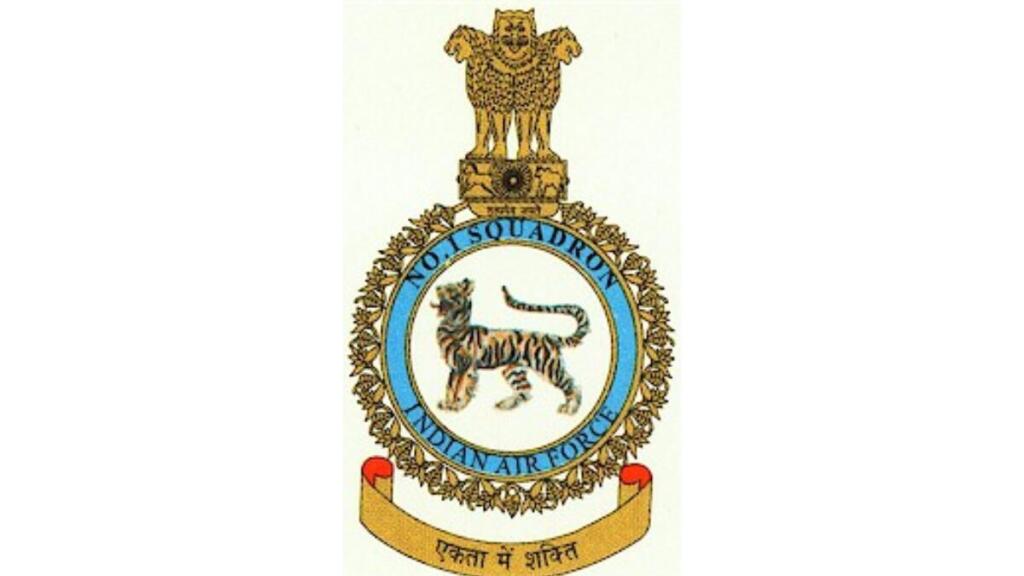
No. 1 Squadron “Tigers”: the oldest
The Tigers were raised on April 1, 1933 and are the oldest squadron in the IAF. The first IAF unit began with four fabric-covered biplanes at an airfield outside Karachi. In the Second World War, the squadron flew in the Burma campaign, providing close air support to the 17th Indian Division during the Battle of Imphal. Its pilots earned Distinguished Flying Crosses, among them Majumdar, gazetted in 1942.
After Independence the squadron’s identity continued. In January 1953, No. 15 Squadron was renumbered as No. 1 Squadron at Halwara, flying Spitfires, carrying the Tigers heritage forward. In the 1971 war the Tigers flew 513 sorties. Today the squadron operates Mirage 2000 jets from Maharajpur in Madhya Pradesh.
No. 2 Squadron “Winged Arrows”
Raised on April 1, 1941, the Winged Arrows are among the force’s wartime-era units. Today the squadron flies the Su-30MKI from Tezpur in Assam, under Eastern Air Command, guarding the northeast.
No. 7 Squadron “Battle Axes”: a first in Asia
Raised in 1943 on the Vultee Vengeance, the Battle Axes saw action in the Second World War and are regarded as one of the elite squadrons. After the war, they were the first unit to receive the De Havilland Vampire, making it the first unit in any air force in Asia to operate a jet fighter.
The squadron also became a training ground for generations of leaders, with a roll that reads like a who’s who of the IAF’s top brass in the 1970s, 1980s and 1990s. In 1962, on its 20th anniversary, the Battle Axes flew the IAF’s first nine-aircraft Hunter formation aerobatic display.
No. 17 Squadron “Golden Arrows”: reborn for the Rafale
The Golden Arrows trace their operational history back to the Hunter era at Ambala, where they flew alongside the Battle Axes in the early 1960s, and to the 1961 liberation of Goa. The squadron was disbanded and later resurrected, with a ceremony at Ambala in 2019 to revive it for the Rafale. It is now based at Ambala with the Rafale in Western Air Command.
No. 101 Squadron “Falcons of Chamb and Akhnoor”: the Rafale in the east
Formed on May 1, 1949 at Palam, No. 101 Squadron has flown the Harvard, Spitfire, Vampire, Su-7 and MiG-21M over its history. Its title recalls its service at Chamb and Akhnoor. It was formally inducted as the second Rafale squadron at Hasimara in West Bengal, placing the aircraft in the eastern sector. The base is the closest to the Chumbi Valley, the tri-junction between Sikkim, Bhutan and Tibet.
No. 18 Squadron “Flying Bullets”: the squadron of a Param Vir Chakra
Formed on April 15, 1965 with five Folland Gnats and eleven pilots, the Flying Bullets operated from Srinagar. In the 1971 war, Flying Officer Nirmal Jit Singh Sekhon, flying from Srinagar, defended the airbase against a raid by Sabre jets. He was awarded the Param Vir Chakra, the only member of the Air Force to receive the honour. The squadron carries it as a distinction, with the battle honour of the 1971 war and a motto of “Swift and Fearless.”
The squadron was stood down in 2016 and returned on April 1, 2020 as a Tejas unit at Naliya in Gujarat, carrying a historic number into the indigenous fighter era.
No. 51 Squadron “Sword Arms”: the Balakot-era MiG-21 unit
The Sword Arms became a household name in February 2019. A day after the Balakot strike, then Wing Commander Abhinandan Varthaman, flying a MiG-21 Bison from this Srinagar-based squadron, attacked a Pakistani F-16 before his own jet was shot down. He was awarded the Vir Chakra. The squadron also took part in crucial combat in the 1999 Kargil war. It was retired as part of the plan to phase out the MiG-21 squadrons.
No. 23 Squadron “Panthers”: the last MiG-21 unit
Raised in the 1950s as the IAF’s first Gnat squadron, the Panthers went on to fly the MiG-21 for decades. Their motto translates as “Immortal and Fearless.” The squadron was number-plated on September 26, 2025, when the MiG-21 Bison was decommissioned from active service, closing a 62-year chapter of the type in Indian skies.
No. 28 Squadron: the first supersonics
When India entered the supersonic age, it did so through the MiG-21. No. 28 Squadron was the first supersonic squadron in the IAF. Its commander, Wing Commander Dilbagh Singh, led seven pilots and engineers to Kazakhstan to train on the avionics and engineering of the type.
No. 220 Squadron “Desert Tigers”: disbanded, then revived
Raised on December 23, 1957, the Desert Tigers converted to the MiG-23BN in 1981. The squadron was disbanded in June 2005 because of its very old aircraft, but was resurrected in September 2012 as the first Su-30MKI squadron in Western Air Command, based at Halwara in Punjab.
The newer generation
Several squadrons now carry the legacy into the Tejas era and the Su-30 age. No. 45 “Flying Daggers”, raised in 1959, flies the Tejas from Sulur in Tamil Nadu. No. 47 “Black Archers” flies the MiG-29 from Adampur. No. 15 “Flying Lancers”, No. 27 “Flaming Arrows” and others continue their long histories, the latter flying the Jaguar from Gorakhpur.
The helicopter heroes
Not every legend flies a fighter. No. 128 Helicopter Unit “Siachen Tigers”, raised in 1985 and based at Mohanbari in Assam, flies the Mi-17, and No. 111 Helicopter Unit “Snow Tigers” has operated since 1963 at Bareilly with the Dhruv. Their names speak to the work of sustaining troops at the world’s highest battlefield and in the snowbound mountains.
The IAF’s squadrons carry the force’s history, but their numbers are a concern. At his October 3 press conference, Air Chief Marshal Amar Preet Singh said the force has 29 fighter squadrons against a sanctioned strength of 42. He said India needs to induct 36 to 40 new fighters a year to arrest the decline.