
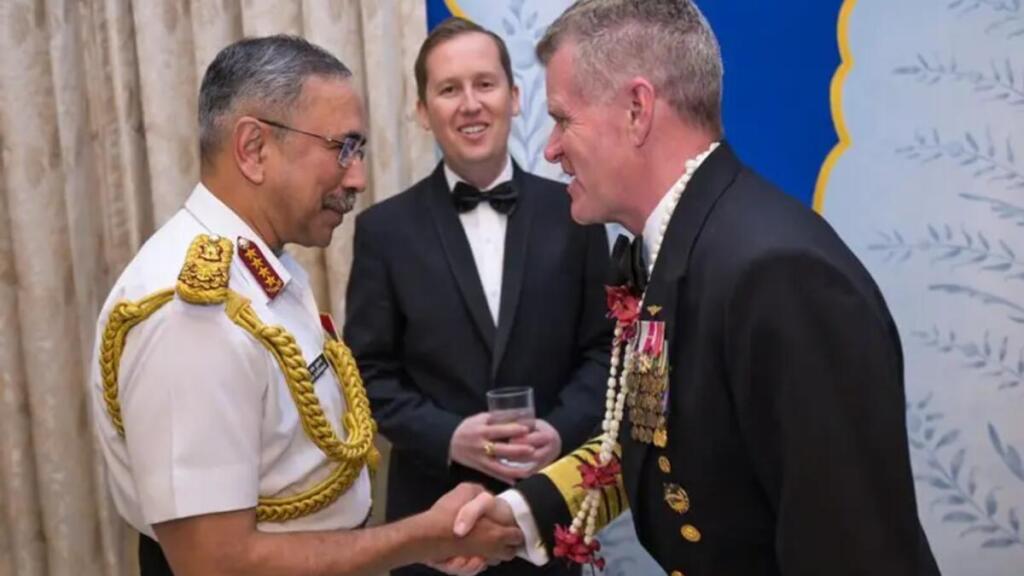
Admiral Samuel J. Paparo, Commander of the US Indo-Pacific Command (INDOPACOM), is in India for his second visit in under eight months. He has met the Chief of Defence Staff and other senior military leaders, continuing a run of high-level military contact between the two countries.
The visit began on Saturday, according to the US Embassy in New Delhi. The mission said Paparo would discuss shared security priorities with his Indian counterparts, including digital transformation and emerging technologies, regional strategic stability, defence energy resilience and an increasingly competitive technology landscape. It described the trip as a sign of the strength of the Major Defence Partnership and of continuing US interest in the Indian Ocean region.
A second visit in a year
Paparo last came to India from February 14 to 19. He met then CDS General Anil Chauhan and then Navy chief Admiral Dinesh Kumar Tripathi in Delhi. He also visited the Army’s Western Command in Chandimandir with US Ambassador Sergio Gor, and toured the National Flight Test Centre in Bengaluru, where the Tejas programme is based. Both Chauhan and Tripathi have since been succeeded in their posts.
The agenda points to where the relationship is moving. Earlier visits were framed around maritime security and interoperability. The US Embassy’s list this time adds technology competition and defence energy resilience, which suggests the partnership is widening from exercises into tech and supply-chain cooperation.
The timing also stands out. INDOPACOM’s commander is the senior US military officer for a region stretching from the Indian Ocean to the western Pacific, and returning within months suggests Washington wants regular access to India’s top military leadership. The visit comes as the Indian armed forces go through leadership changes, with a new IAF chief, Air Marshal Ashutosh Dixit, due to take over on October 31. Such handovers often make early contact with foreign counterparts valuable for both sides.
The two countries already hold regular exercises, including Malabar, Yudh Abhyas, Cope India and Tiger Triumph. A recently approved 10-year defence framework has also been cited as a basis for deeper cooperation.
India is a member of the Quad with the US, Japan and Australia, and the US calls it a Major Defence Partner. New Delhi has consistently held to strategic autonomy, however, and remains part of BRICS. It has not sought a formal alliance with Washington, so the frequent military-to-military contact is a way to build ties without such a commitment.