
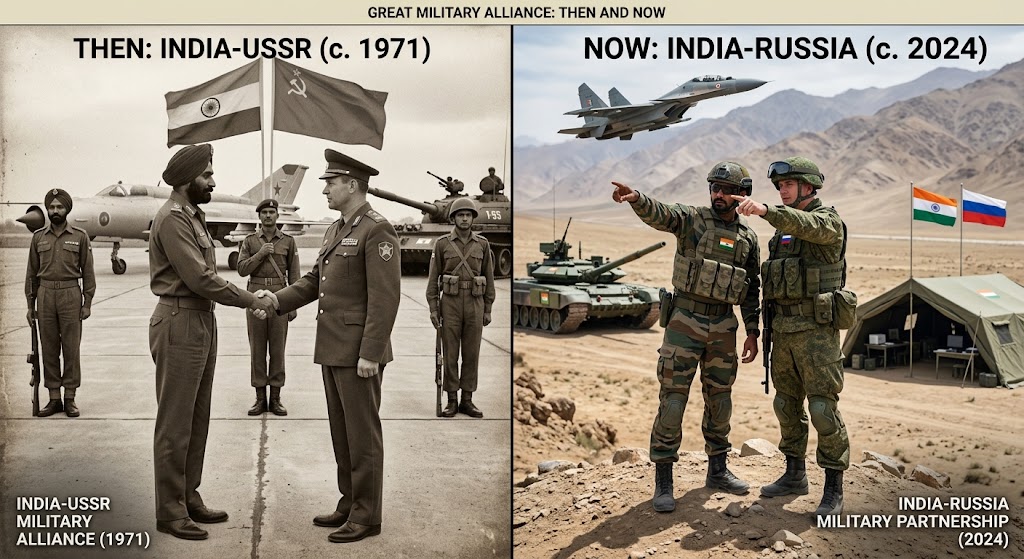
External Affairs Minister S. Jaishankar has highlighted the enduring significance of India-Russia relations, recalling that Moscow stood by New Delhi during some of the most difficult periods in its post-independence history, even when several major powers were aligned with Pakistan. Speaking at the Munich Security Conference in New Delhi, Jaishankar said the historical experience between the two countries continues to influence their relationship today.
Jaishankar pointed to the roots of the relationship in the 1950s, when India and the Soviet Union gradually developed close diplomatic and strategic ties. According to the minister, that history cannot simply be separated from the way New Delhi views Moscow today. He stressed that countries judge international relationships through their own experiences, making India’s perspective distinct from that of Western nations.
The minister’s comments carried particular significance because of the continuing debate in Western capitals over India’s relationship with Russia. New Delhi has faced criticism over its continued engagement with Moscow, especially concerning energy imports and strategic cooperation amid the Russia-Ukraine conflict. Jaishankar’s remarks made clear that India’s foreign policy is shaped not only by contemporary developments but also by decades of diplomatic and strategic history.
The most striking part of Jaishankar’s remarks concerned the period when India’s security and territorial integrity faced serious threats. He recalled that the Soviet Union had stood by India at a time when much of the world preferred supporting the military regime in neighbouring Pakistan. His reference was particularly relevant to the 1971 India-Pakistan war, when the United States deployed a naval task force to the Bay of Bengal while India was confronting Pakistan.
For Indian policymakers, the legacy of that period remains an important element of India-Russia relations. The Soviet Union’s diplomatic and strategic posture during the 1971 crisis is widely regarded as one of the defining moments in the development of the bilateral partnership. Over subsequent decades, cooperation expanded across defence, nuclear energy, space exploration, technology and other strategic sectors.
Jaishankar also emphasised that the relationship is no longer confined to traditional military cooperation. India-Russia ties have developed into a broader economic partnership involving trade, investment, energy and natural resources. Defence remains an important component, but the relationship today encompasses several areas that directly affect India’s long-term economic and strategic interests.
His remarks also underlined a central principle of Indian foreign policy: partnerships are assessed according to national interests and historical experience rather than external expectations. Jaishankar argued that Europe cannot be expected to adopt India’s view of Russia, just as India cannot be expected to automatically adopt Europe’s assessment. For New Delhi, the record of the relationship matters.
That approach has become increasingly visible as India maintains engagement with both Moscow and Western capitals. Despite intense geopolitical tensions following the Russia-Ukraine war, New Delhi has consistently maintained that dialogue and diplomacy are essential for resolving the conflict. India has also engaged with both Russia and Ukraine on issues ranging from the safety of Black Sea shipping to grain and energy exports.
Jaishankar said India’s experience with Moscow has been “positive and consistently positive”, reinforcing the argument that India-Russia relations cannot be understood solely through the lens of the Ukraine conflict. New Delhi has sought to preserve its strategic autonomy while maintaining communication with all major powers, including the United States, European countries and Russia.
The minister’s comments therefore represent more than a historical reminder. They underline the continuity in India’s foreign-policy thinking at a time when global alliances are undergoing significant changes. While India’s partnership with Western countries has expanded substantially in recent years, New Delhi has shown little willingness to abandon relationships that it considers strategically important.
For India-Russia relations, this balancing act remains particularly significant. Russia continues to be an important source of defence equipment, energy and strategic cooperation, while India has simultaneously deepened its engagement with Western economies and security partnerships. Rather than viewing these relationships as mutually exclusive, Indian diplomacy has increasingly sought to manage them through strategic autonomy.
The discussion also demonstrates why historical memory continues to influence international diplomacy. For Indian officials, the relationship with Moscow was built during periods when India faced difficult security circumstances and needed reliable external partners. That legacy continues to inform the country’s calculations even as the international system becomes more complex.
Jaishankar’s remarks ultimately reinforce the importance of India-Russia ties in India’s wider foreign-policy framework. The partnership has changed considerably since the Cold War era, but its foundation remains rooted in decades of diplomatic trust and strategic cooperation. As global tensions continue to reshape international relations, New Delhi appears determined to preserve that relationship while simultaneously pursuing dialogue, diplomacy and engagement with the wider world.