
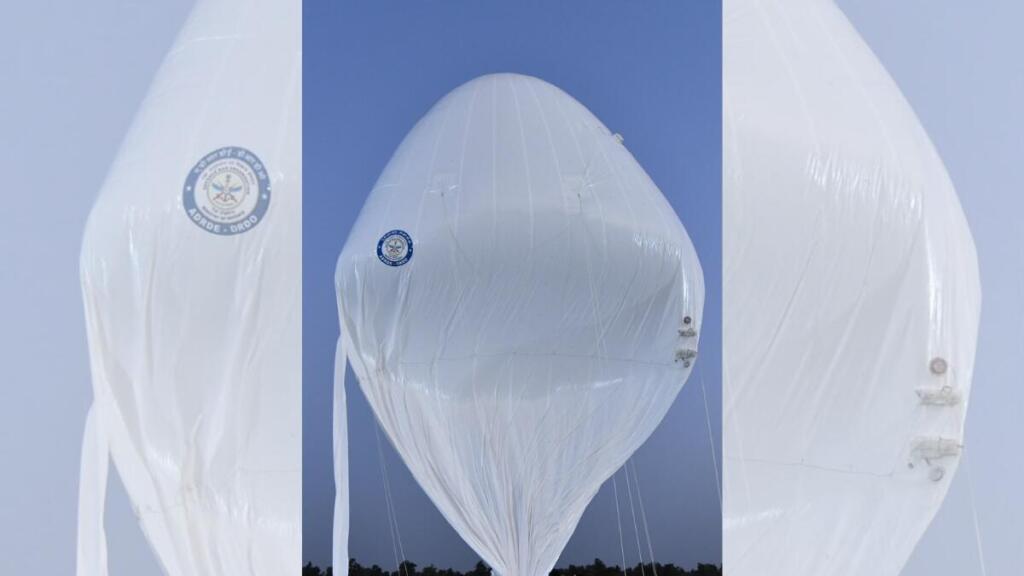
The Defence Research and Development Organisation (DRDO) has carried out a successful flight trial of its indigenously developed High-Altitude Platform (HAPS), a lighter-than-air system meant for long-endurance stratospheric surveillance.
The experimental flight reached 21 km above mean sea level (AMSL) and stayed at about 20 km AMSL for more than 30 minutes. The platform was then commanded to descend and was recovered, after which its flight performance data was analysed.
Throughout the flight, the ground control station received real-time video and other vehicle parameters from the airborne platform. The data showed the system performed as intended, the Ministry of Defence said.
The platform carried an inertial measurement unit, a GPS receiver, onboard cameras, an altitude control mechanism and other control and instrumentation packages.
The trial was conducted in coordination with the Indian Air Force, CEMILAC, the Directorate General of Civil Aviation (DGCA), the Airports Authority of India (AAI) and other civil authorities.
HAPS is being designed and developed by the Aerial Delivery Research and Development Establishment (ADRDE) in Agra.
Defence Minister Rajnath Singh congratulated DRDO, the IAF, public sector undertakings and industry on the trial. He called it an important milestone in India’s Aatmanirbhar Bharat journey toward a long-endurance stratospheric airship.
Defence Secretary Rajesh Kumar Singh, who is also Secretary of the Department of Defence R&D and DRDO Chairman, congratulated the teams involved in the trial.