
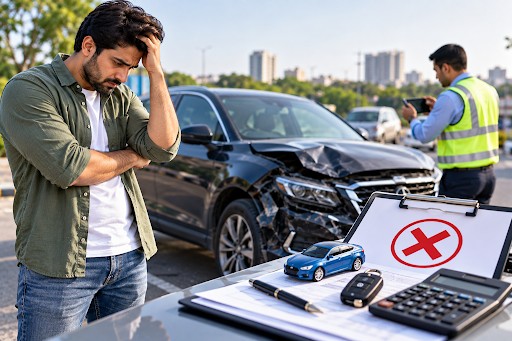
Many car owners think buying an insurance policy is the toughest part. But the real challenge often comes later – when a claim gets rejected because of something they did or didn’t do earlier. A claim depends on the terms and conditions of your car insurance and the specific situation of the loss. The good news? Most of these rules are easy to follow once you’re aware of them. By knowing the common mistakes that can impact claims, you can make sure to stick to the rules when you need to file a claim.
Common mistakes that can affect your car insurance claim
Certain actions or omissions can affect how an insurer assesses a car insurance claim. The following common mistakes explain what to watch for and how following the policy terms can help during the claims process.
1. Inform us quickly to avoid issues
It’s important to let us know immediately if there’s an accident or loss. If your car is stolen, you must also inform the police right away and get an FIR – this will be needed for your claim. If there’s a delay in telling us, it doesn’t always mean your claim will be rejected. We can still consider it if you explain the reason, but it might make the process more complicated. The best option? Call our helpline from the accident spot, before moving your car to a garage.
2. Letting someone drive without a valid licence
Your car insurance comes with a rule called the driver’s clause. It says that anyone driving your car must have a valid driving licence or a learner’s licence that follows the required rules. If someone like a teenager or a friend drives your car without a valid licence, it could affect your claim if something happens.
So, it’s always a good idea to check if the person driving your car has the right licence. This helps you stick to your policy requirements.
3. Drinking and Driving
It’s important to know that our policy doesn’t cover loss or damage if the person driving is under the influence of alcohol or drugs. This rule applies to all conditions and exclusions mentioned in the policy. Even if someone else is driving your car with your permission—say, a friend after a party—it’s your responsibility to ensure they meet the policy requirements. So, please be careful about who you lend your car to.
4. Using a private car for commercial work
A private car insurance policy is usually meant for personal use. The policy terms often mention how you can use your car. For example, it might not cover things like using the car for hire, reward, or carrying goods. If you’re using your car for services like ride-hailing or making deliveries, make sure to check if your policy covers that. If your car is used to earn money, you might need a different policy designed for commercial use.
5. Claiming a No Claim Bonus you have not earned
The No Claim Bonus rewards claim-free years with a discount of 20% to 50% on the own damage premium. When switching insurers, it is important to provide accurate information about your previous policy and claim history when declaring the NCB.
The NCB depends on the policyholder’s eligible claim-free history. If a claim was made during the previous policy period, the NCB declared at renewal may not be applicable, subject to the policy terms.
6. Hiding a CNG kit or modification
Fitting a CNG kit changes the risk the insurer agreed to cover, so policies require you to inform the insurer and have the change endorsed.
The same principle applies to other significant modifications. Informing the insurer and completing any required endorsement helps ensure that the policy reflects the vehicle’s current specifications and applicable coverage.
7. Driving the damaged car or repairing it before inspection
After an accident, the insurer may need to inspect the vehicle as part of the claims assessment. Driving a damaged car further or repairing it before the surveyor has had an opportunity to inspect the vehicle can affect the assessment of the damage.
Policy terms may also specify that any further damage caused by driving the vehicle before repairs is not covered. It is therefore advisable to follow the insurer’s claims process and obtain the necessary approval before repairs begin.
What may not be covered under a standard policy
Some types of loss or damage may fall outside the coverage provided by a standard car insurance policy. These can include wear and tear, mechanical or electrical breakdown and certain forms of consequential loss, subject to the policy terms.
During the monsoon, for example, engine-related damage caused by water ingress may have specific coverage conditions. An engine protection add-on may provide cover for specified engine-related losses, subject to its terms and conditions.
A note for standalone own damage buyers
Owners of newer cars may have a three-year third-party policy and purchase own damage car insurance separately each year. When purchasing standalone own damage cover, the third-party policy details provided should match the actual policy document.
Before buying own damage car insurance, check the third-party policy number and policy dates against the relevant document to ensure that the details provided are accurate.
If your claim is rejected
Ask the insurer for the reason for the decision and, where required, raise your grievance with the insurer’s Grievance Redressal Officer. If the matter remains unresolved or the response is unsatisfactory, you can approach IRDAI through the Bima Bharosa portal. The Insurance Ombudsman is another avenue for eligible complaints, subject to the applicable process, jurisdiction and eligibility requirements. How to Avoid Claim-related Issues
Most claim problems happen because of policy conditions and the information given by the policyholder. Here’s how you can avoid them:
– Inform your insurer as soon as possible.
– Make sure the driver has a valid licence.
– Follow the conditions for car usage mentioned in your policy.
– Provide correct information when buying the policy.
– Stick to the claims process step by step.
Companies in India, like Zurich Kotak General Insurance, include these conditions in their policy documents. Reading the policy terms in advance can help you understand what’s needed and what your insurance covers before you make a claim.