
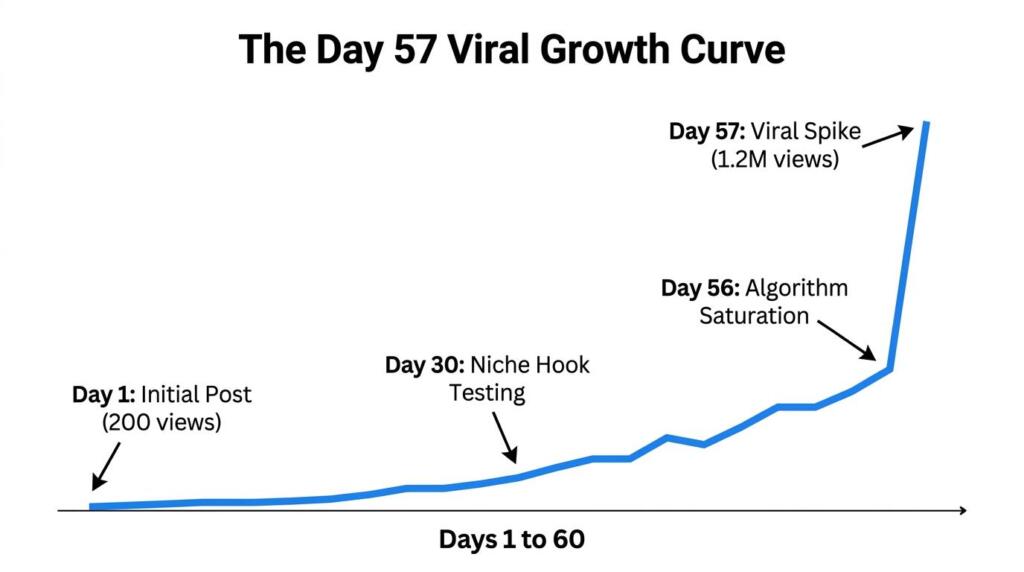
There is a video that was sitting at approximately a hundred views and stayed there for eternity until suddenly it reached a thousand views, then ten thousand, then much beyond a hundred thousand within an afternoon. The video didn’t change in any way at all. What changed was which audience the platform decided to test it against, and understanding that process explains far more about growth than most creators realize while refreshing their analytics tab every few minutes, hoping the number will simply keep moving on its own.
Blastup TikTok views reflect a common hope that this entire curve can simply be purchased outright, skipping straight to the number that normally takes days of testing to reach on its own.
Tier One: The Initial Test Pool
Every video, regardless of who posts it, starts in a small test pool made up of a limited slice of an account’s existing followers along with a handful of unconnected accounts the algorithm considers a reasonable match. This pool is usually only a few hundred people, and how they respond over the first several minutes determines almost everything that follows. A high completion rate and quick early engagement signal that the video deserves a second look from a larger audience. None of this first tier is visible to the creator directly; it shows up only indirectly, in how quickly or slowly the view count starts moving beyond its opening plateau.
Tier Two: The Expansion Ring
Videos that clear the first test pool graduate into a wider ring, typically reaching several thousand additional viewers who share some overlap with the original test group but extend further into related interests. A few things tend to happen at this stage on videos headed toward real growth:
- Completion rate holds steady rather than dropping as the audience widens
- Comments start arriving from accounts outside the creator’s existing following
- Shares begin appearing, extending reach into networks the algorithm had not yet tested
For the videos that fail in this area, they will simply hit a wall at a few thousand viewers, losing their engagement or completion rates in the process. This is generally where the true difference is made between an ordinary video and one that goes viral, even though the final view count may never reach the six-figure mark.
The Tipping Point: Where Compounding Kicks In
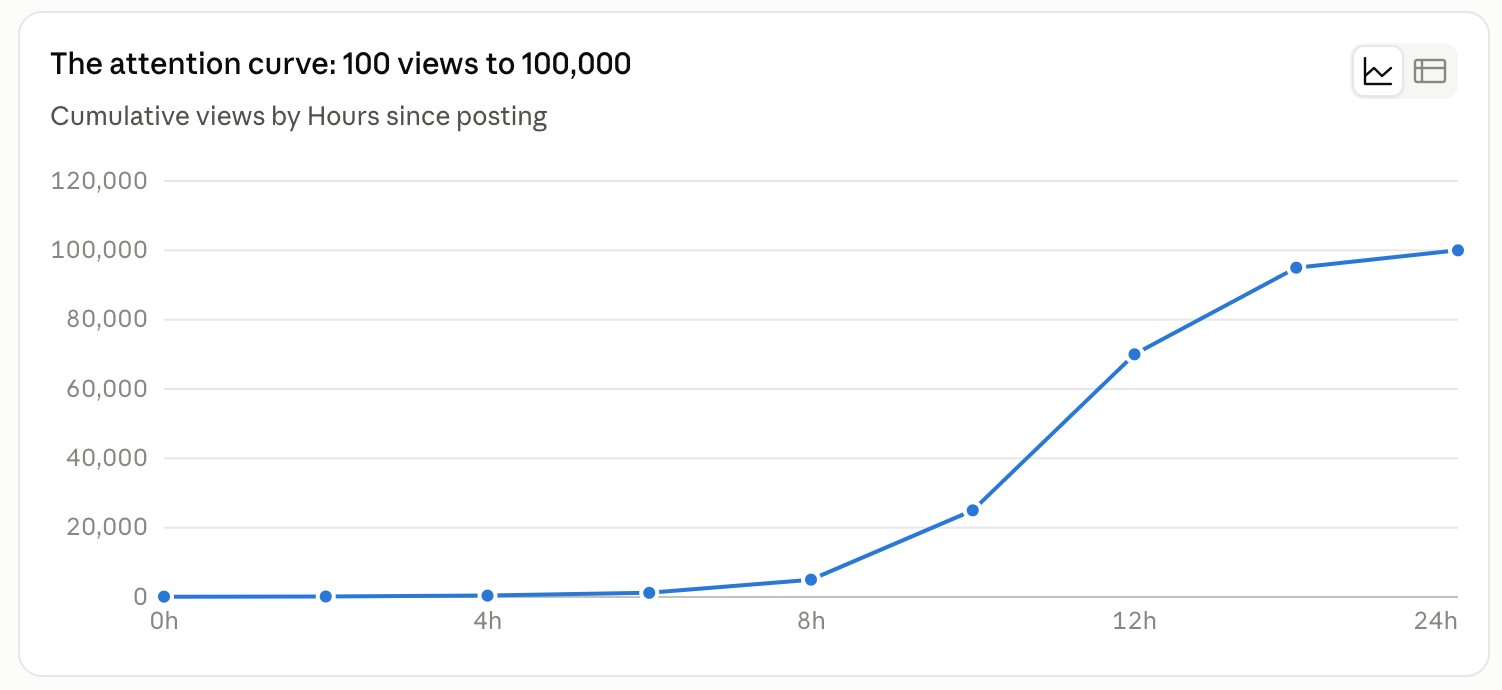

It is rare for the transition into the six-figure realm to occur slowly. The transition is usually characterised by an abrupt turn in the curve rather than an incremental one, which is exactly the reason that makes creators confused because they expected steady growth all the way through.
TikTok Views generally follow tiers rather than a gradual curve, and a sharp upwards turn generally indicates the moment when a video has passed enough pools of people to be considered a potential winner and be offered to a much broader audience. This is essentially the tipping point when the growth curve transitions from linear to almost exponential due to the increased size of the next audience tier.
This compounding effect is precisely why a video can look stagnant for hours and then explode seemingly overnight. The stagnant period is not actually inactivity; it is the video working its way through successive test tiers, most of which are invisible from the creator’s side of the dashboard.
Why the Curve Flattens Eventually
No video sustains exponential growth indefinitely. Eventually the pool of genuinely interested viewers gets exhausted, completion rates start dipping as the content reaches audiences further from its ideal match, and the algorithm redirects its attention toward newer content, clearing its own early test tiers. This flattening is a normal part of the curve rather than a sign that anything went wrong.
What Creators Actually Control in This Process
While the tier system itself runs automatically, creators still influence how well a video performs within it. Strong hooks in the first few seconds improve survival through the earliest test pool. Content built for rewatching or sharing improves performance in the expansion ring. Posting during periods when the target audience is online will improve the chances of having the initial pool of test viewers comprised of people who are actually interested rather than just a random sample.
Reading the Curve Correctly
With this knowledge of the structure of tiers in mind, the meaning of a video being stuck at a certain number of views changes completely. A video that is not able to reach past a few hundred views is not considered bad in itself; it is only unable to overcome the test pool phase, which is a diagnosable problem instead of being an unclear one.