
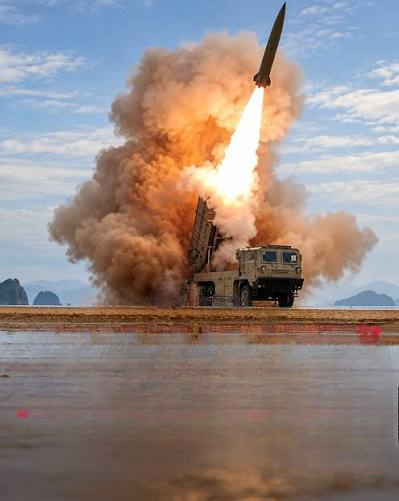
West Bengal has cleared a long-pending defence proposal that could significantly expand India’s missile-testing infrastructure, bringing the DRDO Junput Missile project in Purba Medinipur back into focus after more than two years of administrative delay. The proposed facility, to be established along the state’s Bay of Bengal coast, is expected to provide an additional testing location for missiles and other weapon systems developed by the Defence Research and Development Organisation (DRDO).
The project was originally proposed by DRDO in 2024, with the agency seeking land from the West Bengal government for establishing the testing facility. According to reports, the proposal remained pending under the previous Trinamool Congress government, with the required land not being provided. The issue resurfaced after West Bengal Chief Minister Suvendu Adhikari said that the present state government had responded to DRDO and approved the proposal.
The revival of the DRDO Junput Missile facility comes at a time when India is rapidly expanding its indigenous defence manufacturing and testing capabilities. Developing sophisticated weapons is only one part of the defence equation; testing them safely, repeatedly and under controlled conditions is equally important. Additional testing infrastructure can allow scientists and engineers greater flexibility while reducing pressure on existing facilities.
Junput’s coastal location gives the DRDO Junput Missile project particular strategic significance. The proposed site in Purba Medinipur lies along the Bay of Bengal and is around 70 kilometres from the existing testing infrastructure at Chandipur in Odisha. Its location could make it useful as a complementary facility for missile and weapons trials, providing DRDO with another controlled corridor for conducting tests over the sea.
India’s principal missile-testing infrastructure is currently centred around the Integrated Test Range at Chandipur in Odisha. The facility operates different launch complexes used for testing a variety of weapon systems. One complex supports trials involving short-range tactical missiles and other systems, while another has been associated with tests of longer-range strategic weapons. The addition of the DRDO Junput Missile range would therefore give India’s eastern defence corridor another important testing location.
The project is also significant because defence testing facilities require substantial supporting infrastructure and carefully planned safety arrangements. Earlier reports indicated that land acquisition and basic infrastructure for the Junput project had progressed before work was halted amid local difficulties. Safety measures, including evacuation and compensation arrangements, were also part of the planning process. The future progress of the DRDO Junput Missile project will consequently depend not only on political approval but also on coordination between the state administration, DRDO and local stakeholders.
For West Bengal, the DRDO Junput Missile facility could represent more than a defence installation. Large strategic projects can bring demand for roads, logistics, communications, technical services and other supporting infrastructure. They can also place a region on the national map for defence-related investment and research. While the immediate purpose of Junput is military testing, its wider economic impact could become visible as associated infrastructure and activities develop.
The strategic value of the DRDO Junput Missile project also extends beyond West Bengal. India’s growing defence ambitions require testing capacity that can keep pace with the development of increasingly advanced weapon systems. Existing ranges can face scheduling and operational constraints when multiple programmes require testing. A new facility could help distribute that workload and give researchers greater opportunities to conduct trials without unnecessarily delaying other programmes.
Officials have not publicly disclosed a detailed list of specific missile systems that would be tested at Junput. Reports, however, describe the facility as an important addition to India’s weapons-testing network. The project has also been described as an extension or supplementary facility to the existing testing ecosystem centred around Chandipur. This means the DRDO Junput Missile range should be viewed as part of a broader effort to strengthen India’s defence research infrastructure rather than as an isolated installation.
The political history surrounding the project is likely to remain part of the debate in West Bengal. The current administration has highlighted the fact that the proposal had been pending since 2024 and has presented its approval as an important step for the state’s development. Critics of the earlier delay are likely to question why a defence-related proposal of national significance did not progress sooner, while supporters of the new decision are expected to argue that strategic projects should receive faster administrative attention.
Ultimately, the DRDO Junput Missile project represents an opportunity to strengthen India’s eastern defence infrastructure while bringing a major national security initiative to West Bengal. If the remaining administrative, technical and local issues are resolved smoothly, Junput could emerge as an important testing hub alongside established facilities elsewhere in the country. For India, expanding such infrastructure is increasingly essential as indigenous defence research moves from laboratories and prototypes towards increasingly sophisticated systems requiring rigorous real-world testing.
If you want, I can also produce a shorter, harder-hitting headline while retaining the exact 8-keyword structure.