
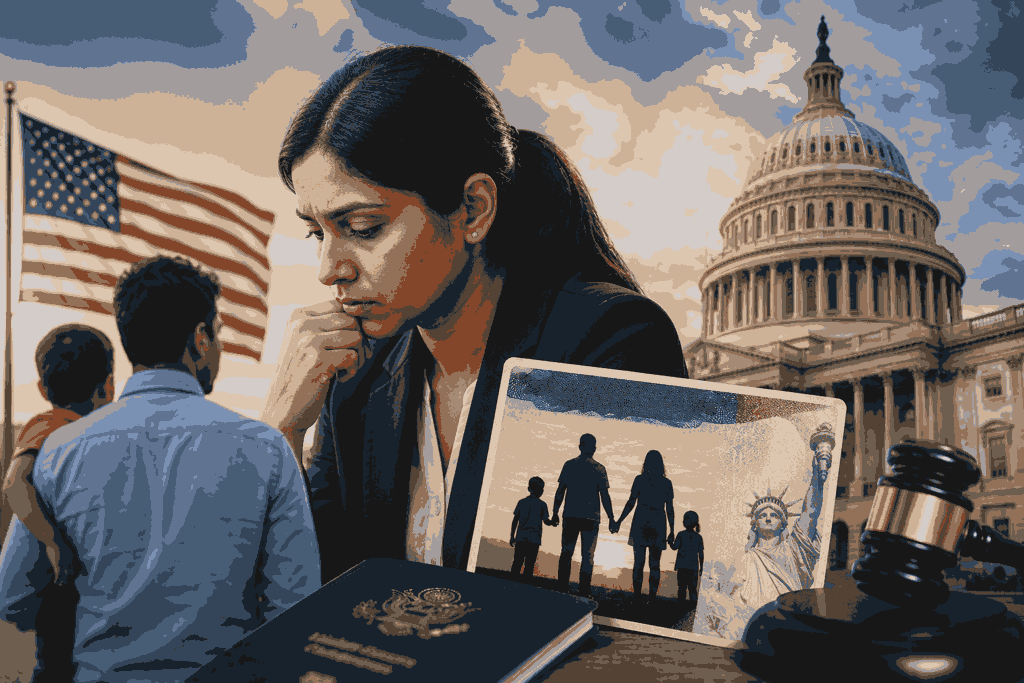
A proposed move by the Donald Trump administration to end employment eligibility for certain H-4 dependent spouses could disrupt the professional and financial lives of thousands of families in the United States, with Indian-origin households likely to face a significant impact. The proposal would reverse a policy that has allowed eligible spouses of H-1B visa holders to obtain employment authorisation and build careers while living in America. The development has put H-4 work permits back at the centre of a contentious immigration debate.
The plan is listed in the US government’s regulatory agenda under the Office of Information and Regulatory Affairs. Its objective is to remove H-4 dependent spouses from the category of noncitizens eligible to receive employment authorisation. However, the proposal has not yet become a rule, and existing beneficiaries are not being stripped of their employment rights immediately.
The H-4 visa itself does not provide permission to work. It is generally issued to spouses and children of H-1B workers so families can remain together in the United States. Eligible spouses must separately qualify for an Employment Authorisation Document, or EAD, before taking up legal employment. For many families, these H-4 work permits have become an important second source of income.
The system dates back to a 2015 regulation that allowed certain H-4 spouses of H-1B workers to seek employment authorisation after meeting specified conditions. It marked a major change for dependent spouses who had previously been unable to work legally.
Indian families could be disproportionately affected because Indian nationals have historically represented a large share of the H-1B workforce. Government data cited in reports show that Indian nationals accounted for about 71 per cent of approved H-1B petitions in fiscal year 2024. Earlier data on H-4 EAD approvals also showed an overwhelming concentration among Indian beneficiaries, with women representing the vast majority. That history explains why the debate over H-4 work permits has generated particular anxiety among Indian professionals and their families.
For many spouses, employment means maintaining professional qualifications, building careers and contributing to household expenses. A forced exit from the workforce could interrupt careers that took years to establish. Families dependent on two incomes could face difficult decisions involving housing, education and savings.
The proposed rollback is not the first Trump administration attempt to restrict H-4 employment. During Trump’s first term, DHS proposed ending employment eligibility for certain H-4 spouses in 2017. The proposal was never finalised and was withdrawn in 2021, reviving a policy dispute that has remained unresolved.
Importantly, the latest proposal does not mean existing H-4 work permits have suddenly become invalid. Before implementation, DHS must publish a formal Notice of Proposed Rulemaking in the Federal Register, allow public comments and then issue a final rule. Until that process is completed, eligible H-4 spouses with valid employment authorisation can continue to work under the current framework.
The proposed change also fits into a broader tightening of US immigration policy affecting legal immigration and skilled foreign workers. The possible removal of H-4 work permits has therefore become part of a wider debate over immigration controls and the economic realities of skilled-worker families.
For Indian women, the potential consequences extend beyond immigration status. Many have established careers in technology, healthcare, education and finance. Losing the ability to work could mean reduced household income and a forced pause in professional development.
Supporters of tighter employment rules argue that immigration policy should prioritise American workers and that dependent visa categories should not automatically create access to the US labour market. The administration will have to weigh that argument against concerns from businesses and immigrant families.
For now, uncertainty is likely to remain. The proposal is still at an early regulatory stage, and its final language and implementation timeline are not yet known. Families relying on H-4 work permits should monitor official announcements rather than assume that the change has already taken effect.
The coming rule-making process surrounding H-4 work permits could determine whether thousands of spouses retain the ability to pursue careers in America or become legally dependent on the employment status of their H-1B partners. Until a final decision is made, H-4 work permits remain valid under existing rules, but the possibility of their removal has placed many Indian families on alert.