

However, two videos could have the exact same view count yet paint an entirely different story from each other. One video turns curious viewers into devoted subscribers who start to exchange constructive comments and go on to create their own stitches and duets from the video. The other video has the same view count and then vanishes without a trace, leaving hardly any evidence of its existence. While creators compare the two videos, many will make the mistake of thinking that the latter is somehow broken when in truth there is nothing wrong with the video itself.
The view count cannot account for this phenomenon precisely because of which the quest for safe and real TikTok likes has become increasingly common among creators seeking an explanation for the success and failure of videos that look similar in terms of metrics. The real reason does not lie in the method used to get the like but in what happens after the viewer clicks play.
What Views Actually Measure
A view on TikTok registers extremely quickly, often after just a second or two of playback. This low threshold makes the metric useful for measuring reach but almost useless for measuring interest. A video could receive hundreds of thousands of views simply based on its having come into contact with so many people without regard to whether those people were interested in what they were watching. Views measure exposure, not effectiveness, and exposure has never been an indicator of any effectiveness whatsoever.
The Hidden Variable: Watch Time
The number that actually separates two identically viewed videos is watch time, specifically how much of a video gets watched before someone scrolls away. The fifteen seconds spent watching a video through to completion will carry a lot more weight than when you stop watching after two seconds, despite both of them technically registering as a “view” once you click play. And this small difference can add up very quickly because it is the fact that users watch videos through to the end that counts most in the algorithm’s eyes.
Where the Gap Shows Up
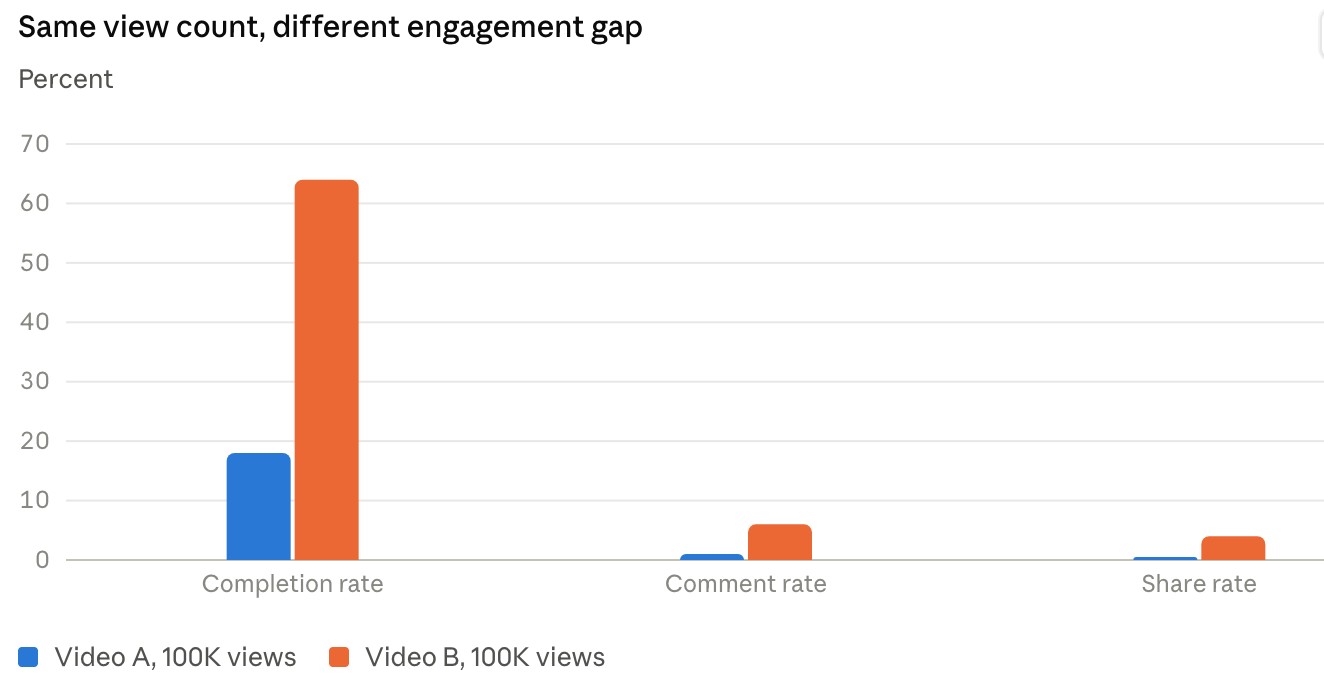

A handful of visible clues usually reveal which side of the gap a video landed on:
- Comment sections filled with specific reactions to the content versus generic or bot-like replies
- A steady trickle of shares over days rather than a spike that dies immediately
- Profile visits and follows that continue well after the video stops trending
- Duets and stitches that reference the actual content rather than unrelated trends
Videos that score higher on the other end of the spectrum feature many of these signals altogether, whereas videos that only got views feature hardly any of these signals.
Why the Category Matters More Than Any Single Number
Here comes the more general idea that would be useful here: TikTok Engagement as a category includes everything else that takes place after a view has been logged – from watch time to comments, shares, saves, and actions on profiles. Why the combined nature of the signal rather than chasing views alone would explain why even videos with the same number of views might end up being polar opposites in terms of the final results. A video optimized for just views would get plenty of them but low engagement everywhere else because the audience was the wrong one.
Brands running paid promotion have learned this distinction the hard way. A campaign that revolves around manipulating view numbers generally fails to match a campaign that revolves around actual watch time and engagement, even if their numbers on the report appear to be extremely close.
Why the Same View Count Can Mean Two Different Audiences
One of the reasons for this problem is the actual nature of the audience reached by each campaign. While a video driven by paid boosts or active distribution techniques will end up reaching a wide range of uninterested people who only increase views but don’t do anything else, a video earning the same number of views through organic means will always attract people who are interested in the subject.
Reading the Real Signal
Whereas views are often considered to be the end point, what could be considered a better practice would be to take note of the ratio of views versus all the other things that occur afterward—the completion rate, the comment rate, and the share rate compared to total reach. A video that has relatively few views but a very good ratio of all of these things is usually in better shape than a video with a huge number of views and nothing else.
Closing the Gap
The gap between two videos with identical views does not usually get closed by seeking out a higher number. It gets closed by paying attention to the things that happen after the view, because that is when the actual gap gets created.