
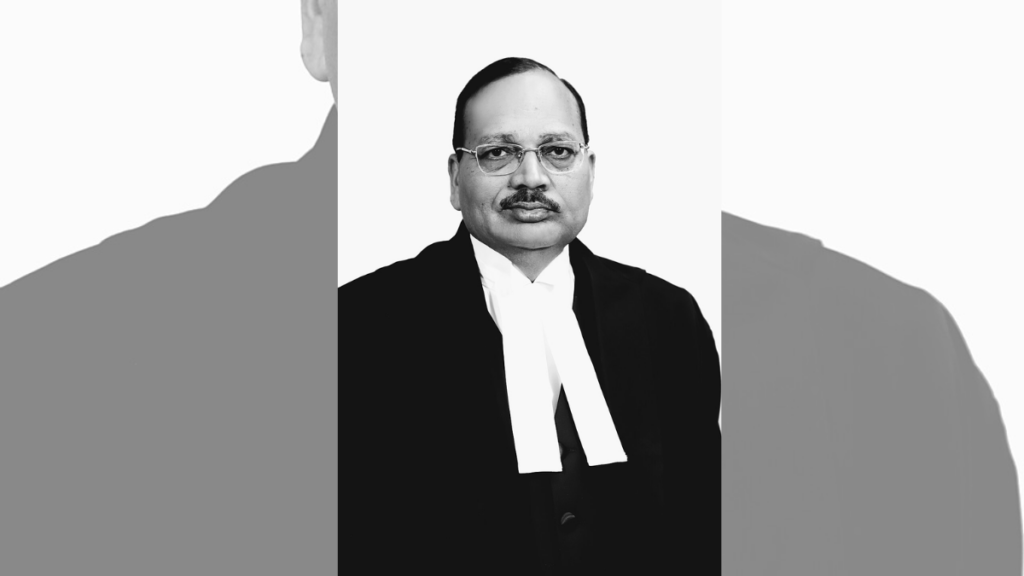
The Supreme Court has ruled that the Bar Council of India (BCI) and State Bar Councils have no statutory authority to take disciplinary action against law students, holding that such power only kicks in once a person formally enrols as an advocate. Until then, the Court clarified, disciplinary authority over students rests solely with their institution, or whatever body is designated under that institution’s own governing rules.
The ruling came from a bench of Chief Justice of India Surya Kant, Justice Joymalya Bagchi, and Justice V Mohana, in a petition brought by two NALSAR University of Law alumni, Mihira Sood and Abhishek Tiwari. Their challenge targeted directions issued on August 13 by BCI Chairman Manan Kumar Mishra, which sought to block the enrolment of NALSAR’s 2026 graduating batch and called for an inquiry into students and faculty over a campaign opposing the CJI’s participation in the university’s convocation. Applying its reasoning on jurisdiction, the Court found those directions legally unsustainable.
Mishra had withdrawn the directions within about an hour of issuing them, once they drew public criticism. Even so, the case continued: back on August 14, the bench had already voiced disapproval of the BCI’s conduct and issued an interim order shielding NALSAR’s students and faculty from any punitive steps by the BCI or state bar bodies. With Thursday’s ruling, the Court disposed of the petition altogether, converting that interim protection into a permanent one.
At the hearing, senior advocate K. Parameshwar, appearing for the petitioners, argued that even though the original directions had been pulled back, the manner of their issuance still warranted scrutiny — framing the episode not as a dispute involving one student, but as a broader question about freedom of expression across the university. Mishra, appearing for the BCI, reiterated that the directions had been rescinded almost immediately after being issued.
The ruling settles, at least for now, a question that had loomed over the case since it began: how far a professional regulator’s authority extends into a university’s internal affairs, and where that line sits under the Advocates Act, 1961.