
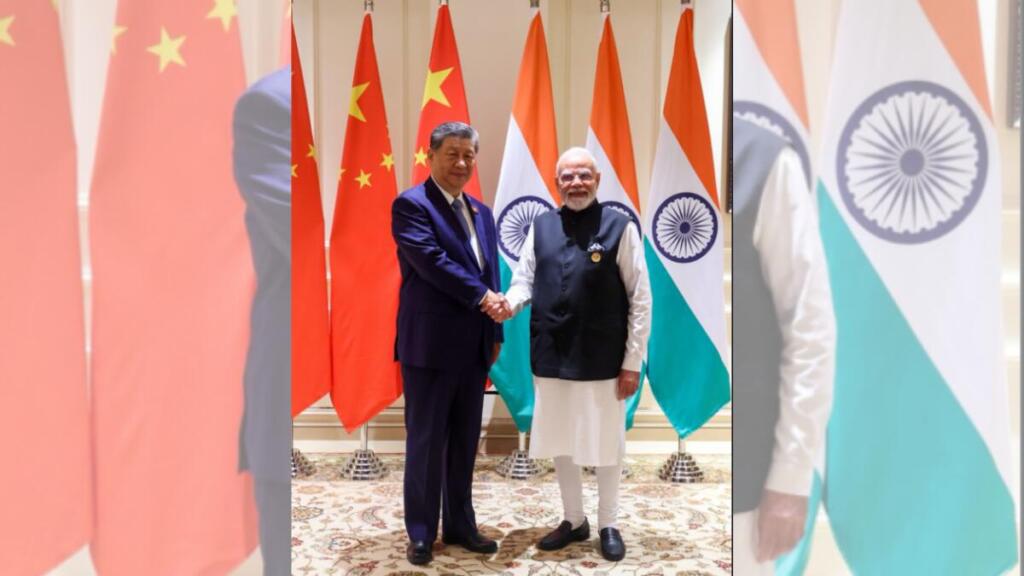
Prime Minister Narendra Modi and Chinese President Xi Jinping held bilateral talks in New Delhi on Saturday, September 12, on the sidelines of the 18th BRICS Summit — Xi’s first visit to India in seven years. The talks were expected to focus on reviewing boundary stabilisation measures, expanding trade and investment channels, and restoring broader economic engagement, as India hosted the two-day summit at Bharat Mandapam under its 2026 BRICS chairship.
Context and backdrop
The meeting came as Xi arrived in New Delhi on a two-day visit, with people familiar with the matter noting the trip offered a key opportunity to further normalise relations that had come under severe strain following the eastern Ladakh military standoff. The discussions signalled a renewed effort to stabilise India-China relations after years of tension following the 2020 Galwan clash, when diplomatic ties had hit rock-bottom.
Recent diplomatic progress — including patrolling arrangements along the LAC, the resumption of direct flights, and eased business visa procedures — had laid the groundwork for this renewed top-level dialogue. The two leaders had last met in Tianjin in August 2025 on the sidelines of the SCO summit.
What was discussed
According to India’s Ministry of External Affairs, both leaders acknowledged steady progress in bilateral ties and reiterated that India and China should approach their relationship from a “strategic perspective,” keeping long-term development in mind. Modi framed the relationship around what he called the “3 Mutuals”—mutual respect, mutual sensitivities and mutual interests—and thanked China for its support during India’s BRICS presidency.
On the border question, Modi stressed that peace and tranquility along the border remain a prerequisite for cordial ties, underlining the need for both sides to observe existing agreements on border-related issues. Both leaders expressed commitment to a fair, reasonable and mutually acceptable resolution of the boundary question, proceeding from the broader political perspective of their overall relationship and long-term interests.
The wider summit backdrop
The bilateral talks came shortly after Modi announced that BRICS had adopted the New Delhi Declaration 2026 with full consensus among all 11 member states — a notable diplomatic achievement given sharply differing positions among countries like Iran, Saudi Arabia and the UAE over the conflict in West Asia. Coming as BRICS marked its 20th anniversary, the declaration’s adoption followed by the high-profile Modi-Xi meeting is being read in New Delhi as evidence that India’s chairship succeeded in holding together an increasingly complex grouping.
Analysts’ take
The meeting placed one of the world’s most consequential bilateral relationships back at the center of international attention. India and China cooperate within BRICS even as they compete for economic and strategic influence across Asia, and their priorities frequently diverge — India retains close ties with the US, Japan and Australia through the Quad, while pursuing strategic autonomy rather than full alignment with any bloc. Trade is likely to be a key follow-on issue, along with the question of Chinese investment, since India tightened scrutiny of investment from neighboring countries after the border crisis.