
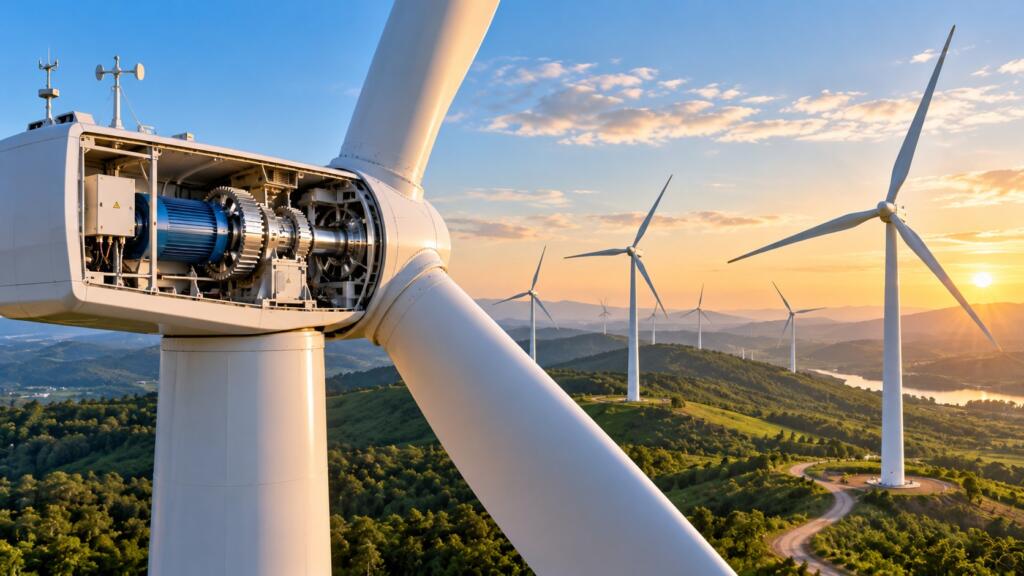
Wind power plants are evolving as turbine technology enables greater energy capture, higher generating capacity, and more responsive operation. In a modern wind energy power plant, advances in rotor design, tower height, turbine controls, and monitoring systems influence how electricity is generated and managed. These developments extend beyond individual machines because turbine capabilities also shape plant layouts, maintenance strategies, and grid interaction. Together, they are changing how developers plan and operate utility-scale wind projects for efficient and reliable long-term energy production.
Larger Turbines Are Increasing Power Output
Wind turbines have grown substantially in rated capacity. Higher-capacity machines can produce more electricity per turbine under suitable operating conditions. This lets developers achieve a planned project capacity with fewer turbines than would be required with lower-capacity machines.
Increasing turbine capacity also affects plant-level engineering. Developers consider turbine spacing, foundations, electrical collection systems, installation requirements, and site characteristics when selecting equipment. Turbine capacity is therefore closely tied to the overall design and infrastructure requirements of modern wind projects.
Higher ratings also require compatible drivetrains, structural components, electrical equipment, and supporting infrastructure. These elements work together to accommodate the turbine’s generating capacity and operating loads while supporting its intended performance under site-specific conditions.
Longer, More Advanced Blades Are Improving Energy Capture
Rotor diameter has increased alongside turbine capacity. Longer blades create a larger swept area, allowing a turbine to intercept more moving air. This can increase energy capture and support electricity generation across a broader range of wind conditions.
Advances in aerodynamic design and materials also support larger rotors. Engineers can optimize blade shape, structural strength, flexibility, and weight for specific turbine designs, helping wind projects use the wind resources available at each location more effectively.
Modern blade engineering also considers forces experienced during operation. Advanced composite materials and aerodynamic profiles can support longer blades while managing weight and structural loads, helping rotor technology evolve alongside increases in turbine capacity and tower height.
Taller Turbine Towers Are Expanding Wind Energy Potential
Tower technology is another important part of turbine evolution. Wind speeds generally increase with height, although the effect varies by location and terrain. Raising turbine hub height can access stronger wind resources where site conditions support it.
Taller towers also provide clearance for larger rotors. By considering hub height and rotor diameter together, developers can select turbine configurations suited to local wind conditions and potentially expand the range of locations suitable for utility-scale wind generation.
Detailed wind-resource assessment helps determine suitable hub heights for individual projects. This approach links tower selection to expected wind conditions, rotor dimensions, and energy production, rather than treating tower height as an independent design decision.
Intelligent Turbine Controls Are Optimizing Plant Performance
Modern turbines respond to changing wind and operating conditions through automated control systems. Sensors and control equipment coordinate mechanical and electrical functions to support effective operation. Key turbine control technologies include:
- Pitch Control: The system adjusts blade angles to regulate aerodynamic forces, rotor speed, and power production as operating conditions change.
- Yaw Control: The yaw system changes rotor orientation to maintain suitable alignment with wind direction and support effective energy capture.
- Sensor-Based Monitoring: Sensors measure wind conditions, vibration, temperature, rotor speed, and component status to support automated control decisions.
Together, these technologies allow turbines to make continual operating adjustments. Plant-level control systems can also coordinate multiple turbines, connecting individual turbine responses with the performance requirements of the wider project.
Predictive Maintenance Is Improving Turbine Availability
Advanced turbine technology is also changing maintenance practices. Condition-monitoring systems collect data from key components, while analytical tools help operators identify changes in equipment behavior and determine when inspection or servicing may be required.
Maintenance teams can use these insights to plan work according to equipment condition. Combining digital monitoring with regular inspections and servicing helps operators schedule maintenance efficiently, manage component performance, and support turbine availability throughout the plant’s operating life.
Performance data can also help operators compare operating patterns across turbines. These comparisons support component assessment, maintenance scheduling, and plant-wide performance monitoring, giving teams useful information for coordinating maintenance activities across the project.
Advanced Turbine Systems Are Supporting Grid Integration
Turbine evolution also extends to electrical systems. Modern turbines use power electronics and sophisticated controls to manage electricity output and interact with the wider power system. Relevant capabilities include:
- Active Power Control: Turbine and plant controllers can adjust active power output according to operating conditions and applicable grid requirements.
- Voltage Support: Modern power electronic systems can provide reactive power capabilities that support voltage management when configured to meet interconnection requirements.
- Frequency Response: Suitable turbine and plant controls can adjust active power under specified conditions, allowing wind generation to contribute to certain forms of grid frequency response.
These capabilities provide greater control over how wind-generated electricity interacts with the grid. Advanced turbine controls therefore connect plant operation with wider electricity-system requirements as renewable generation becomes an important part of power networks.
Advanced Turbines Are Reshaping Wind Plant Design
The combined effect of these technologies is changing wind plant planning. Developers increasingly evaluate turbine capacity, rotor diameter, hub height, wind resources, spacing, electrical infrastructure, controls, installation needs, and maintenance as interconnected elements of project design.
Technology also supports operations after commissioning through monitoring and performance management. Renewable energy companies such as Hero Future Energies apply data analytics and emerging technologies to improve the utilization and performance of utility-scale assets.
Project design can therefore connect individual turbine capabilities with overall plant behavior. Careful equipment selection, placement, monitoring, and control help align technology with site characteristics and operating requirements, allowing a wind energy power plant to benefit from turbine and plant-level advances.
Conclusion
Advanced turbine technology is changing wind power plants at equipment and project levels. Larger rotors improve energy capture, taller towers access wind at greater heights, and higher-capacity turbines influence plant design. Intelligent controls enable turbines to respond to changing conditions, while digital monitoring supports informed maintenance planning. Advanced electrical systems also strengthen coordination with the grid. Together, these developments are helping wind projects use available resources more effectively while supporting reliable, efficient, and increasingly sophisticated utility-scale wind power generation.