
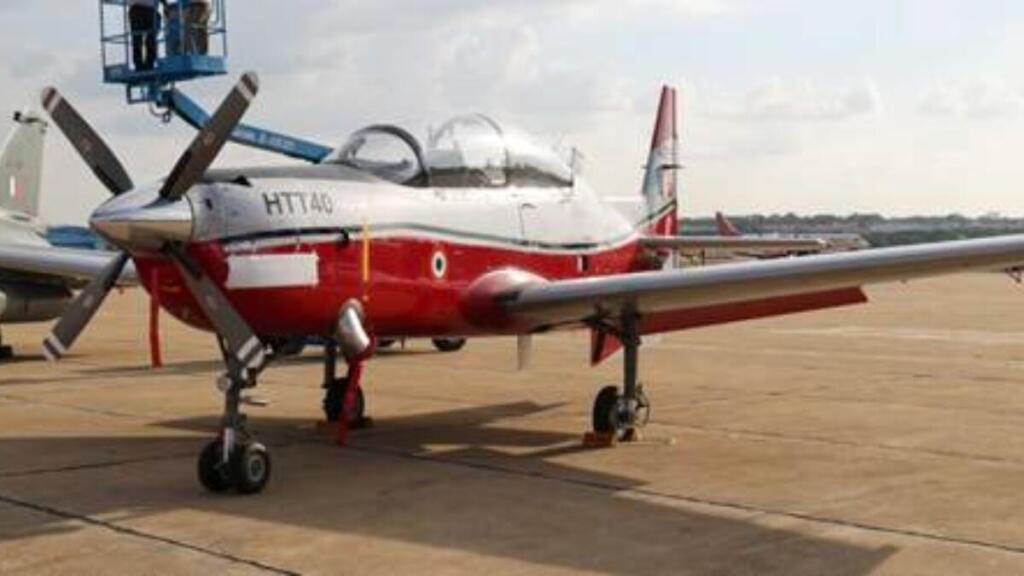
Hindustan Aeronautics Limited (HAL) on Thursday handed over two Light Combat Aircraft (LCA) Tejas Final Operational Clearance (FOC) Twin Seater Trainers and three HTT-40 Basic Trainers to the Indian Air Force, along with four Dhruv Next Generation (NG) helicopters to Pawan Hans Limited, in a ceremony attended by Defence Minister Rajnath Singh and Civil Aviation Minister K Rammohan Naidu.
Speaking at the event, Singh described the handover as a significant milestone in India’s progress toward indigenous aerospace capability, technological self-confidence and Aatmanirbharta (self-reliance), reiterating the government’s goal of making India “capable, self-reliant, and globally competitive” in meeting its own aerospace needs.
A gradual climb, not a “big bang”
The defence minister cautioned against expecting rapid, sweeping breakthroughs in aerospace development, describing it instead as a long, incremental process. He characterized individual platforms and components as “small rungs on a long ladder,” urging patience with the inevitable challenges as milestones along a broader roadmap.
Singh also framed the ceremony as evidence of growing synergy between civil and defence aerospace, arguing that India’s aerospace ecosystem shouldn’t be built solely around military requirements. He pointed to aircraft design, avionics, propulsion, composite materials, flight control systems, manufacturing and certification as capabilities that benefit both sectors when developed domestically.
On the specific platforms
- LCA Tejas Twin Seater Trainers: Singh called the FOC trainer a symbol of India’s indigenous military aerospace capability and a sign of a maturing fighter aircraft ecosystem, noting it retains the core systems and combat capability of the frontline Tejas, giving pilots a training continuum straight into frontline operations. These two aircraft complete the deliveries under the FOC contract.
- HTT-40 Basic Trainers: Singh noted India had relied on imported aircraft for basic pilot training for years, and expressed confidence the indigenously built HTT-40 — built around a turboprop engine with a modern cockpit and avionics suite — could also find export markets. It’s designed for aerobatics, general handling, instrument flying, navigation, night flying and close formation training.
- Dhruv NG helicopters: Civil Aviation Minister Naidu called the type’s certification and induction into civil operations a milestone for India’s indigenous civil aviation ecosystem. The helicopters feature enhanced systems, modern avionics and a more powerful engine, and are intended for passenger transport, emergency medical services and offshore logistics — marking HAL’s entry into the civil and commercial rotary-wing segment.
Push for public-private collaboration and faster timelines
Singh called on India to move past treating its public and private aerospace sectors as competitors, urging deeper collaboration to accelerate growth in areas like artificial intelligence, autonomous systems, unmanned aerial systems, electronic warfare, cyber technologies and next-generation propulsion.
He also flagged realistic project timelines as a priority, warning that delays in ongoing technical projects risk creating capability gaps, driving up costs, and increasing the chance that technology becomes obsolete before it’s fielded.
Addressing young engineers and scientists directly, Singh urged them to pursue technologies that “do not exist today,” framing it as key to securing India global leadership in aerospace over the next decade.
HAL’s role
HAL Chairman and Managing Director Ravi K said the day’s handovers reflected the company’s ability to deliver across both civil and defence platforms, and the depth of the indigenous aerospace ecosystem built up over the years. Also present at the event were Air Chief Marshal AP Singh (Chief of the Air Staff), Defence Production Secretary Sanjeev Kumar, and Civil Aviation Secretary Samir Kumar Sinha.