
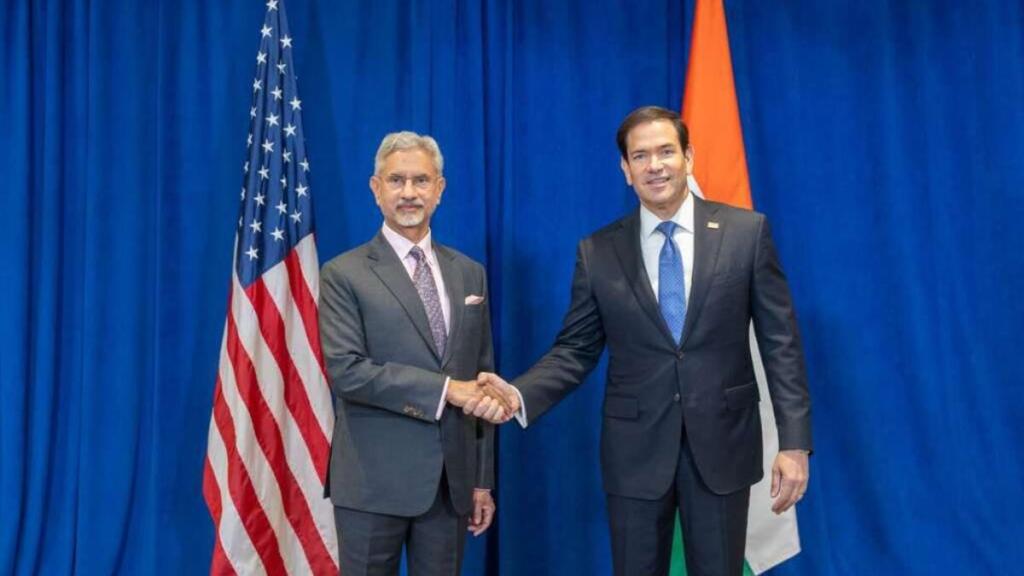
External Affairs Minister S Jaishankar met US Secretary of State Marco Rubio on the sidelines of the UN General Assembly’s High-Level Week in New York on September 23. The meeting centred on a newly signed US law that could hit India hard for continuing to buy Russian oil — and comes just weeks before Rubio is due in New Delhi.
Jaishankar raised India’s concerns directly with Rubio over the Sanctioning Russia and Iran Act (SRIA). Summing up the talks on X, he said he had “reiterated India’s interests and concerns with regard to SRIA” and that the two also discussed the Gulf and Ukraine situations. Rubio, for his part, said the US and India were continuing to build on their strategic partnership and coordinate on regional and multilateral priorities.
What is SRIA — and why does it worry India?
The Sanctioning Russia and Iran Act of 2026 — often referred to by the name of its sponsor, Senator Lindsey Graham — was signed into law by President Trump days before this meeting, after clearing the Senate 86-11 in August and the House 262-159 on September 16. It gives the US administration expanded powers to impose sanctions, tariffs and other restrictions tied to Russia’s war in Ukraine and to Iran.
The law’s Russia-related provisions target Russian officials, financial institutions, the energy sector, and the “shadow fleet” of vessels used to move Russian oil around existing sanctions. For India, the critical piece is a provision that gives Washington a legal pathway to impose tariffs of up to 100% on countries that continue buying Russian energy — a category that includes India, one of Russia’s largest oil customers. Importantly, the bill doesn’t automatically impose that tariff; it authorizes the executive branch to do so if it chooses to invoke it.
Why this matters for India
New Delhi has consistently defended its Russian oil purchases as a matter of energy security for its population, based on diversified sourcing and market conditions rather than politics. This isn’t a new fight — Trump had already slapped an extra 25% tariff on Indian exports in August specifically over the Russian oil issue, on top of an earlier 25%, taking total tariffs on India to 50%. Washington has repeatedly accused India of helping sustain Russia’s war effort by continuing to buy discounted crude.
India has told the US at senior levels that the law could affect bilateral ties, trade, and the global energy market, and has said it will take steps to protect its trade and economic interests, including working with domestic industry to manage the fallout.
What happens next
Rubio is scheduled to travel to India in October this year, which will be his second visit this year. It’s expected to be the venue where these tensions get worked through in more detail, alongside the broader India-US trade negotiations that have been running in parallel. The backdrop is a genuinely crowded one: India and the US are still trying to close a trade deal, Russian President Vladimir Putin is reportedly expected to visit New Delhi early next month for a summit with PM Modi, and Jaishankar has also been engaging Moscow directly, including a visit earlier this year for the India-Russia intergovernmental commission.
In short: this meeting was less a resolution and more a marker — India making sure its objections to the sanctions law are on record with Washington ahead of a month that will bring both Rubio’s visit and, potentially, Putin’s.