
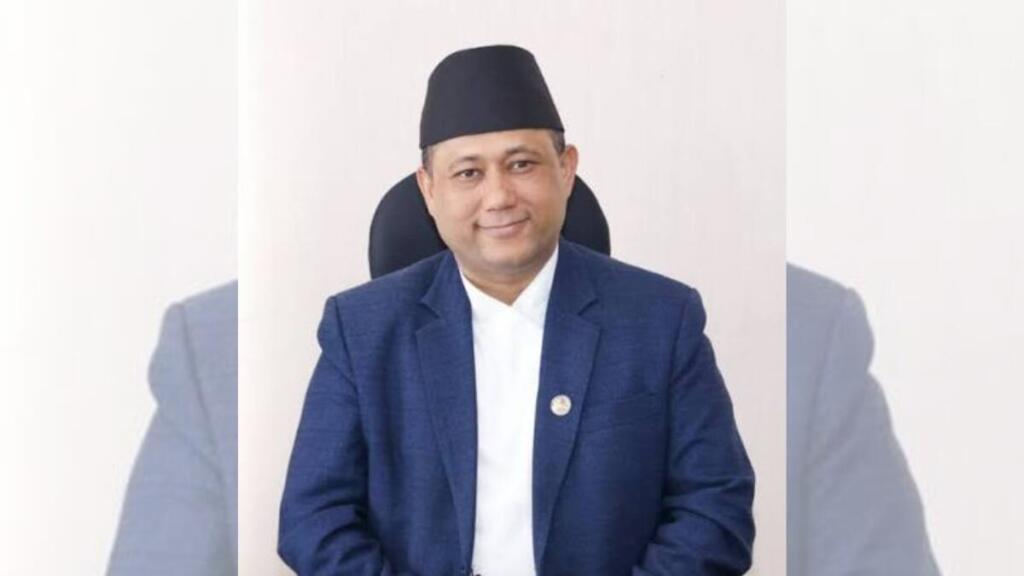
Days after asserting that Nepal was owed climate-related compensation from the world’s biggest greenhouse gas emitters, Foreign Minister Shisir Khanal has walked the claim back — at least where India is concerned — insisting that Kathmandu has not formally sought financial compensation from New Delhi.
“Neither I nor anyone in the Ministry of Foreign Affairs or Government of Nepal has claimed or asked for compensation from India or any other country, including China or the United States,” Khanal told ANI on Thursday.
The Reversal
The clarification comes just two days after Khanal himself framed the matter very differently. On Tuesday, he had said Nepal was shifting its diplomatic posture from “aid” to “justice and compensation,” naming India, China and the United States as the world’s three largest greenhouse gas emitters and arguing they carried a “historical responsibility” to compensate vulnerable nations like Nepal. Post-disaster assistance, he had said then, should be treated as a “moral liability,” not “charity.” Nepal’s finance ministry was reported to have sent a formal climate compensation claim letter to international partners, and Kathmandu had separately approached the UN-backed Loss and Damage Fund over the disaster.
By Thursday, speaking to ANI, Khanal recast that stance as a general appeal rather than a specific demand on India. “Our call has been for the global community to look at this disaster from the perspective of climate change and the impact it’s having in Nepal,” he said, adding that India, China and Nepal “share similar environmental ecosystems” and are all affected by climate change in the Himalayas.
Crediting India’s Response
Khanal was notably warmer toward New Delhi in the ANI interview, crediting India’s relief effort in the aftermath of the flash floods. “In this disaster context, right after the disaster, we began to receive communication from Indian officials and they have provided all kinds of support and they have said they are standing ready to provide any support that the government of Nepal needs,” he said, adding that India had “fully supported” Nepal’s initiatives as new requirements arose.
India has mounted a sustained humanitarian response since the floods struck, including multiple C-130J aircraft carrying tens of tonnes of relief material — medical supplies, generators, solar lamps, tents and water purification units — along with a rescue team and additional medicine shipments routed through the Ministry of External Affairs.
Khanal also pointed to India’s past support, recalling assistance after Nepal’s 2015 earthquake, and said he hoped for continued help through reconstruction. “The Government of India has been very generous,” he told ANI, adding, “We stand ready to collaborate to save our civilisation, our heritage, our culture and our future together.”
The flash floods — triggered by a disaster in the Bhotekoshi river basin on August 26 — have killed hundreds, with thousands more reported missing as search, rescue and rehabilitation operations continue across affected regions. Khanal’s clarification to ANI comes as those operations remain ongoing, and as Nepal continues to press its broader case internationally for climate-related support, even as it draws a distinction between that global appeal and any formal bilateral demand on India.