
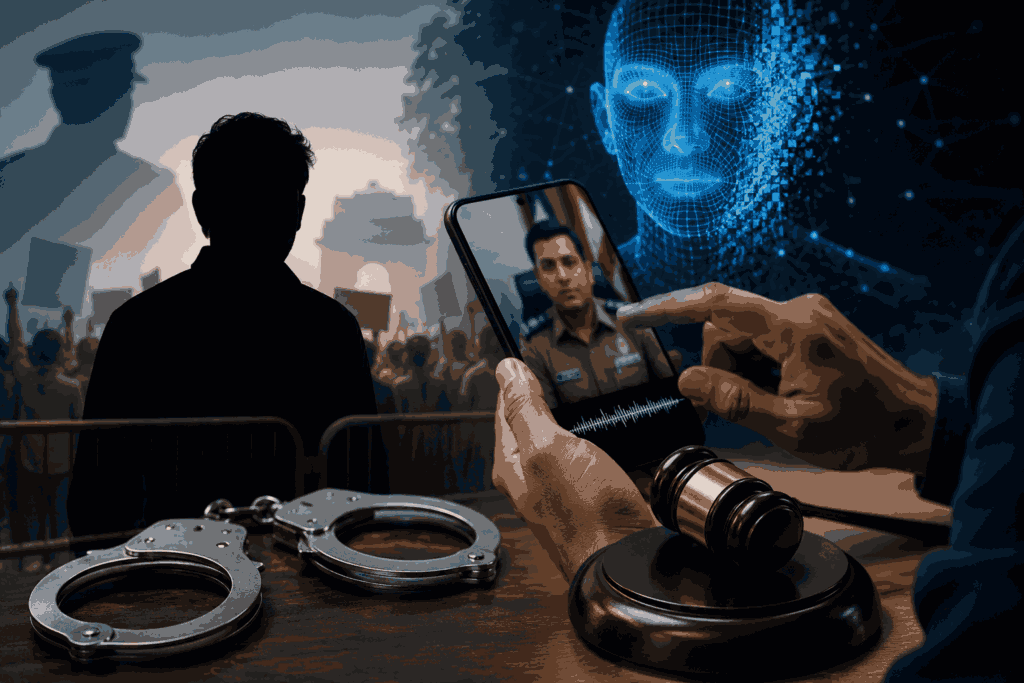
The Maharashtra Police have registered a case against Congress leader Bhai Jagtap over the alleged circulation of an AI-generated video that falsely claimed a Delhi Deputy Commissioner of Police had resigned following the Jantar Mantar protest. The development comes amid growing scrutiny of digitally manipulated content and its potential impact on public discourse, with investigators examining whether the video was knowingly shared despite being fabricated.
According to reports, the viral clip purported to show Delhi DCP Sumit Jha announcing his resignation while alleging pressure to falsely implicate protesters. However, fact-checks and official statements established that the video was digitally manipulated using artificial intelligence. Authorities stated that the original footage had been altered, with fabricated audio and mismatched lip movements creating the appearance of an authentic statement.
The case against Bhai Jagtap is part of a wider investigation into the spread of AI-generated misinformation surrounding recent demonstrations. Law enforcement agencies have increasingly focused on identifying individuals responsible for sharing fabricated videos that could mislead the public or influence perceptions during politically sensitive events. Investigators are expected to examine the origin of the video, the sequence of its circulation and whether any criminal provisions relating to misinformation or forgery are applicable.
Officials have reiterated that there is no evidence that the Delhi DCP resigned. The Delhi Police had earlier released the authentic version of the officer’s message, in which he warned the public about misinformation campaigns and urged citizens to rely on verified information from official sources. Experts who examined the viral clip also pointed to visual inconsistencies and audio synchronisation issues that are commonly associated with AI-generated deepfakes.
The controversy involving Bhai Jagtap has once again highlighted the challenges posed by rapidly evolving artificial intelligence tools. Deepfake technology has become increasingly sophisticated, enabling the creation of realistic-looking videos capable of misleading viewers within minutes of appearing online. Authorities across India have repeatedly advised social media users to verify sensational claims before forwarding them, particularly when such content appears to feature senior public officials making unexpected announcements. (
The broader investigation into online activity linked to the protests has already uncovered hundreds of questionable social media posts, including numerous AI-generated visuals and videos. Maharashtra’s Cyber Cell has stated that it identified hundreds of misleading posts across multiple platforms, with a significant number allegedly created using artificial intelligence. Officials say coordinated misinformation campaigns can complicate law enforcement efforts by spreading false narratives during periods of public unrest.
Political reactions to the case are expected to intensify in the coming days. While supporters of Bhai Jagtap may contest the allegations through legal and political channels, investigators are likely to rely on digital forensic analysis to determine the origin, editing history and dissemination pattern of the disputed video. Such investigations increasingly involve metadata analysis, AI detection tools and platform records to establish whether manipulated content was deliberately created or knowingly amplified.
Legal experts note that cases involving synthetic media are becoming more common as artificial intelligence tools become widely accessible. Although freedom of expression remains a protected democratic value, the deliberate creation or circulation of fabricated content presented as genuine may attract legal consequences where authorities believe it causes public harm or spreads misinformation. The proceedings involving Bhai Jagtap are therefore likely to be closely watched as another significant test of how Indian law addresses AI-generated political content.
The episode also serves as a reminder of the growing importance of digital literacy in the age of artificial intelligence. As realistic deepfake videos become easier to produce, public institutions, technology platforms and citizens alike face increasing responsibility to verify information before accepting or sharing it. The investigation concerning Bhai Jagtap underscores the broader challenge of balancing technological innovation with safeguards against misinformation, ensuring that trust in public communication is not undermined by fabricated digital content.