
An anime wager will never be viewed simply as a plot point. Each time an anime character places a bet, they have entered into a mini-character study: the bet forces them to make a choice, shows the viewer what the character believes is valuable, and does it within a couple of intense minutes. This instinct applies just as much to the “big picture” elements of blockbuster shonen, as well as to a sub-genre of anime specifically created out of card tables and dice. For audiences watching anime from the perspective of Western television (in which betting typically indicates moral downfall), the Japanese way can appear quite thoughtful.
Gran Tesoro and the Casino Arc in One Piece
A prime example of this type of viewing experience comes when the Straw Hats enter Gran Tesoro in One Piece Film: Gold, released in 2016. The entertainment city was founded by its owner Gild Tesoro, who is nicknamed the Casino King. Unlike the typical depiction of money and wealth as being used solely for individual gratification, Tesoro uses his wealth to demonstrate his power over others.
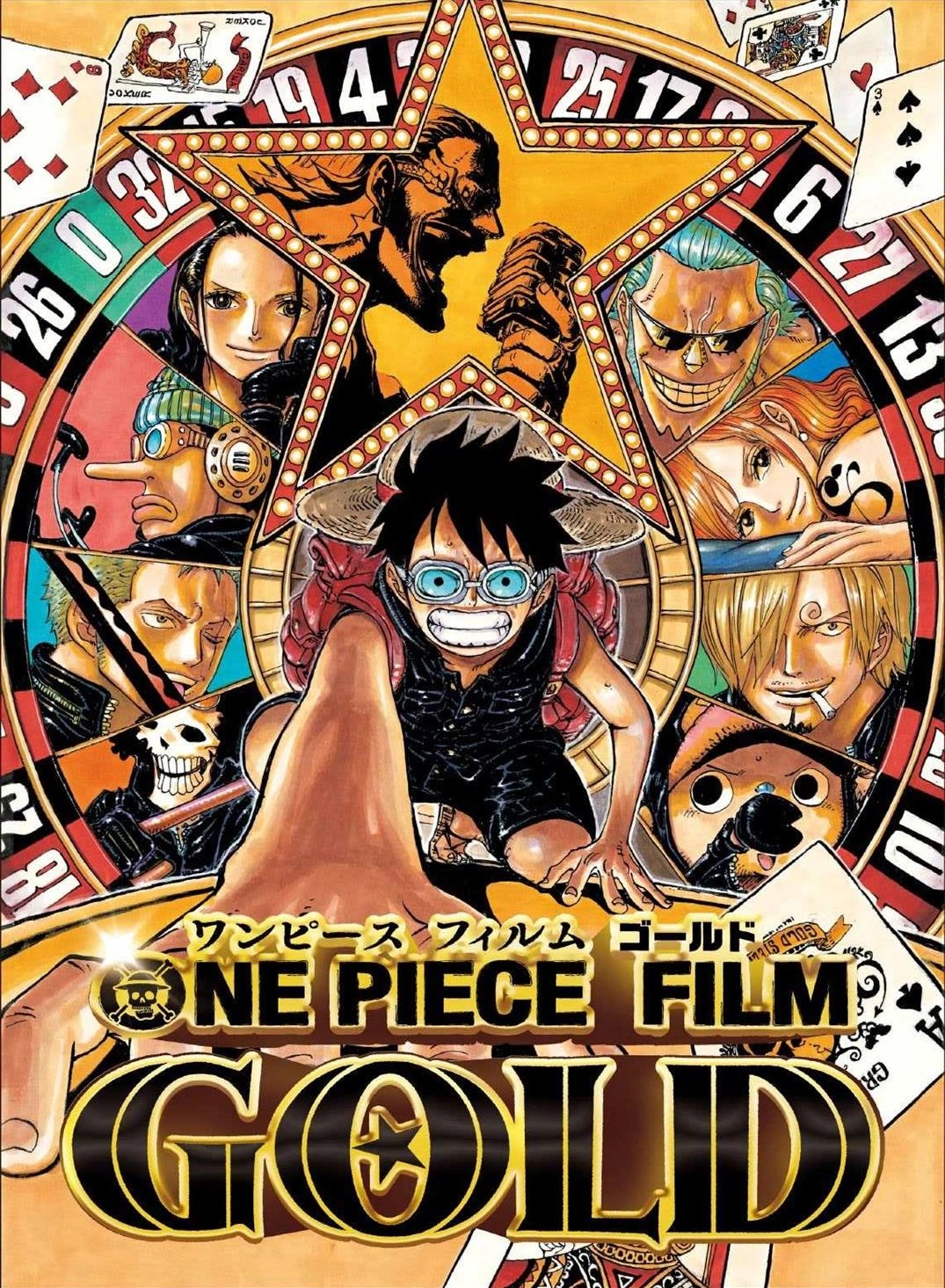

What works about this setting, however, is not the grandeur of the entertainment city itself, but the prison underneath. While people come to visit the entertainment city in hopes of making some quick money, once visitors get caught up in a cycle of debt and lose, they lose their freedoms completely. The film illustrates how the casino floor serves as a machine that exposes players’ greed, while the crew’s escape plan turns into a heist rather than winning at luck. Since the Dressrosa Arc had illustrated a similar concept using land-based public spectacles to hide systems of control, Gran Tesoro fits into a long-running thematic arc that One Piece had developed over years.
The Gambling Genre: Fukumoto’s Blueprint
Outside of shonen adventures, however, another type of genre exists. He is best known for creating the gambling genre. The creator of Akagi is Nobuyuki Fukumoto. In addition to Akagi, Fukumoto also started Kaiji in Weekly Young Magazine in 1996.
Fukumoto’s formula is what distinguishes his titles from other casino thrillers:
- Created games: Instead of utilizing established game rules, many of the competitions depicted in his titles use made-up rulesets. As such, fans watch along with the title’s characters to learn the probabilities of each contest.
- Interior Monologues: Many episodes (if not several dozen episodes) consist almost entirely of extended sequences depicting an interior monologue. Much like how long sequences can become suspenseful based upon mathematical concepts alone, this internal dialogue often consists of arithmetical problems and solutions to said problems.
- Losses are permanent: Almost all losses experienced by title characters cannot be reversed by later story developments — which makes each subsequent loss all-the-more tense throughout dozens of chapters.
Poker turns up directly in the later Kaiji material. The arc known as One Poker, serialized between 2013 and 2017, strips the game down to a two-card duel, which keeps the drama tight but leaves out almost everything a real Texas Hold’em hand involves. That gap is where the reading usually starts. Readers interested in comparing the fictional game with real poker can consult rules guides covering hand rankings, betting rounds, and position, as well as a Bovada platform overview. The fiction supplies the tension; the reference material supplies the actual game.
Kakegurui and the Modern Wave
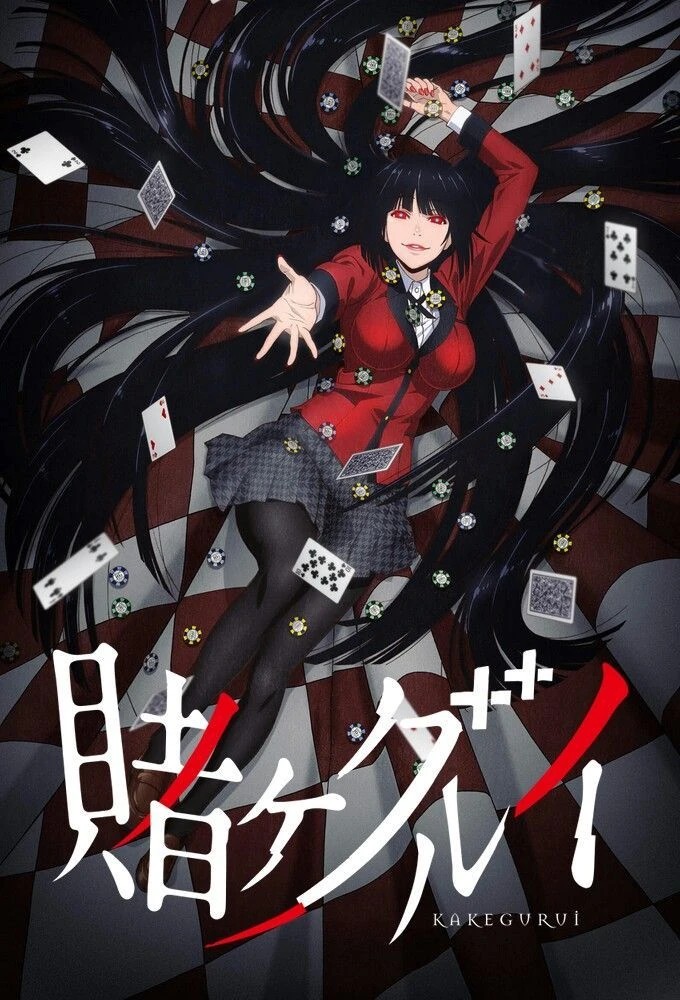
The modern wave of this genre expanded internationally over the next few years. A new title was launched in 2014. Kakegurui — Compulsive Gambler was created by writer Homura Kawamoto and illustrator Toru Naomura. Its serialization took place through Square Enix’s Gangan Joker, and then it had an anime version made by MAPPA, which ran from July to September 2017. Netflix streaming allowed viewers across the U.S. to watch the series. In contrast to other school ranking systems that use grades to determine student social standing, students at Hyakkaou Private Academy have their rankings determined based on the outcomes of bets.

What These Stories Get Right and Wrong
Probability is altered in fiction to create pace. Comeback victories are staged for dramatic effect at predictable times. Therefore, readers would not find much information regarding variance if these characters were used as instructional tools.
In addition to the psychological aspects of tilt (the state of being tilted or out of balance), the authors do a good job illustrating sunk cost reasoning (i.e., committing resources to a project simply because you’ve committed them) and the illusion of control (i.e., people believe they have more control over events than they actually do). The behaviors exhibited by both Kaiji and Yumeko Jabami in their respective stories represent identifiable patterns of behavior and are not merely plot devices. Additionally, Kakegurui portrays compulsive gambling as a characteristic that is observable in terms of its costs, which represents a more authentic portrayal than the glamorization that exists within many casino-based stories.
Why the Format Endures
A gamble is inherently cinematic. A fictional wager gives the scene a clear beginning, identifiable stakes, and a limited set of decisions before the outcome is revealed. Authors receive the tension associated with a fight scene without having to include one actual punch thrown during said fight scene. Readers also obtain a puzzle that they can try to solve before the reader sees how the main character solves it.
Gran Tesoro is a reminder to those familiar with One Piece that the franchise can dramatically shift formats without altering its unique voice. Similarly, for those interested in learning more about this larger category, Fukumoto’s work will remain foundational, as newer works demonstrate how far the format has evolved since a mahjong manga debuted in 1991.