
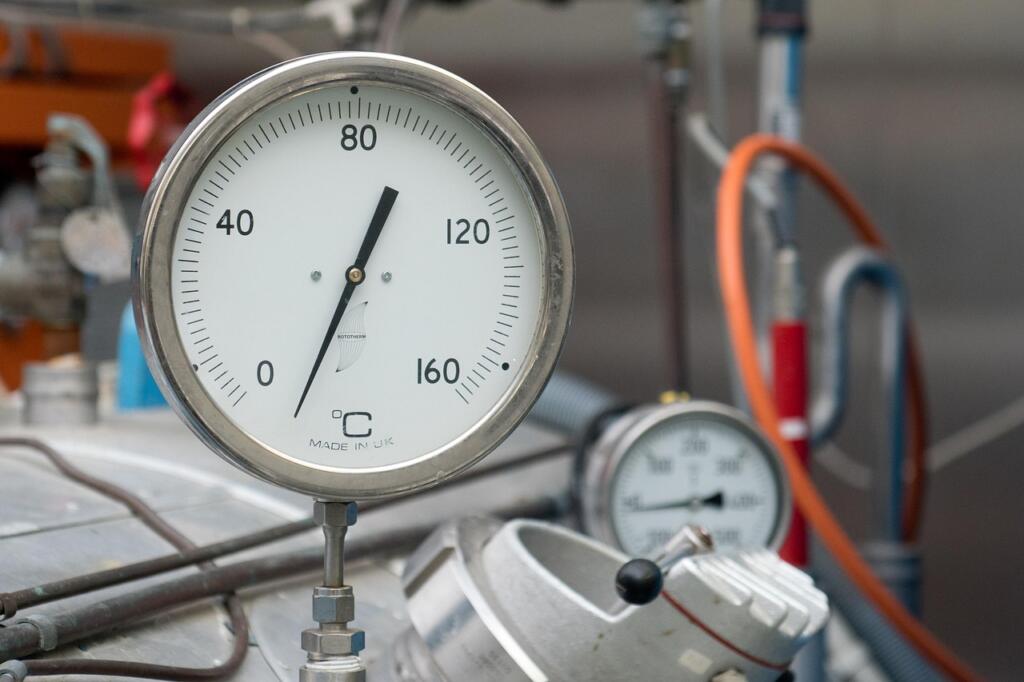
Quick Summary
- Accuracy and measurement range should match the application’s operating conditions.
- Material construction determines durability in harsh industrial environments.
- Response time impacts process control and operational efficiency.
- Installation compatibility reduces maintenance challenges and replacement costs.
- Calibration stability minimises measurement drift over time.
Smart monitoring capabilities are becoming increasingly valuable for modern facilities.
Whether you’re running a refinery, a pharmaceutical plant, a food processing line, or a power generation unit, accurate temperature readings are what keep everything running the way it should.
But picking the right temperature gauge? It’s not always simple. The market is packed with options, different specs, materials, mounting styles, and performance levels. A lot of buyers get drawn to price or basic functionality and miss the features that actually matter for long-term reliability. Here’s what to actually look for.
Features You Should Consider in a Temperature Gauge
Not every temperature gauge is built for the same job. Understanding the features that truly affect accuracy, durability, and performance can help you make a smarter investment.
1. Measurement Accuracy
Accuracy is usually the first thing engineers check. And it should be.
Even a small measurement error can cause real problems when temperature control directly affects product quality or equipment performance. In pharma, chemical processing, and food manufacturing, inaccurate readings can lead to production losses, compliance headaches, or safety issues you really don’t want.
When you’re evaluating a gauge, look at the accuracy class needed for your specific application. High-precision environments need tighter tolerances than general industrial processes. Also check whether stated accuracy holds across the entire operating range, not just under ideal lab conditions.
2. The Right Temperature Range
A gauge is only useful if it can actually handle your operating temperatures.
Pick something with the wrong range, and you’re looking at poor readability, a shorter lifespan, or readings you just can’t trust. Ideally, your normal operating temps should sit in the middle of the scale; that way, operators can spot variations and abnormal conditions quickly.
If your process temperatures fluctuate, account for both normal and worst-case scenarios. It’s also worth thinking ahead if your process might change down the line; choosing a wider range now can save you from an early replacement.
Steam distribution systems, for example, can spike well above standard operating conditions. Instruments selected without enough headroom tend to wear out fast or fail outright.
3. Durable Construction Materials
Industrial environments aren’t kind to instrumentation.
Moisture, chemicals, vibration, dust, and harsh weather can degrade a poorly built device faster than you’d expect. Material choice plays a big role in how long a gauge holds up. Stainless steel housings are a popular choice, with good corrosion resistance and solid mechanical strength.
A gauge in a petrochemical facility, for instance, needs to stand up to corrosive atmospheres while still giving consistent readings over long periods. Cheap construction simply doesn’t cut it there.
4. Fast and Stable Response Time
Temperature can change fast. If your gauge is slow to react, operators might miss process variations that matter, things that can affect safety or production quality before anyone has a chance to respond.
That said, overly sensitive instruments can produce unstable readings that cause unnecessary alarm. You want something that’s responsive without being jittery. The right balance depends on the specific dynamics of your process.
In a heat treatment furnace, for example, fast deviation detection lets operators correct things before material properties are affected. That kind of early response directly cuts down on scrap.
5. Mounting and Installation Flexibility
Installation requirements tend to get underestimated.
Different setups need different configurations: bottom-entry, back-entry, adjustable-angle, and so on. Space constraints, accessibility, and piping layouts all influence what’s actually practical at your site.
Choosing a gauge that fits your existing infrastructure saves time during installation and makes future maintenance much less of a headache. Maintenance teams especially appreciate standardised mounting configurations; replacements become a lot faster, and downtime stays low.
6. Resistance to Environmental Conditions
Vibration, pressure swings, humidity, dust, and mechanical shock, these are facts of life in most industrial facilities. They can quietly wreck measurement reliability if the instrument isn’t built for them.
Gauges designed for tough environments typically include protective features that hold up under these conditions. Equipment near rotating machinery, for example, is subject to constant vibration. Without adequate protection, internal components wear down, leading to inconsistent readings or, worse, total failure.
Don’t assume all gauges perform the same way under identical conditions. They don’t.
7. Compliance with Industry Standards
Regulatory requirements keep getting stricter across most sectors. That’s just the direction things are moving.
Compliance with recognised standards is a sign of consistent manufacturing quality, reliable performance, and compatibility with what the industry expects. It also simplifies audits and procurement evaluations; you’re not scrambling to justify the choice later.
When reviewing specs, check that the manufacturer follows relevant international standards and testing procedures. For procurement teams, standard compliance is often a meaningful benchmark when comparing products side by side.
8. Long-Term Calibration Stability
Getting the accuracy right out of the box matters. But keeping that accuracy over months and years? That’s often what separates a good purchase from a frustrating one.
Frequent recalibration drives up maintenance costs and can disrupt operations. Instruments with solid calibration stability reduce those lifecycle expenses and give you greater confidence in your readings day to day.
Facilities running hundreds of measurement points can see real savings when they pick instruments known for stability. It’s one of those decisions that pays off quietly over time.
9. Smart Monitoring and Digital Integration
Digital transformation is happening across industrial operations. Traditional instruments still have a place, but many facilities now want devices that can support broader monitoring strategies, data collection, remote visibility, and integration with plant management systems.
Not every application needs advanced connectivity. But if your facility has modernisation plans on the horizon, it’s worth asking whether the gauge you’re selecting today can support what you’ll need tomorrow.
Thinking a step ahead now reduces future upgrade costs and makes scaling a lot less painful.
Final Words
Picking the right industrial temperature gauge isn’t just about matching a spec on a datasheet. Accuracy, measurement range, material durability, environmental resistance, calibration stability, installation fit, and standards compliance all play a real role in how well a gauge performs over its working life.
As industrial processes demand greater precision, working with experienced manufacturers like Tempsens can help organisations access measurement solutions built to meet modern operational needs while supporting long-term efficiency and compliance goals.