
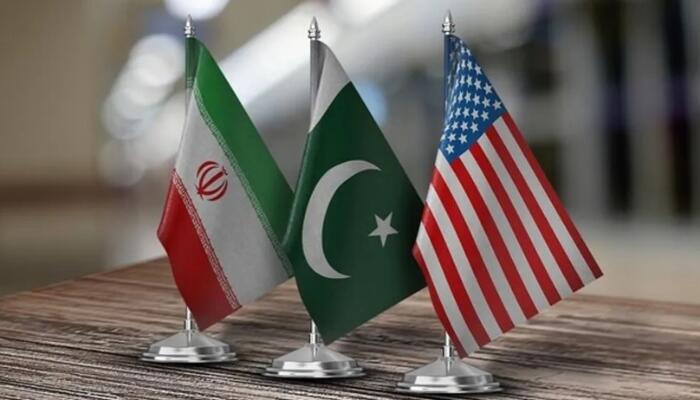
A dramatic shift in West Asia’s geopolitical landscape unfolded after United States President Donald Trump announced that a peace agreement with Iran had been finalised, marking what he described as an end to the conflict and a reset in regional stability.
Trump declared that the United States had authorised the withdrawal of its naval blockade and confirmed the reopening of the Strait of Hormuz, one of the world’s most strategically significant maritime corridors. In a series of posts on Truth Social, he announced, “The Deal with the Islamic Republic of Iran is now complete. Congratulations to all!”
He further added, “Ships of the World, start your engines. Let the oil flow!” framing the development as a breakthrough moment for global energy movement and regional peace. Trump also said the agreement would bring “Peace and Security to the whole Region” and indicated that the waterway would reopen after formal signing later this week. However, the White House has not yet released the text of the agreement.
India welcomes development, stresses stability and navigation freedom
Reacting to the announcement, Prime Minister Narendra Modi welcomed the understanding between the United States and Iran, underlining the broader humanitarian and economic toll of the conflict in West Asia.
In his post on X, Modi said he welcomed the agreement in light of “serious economic disruption across the world and loss of life in many countries.” He expressed hope that the implementation of the understanding would help restore peace and stability in the region.
Significantly, Modi stressed the importance of open maritime routes, stating that the agreement should ensure “freedom of navigation and commerce.” He added that India looks forward to continued deliberations on unresolved issues to achieve a “sustainable final agreement.”
Strait of Hormuz at the centre of global attention
The announcement places renewed global focus on the Strait of Hormuz, a narrow but critical passage through which a substantial portion of the world’s crude oil shipments pass.
Any disruption in this corridor has historically triggered sharp volatility in energy markets, with immediate consequences for inflation, supply chains and global trade stability. The US decision to lift its naval blockade and reopen the passage signals a notable de-escalation in military posture after sustained tensions in the region.
Implementation still uncertain despite political announcement
Despite the high-profile declarations, key procedural elements of the agreement remain unclear. The White House has not published the formal text, leaving unanswered questions over scope, enforcement mechanisms and binding commitments.
Iranian officials have indicated that implementation will begin only after a formal signing ceremony, suggesting that the understanding is still in a transitional phase rather than fully operational.
This gap between political announcement and legal execution has left global stakeholders closely watching developments, particularly given the strategic importance of the region and its energy routes.
Fragile breakthrough with global consequences
While Washington has projected the deal as a breakthrough for peace and security, its long-term impact will depend on execution, compliance and diplomatic follow-through. For now, attention remains fixed on West Asia, where the reopening of the Strait of Hormuz and the tentative US–Iran understanding could reshape energy flows, maritime security and the broader geopolitical balance.