
The Trinamool Congress (TMC) appears to be heading towards an unprecedented organisational and political crisis as a rebellion within its parliamentary ranks gathers momentum, threatening to deepen the turmoil that has already engulfed the party following its recent electoral setback in West Bengal.
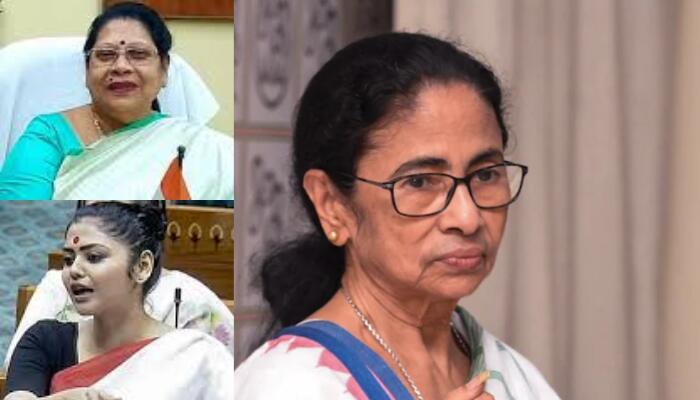
At the centre of the unfolding drama is senior MP Kakali Ghosh Dastidar, who has emerged as the principal face of the parliamentary revolt against Chief Minister Mamata Banerjee’s leadership. Rebel leaders claim that they have secured the support of 19 Members of Parliament. This figure would represent nearly two-thirds of the party’s Lok Sabha strength and could significantly alter the balance of power within the organisation.
The situation intensified after reports suggested that actor-turned-politician Sayoni Ghosh and veteran parliamentarian Mala Roy may have aligned themselves with the dissident camp. While neither leader has publicly confirmed the development, Dastidar responded with a cryptic “Yes” when asked whether the two MPs had joined the rebellion.
Rebellion Expands Beyond the Assembly
The parliamentary uprising follows an earlier revolt within the party’s legislative wing in West Bengal. Expelled MLA Ritabrata Banerjee had previously claimed that 58 TMC legislators had been recognised as part of an opposition grouping in the Assembly, signalling deep fractures within the party structure.
According to reports, a letter carrying the signatures of rebel MPs has already been submitted to the office of Lok Sabha Speaker Om Birla, although no formal acknowledgement has yet been made public.
The rebels have sought to distance themselves from suggestions that they intend to formally join the Bharatiya Janata Party. Dastidar has maintained that their objective is not to become BJP members but to support the BJP-led National Democratic Alliance.
On Monday, reports indicated that 20 of TMC’s 28 Lok Sabha MPs had informed the Speaker of their intention to sever ties with the TMC parliamentary party led by Abhishek Banerjee and align with the NDA. However, the complete list of MPs involved has not yet been officially disclosed.
Questions Over the Future of TMC’s Leadership Structure
The reported inclusion of Sayoni Ghosh has attracted particular attention given her proximity to both Mamata Banerjee and Abhishek Banerjee. Once regarded as one of the party’s most prominent young faces, Ghosh rose rapidly through TMC ranks after entering politics in 2021. Despite losing her Assembly election debut from Asansol South, she was entrusted with the leadership of the party’s youth wing and later won the prestigious Jadavpur Lok Sabha seat in 2024.
Mala Roy’s name is equally significant. A long-time political figure whose career has traversed both Congress and TMC, Roy has remained a prominent representative from Kolkata South and has historically been considered close to Mamata Banerjee.
A senior TMC leader aligned with the party leadership expressed surprise over the speculation, noting that both Ghosh and Roy had been entrusted with important organisational responsibilities even after signs of dissent emerged within the party.
Mahua Moitra Hits Back
TMC MP Mahua Moitra has strongly criticised the dissident faction, describing its members as “traitors” and challenging the legal basis of their move.
In a post on X, Moitra argued that even if the rebels succeeded in securing the support of 19 MPs, they could not create a separate parliamentary faction. Citing the Supreme Court’s 2023 judgment in the Subhash Desai case, she contended that the only legal route available would involve a merger with another political party supported by two-thirds of the parent organisation.
As uncertainty continues to surround the exact number of MPs backing the revolt, the crisis has exposed the most serious fault lines within the Trinamool Congress since its formation in 1998. For Mamata Banerjee, the challenge now extends beyond electoral recovery. It is increasingly becoming a battle to preserve the unity and identity of the party she built nearly three decades ago.