
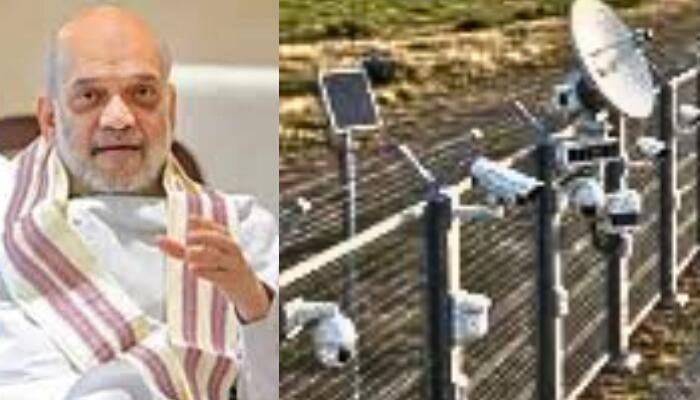
Union Home Minister Amit Shah delivered a firm message on border security and demographic change. He said, “The Centre will not tolerate demographic shifts in West Bengal, Tripura and Bihar. At the same time, he confirmed that the Smart Border project has reached its final stage and will soon move into a pilot rollout.”
Shah made these remarks while addressing personnel of the Border Security Force at the Lankamura Border Outpost in Tripura. He said the government continues to work to bridge gaps in India’s border security system. Moreover, he stressed the need to strengthen the protection of international borders through better coordination and planning.
In addition, Shah outlined a major policy step in border management. He said, “The Smart Border initiative will begin as a pilot project in seven to eight locations across the country. The Centre aims to test a more integrated and technology-driven security model before scaling it further.”
Smart Border project enters testing phase
Shah explained that the Smart Border concept has now entered its final stage of preparation. Therefore, the Centre will roll it out first on a pilot basis.
The new system will bring together advanced technology, local administration and border security forces under a single framework. As a result, the model aims to improve surveillance, strengthen coordination and reduce gaps in border management.
Furthermore, Shah emphasised that the goal is to build a faster and more responsive security grid along India’s international borders. The pilot phase will also test how effectively technology and ground forces can work together in real-time situations.
Firm message on demographic changes
At the same time, Shah issued a strong warning on demographic changes in border states. He said the Centre will not accept such shifts in West Bengal, Tripura and Bihar.
Importantly, he linked this issue to broader concerns about national security and border stability. In his remarks, he placed demographic developments within the larger framework of safeguarding India’s frontiers.
Meanwhile, he reiterated that the government remains committed to strengthening border security. He also said it is actively working to address existing gaps in the system in a structured and continuous manner.
Focus on stronger border management
Shah also highlighted the role of the Border Security Force in securing India’s international boundaries. In this context, he called for stronger coordination between technology, administration and field-level personnel.
Accordingly, the Smart Border project aims to integrate these elements into a unified operational system. This integration, he said, will improve efficiency, enhance response time and modernise border management.
Overall, the Tripura address reflected a broader shift in the Centre’s approach. As the Smart Border project moves towards its pilot phase, the government is combining technological modernisation with a firm stance on demographic changes in sensitive border states.