
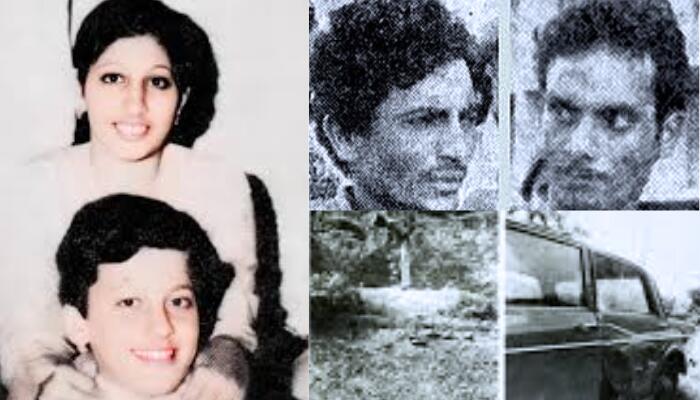
Few criminal cases in modern India continue to evoke the same sense of horror as the abduction and murder of Geeta and Sanjay Chopra in 1978. Nearly five decades later, Prime Video’s Raakh has returned the Ranga–Billa case to the national conversation, reviving memories of a crime that shocked the country, scarred a generation, and left a lasting imprint on India’s criminal justice system.
Though fictionalised, the series draws unmistakable inspiration from one of the most infamous criminal cases in independent India. Its significance extends beyond the brutality of the crime itself. The case became a defining moment in public discourse on urban safety, policing, and the limits of judicial leniency in cases involving extreme violence.
Geeta Chopra, 16, and her younger brother Sanjay, 14, were the children of Captain Madan Mohan Chopra of the Indian Navy. The family lived in the Officers’ Enclave at Dhaula Kuan, New Delhi. On the evening of August 26, 1978, the siblings left home to participate in an All India Radio youth programme. Their parents expected an ordinary evening. The children would attend the programme, their family would listen to the broadcast at home, and their father would collect them afterwards. Instead, the journey ended in tragedy.
When the scheduled broadcast began, the Chopra family was confronted with an unsettling reality. The voices on air were not those of their children. Concern quickly turned into panic. Captain Chopra searched hospitals, police stations and the All India Radio premises before formally reporting the siblings missing later that night. Unbeknownst to the family, the crime had already unfolded.
The perpetrators, Kuljeet Singh alias Ranga and Jasbir Singh alias Billa, were petty criminals who had arrived in Delhi after previous criminal activity in Mumbai. Travelling in a Fiat Padmini bearing a falsified registration number, they were searching for potential kidnapping targets. Near Dhaula Kuan, they persuaded the Chopra siblings to enter their vehicle. Witnesses later reported seeing signs of distress and attempts by the children to seek assistance. Some members of the public attempted to intervene, while others alerted authorities. Yet the vehicle disappeared before any meaningful action could be taken.
Subsequent judicial records noted that the vehicle had been modified in a manner that made escape exceedingly difficult once passengers were inside. The children were eventually driven towards the Ridge and Delhi Cantonment area, where the crime took a horrifying turn.
Upon discovering that the children were the offspring of a government officer of modest means, the accused abandoned any realistic expectation of securing a substantial ransom. Court records repeatedly highlighted the extraordinary courage displayed by both victims during their captivity. Rather than submit to their captors, they resisted.
Sanjay fought his attackers despite overwhelming odds and sustained multiple injuries in the process. Geeta endured immense suffering. Trial proceedings and judicial narration recorded that she was subjected to sexual violence before both siblings were murdered. Their bodies were later abandoned near Upper Ridge Road and discovered on August 28, 1978.
Few crimes have so profoundly unsettled the national conscience. The murders dominated headlines across the country, triggered widespread student protests, and generated intense debate in Parliament and beyond. Across Delhi, a deep sense of insecurity took hold. Parents questioned whether the capital remained safe for their children, while public scrutiny increasingly focused on the adequacy of policing and emergency response systems.
The case also raised enduring questions about law enforcement. Contemporary reports and subsequent judicial observations pointed to delays in the initial response despite witness alerts and reports of suspicious activity. The possibility that earlier intervention might have altered the outcome became a matter of public debate and institutional introspection.
The manhunt concluded on September 8, 1978, when Ranga and Billa were identified aboard the Kalka Mail by security personnel. Investigators assembled a substantial evidentiary record comprising forensic findings, witness testimony, medical documentation and material evidence, all of which proved central to securing convictions.
In 1979, the accused were convicted on charges that included murder, kidnapping, unlawful confinement, kidnapping with intent to cause harm, and other related offences. The Delhi High Court affirmed the death sentences imposed by the trial court, a decision subsequently upheld by the Supreme Court. In strongly worded observations, the apex court characterised the offenders as a menace to social order and emphasised that crimes of such exceptional brutality warranted the severest punishment available under law.
The case would go on to acquire significance far beyond the convictions themselves. It became a prominent reference point in discussions surrounding India’s “rarest of rare” doctrine, a principle that governs the imposition of capital punishment in the most exceptional cases. Legal scholars, courts and commentators continue to cite the case while examining the balance between deterrence, retribution, proportionality and constitutional safeguards in death penalty jurisprudence.
However, contrary to popular belief, the case did not directly result in specific child protection legislation. Its enduring influence lies instead in sentencing jurisprudence, judicial reasoning and broader debates concerning the administration of criminal justice in cases involving extreme violence.
Ranga and Billa’s mercy petitions were eventually rejected, and both men were executed at Tihar Jail on January 31, 1982.
The nation later honoured Geeta and Sanjay Chopra with the Kirti Chakra posthumously. In their memory, the Geeta Chopra Award and the Sanjay Chopra Award continue to recognise acts of exceptional bravery by children under the age of 16, ensuring that their legacy is remembered not solely through the tragedy they endured, but also through the courage they displayed.
Nearly five decades after the crime, Raakh has returned the case to public discussion. Yet beyond the dramatisation lies a stark historical reality. Long before the age of social media outrage and round-the-clock news coverage, the murders of Geeta and Sanjay Chopra shook India to its core. The names Ranga and Billa have since become synonymous with one of the darkest chapters in Delhi’s criminal history, while the courage of two young siblings continues to endure in public memory and in India’s evolving legal discourse on the gravest crimes known to society.