
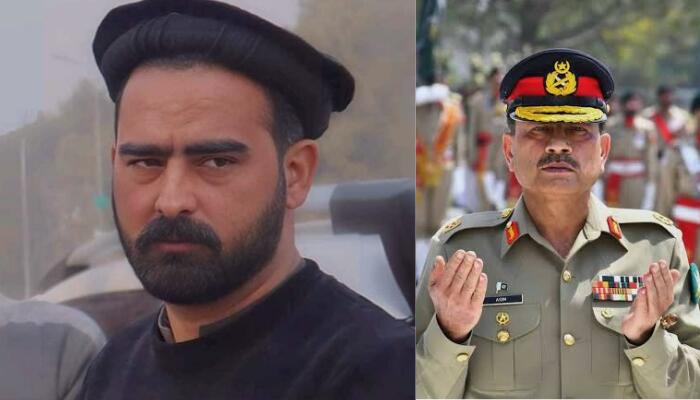
At a recent gathering in Rawalakot, leaders of the Jammu Kashmir Joint Awami Action Committee (JAAC) and the Awami Action Committee issued some of their strongest statements yet against Islamabad and its military leadership. The tone and content of their remarks reflected a clear shift from economic grievance to political challenge.
What began as a cost-of-living protest is increasingly being reframed as a wider question of governance, representation and control over resources in the region.
From Price Shock to Political Defiance
The roots of the current unrest lie in mass protests that spread across PoK during 2024 and 2025. At the time, demonstrators mobilised against high electricity bills, rising food prices and policies they described as discriminatory economic measures imposed by Islamabad.
The pressure eventually forced Pakistan’s government to introduce relief measures, including reductions in electricity tariffs and wheat subsidies. However, protest leaders maintained that these steps failed to address deeper structural concerns related to political authority and economic decision-making.
Over time, the movement’s language began to evolve. Economic demands were increasingly joined by questions over who controls the region’s resources, who benefits from its strategic geography and how much agency local communities actually possess.
‘Pakistan Military Is Stopping Our Food and Rations’
JAAC leader Sardar Aman emerged as one of the most prominent voices at the Rawalakot gathering. He accused Pakistan’s military establishment of deliberately restricting supplies and applying economic pressure on local populations.
“Pakistan military is stopping our food and rations,” Aman said, alleging that authorities were attempting to weaken the movement by controlling access to essential goods.
He also rejected claims that the agitation opposed government subsidies, arguing that the demand was for fairness, dignity and economic justice rather than the withdrawal of support.
Direct Challenge to Islamabad’s Security Narrative
In one of the most politically sensitive remarks, Aman questioned Pakistan’s long-standing justification for its military presence in the region.
“Defending against India is our issue, not your business,” he said, asserting that decisions related to security and governance should rest with the people of PoK.
He further accused Pakistan of exploiting the region’s natural wealth, alleging that it was “looting our waters and resources” while failing to ensure meaningful development for local communities.
The protest leader also claimed that activists were being increasingly labelled as extremists and terrorists, a charge he said was being used to suppress peaceful political dissent.
Trade Through India Emerges as Symbolic Demand
One of the most striking moments of the gathering came when Aman raised the possibility of alternative trade routes if Pakistan failed to ensure economic access.
Declaring that “all trade routes will open soon, either from Pakistan or India,” he highlighted growing frustration over economic isolation and limited commercial opportunities.
The reference to India is significant, as cross-Line of Control trade between Jammu and Kashmir and PoK was suspended years ago, cutting off an important economic channel for local communities.
A Narrative Under Strain in Islamabad
The developments in PoK extend far beyond a conventional protest over inflation. They intersect directly with Pakistan’s long-standing international position on Kashmir.
For decades, Islamabad has projected itself as the voice of Kashmiri self-determination. However, voices emerging from within PoK are increasingly questioning whether that claim reflects the reality on the ground.
By challenging Pakistan’s military role, alleging resource exploitation and demanding greater economic autonomy, protest leaders are pushing the conversation into politically sensitive territory.
Aman concluded by stating that the movement would continue and eventually advance towards Muzaffarabad, the administrative capital of PoK.
Whether the agitation sustains its momentum remains uncertain. What is already evident is that a protest that began over electricity tariffs and wheat prices has evolved into a broader challenge to Pakistan’s authority and its Kashmir narrative, one that is becoming increasingly difficult for Islamabad to ignore.