
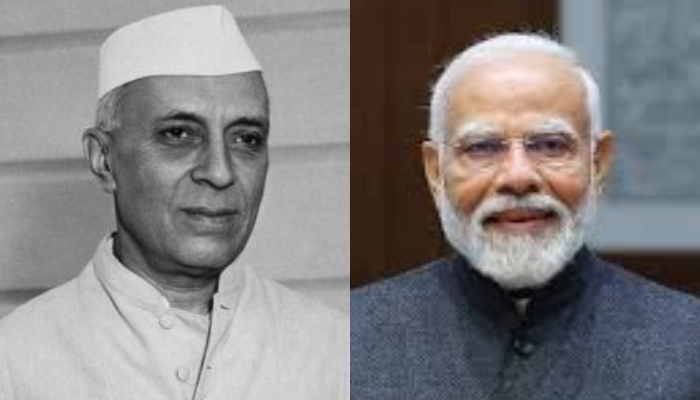
With 4,398 consecutive days in office as of 9 June 2026, Modi has moved ahead of Nehru’s 4,397-day tenure following his electoral mandate in 1952. While the numerical difference is only a single day, the milestone carries considerable historical significance, linking two defining eras of Indian politics separated by more than seven decades.
Having first taken oath on 26 May 2014, Modi has now spent more than 12 years as Prime Minister, leading governments formed after three successive Lok Sabha victories in 2014, 2019 and 2024. His latest term began on 9 June 2024 when he was sworn in for a third consecutive tenure at the head of the National Democratic Alliance (NDA).
Three Consecutive Mandates in a Changing Political Landscape
The achievement places Modi in an exclusive category of Indian leaders. Apart from Nehru, no other Prime Minister has secured three consecutive electoral mandates to lead the government at the Centre.
In a political system that has witnessed coalition instability, shifting alliances and frequent electoral realignments, the continuity of leadership across three successive general elections stands out as a rare phenomenon. The milestone reflects not only political longevity but also sustained electoral appeal across changing demographic, social and economic realities.
Modi also remains the first Prime Minister born after India attained Independence. Born on 17 September 1950, he represents a generation distinct from the leaders who shaped the country during its formative decades after 1947.
Record-Setting Executive Career
The latest achievement comes only months after another major milestone in Modi’s political career.
In March 2026, his combined tenure as an elected head of government crossed 8,931 days, including his years as Chief Minister of Gujarat and Prime Minister of India. That figure enabled him to surpass former Sikkim Chief Minister Pawan Kumar Chamling, who previously held the record for the longest continuous service in elected executive office in the country.
The distinction highlights the extraordinary length of Modi’s uninterrupted presence in executive governance, spanning both state and national administrations.
NDA Expected to Mark the Occasion
The political significance of the milestone is expected to be reflected at the NDA meeting scheduled for 10 June 2026.
Chief Ministers from NDA-ruled states are set to participate in the gathering, where Andhra Pradesh Chief Minister and Telugu Desam Party chief N. Chandrababu Naidu is expected to move a resolution recognising Modi’s 12 years in office and highlighting key governance achievements during the period.
The move is likely to receive backing from alliance partners and serve as a demonstration of unity within the ruling coalition at a moment of considerable symbolic importance.
A New Benchmark in Democratic Politics
Modi’s record establishes a new benchmark in the country’s democratic journey and reflects the transformation of India’s political landscape since Independence.
More than a statistical achievement, the milestone reflects sustained public trust, repeated electoral endorsement and an unparalleled continuity of leadership in contemporary India. Having secured three successive mandates and established new records in public office, Modi’s tenure has now entered a chapter that places him at the forefront of India’s democratic and political history.