
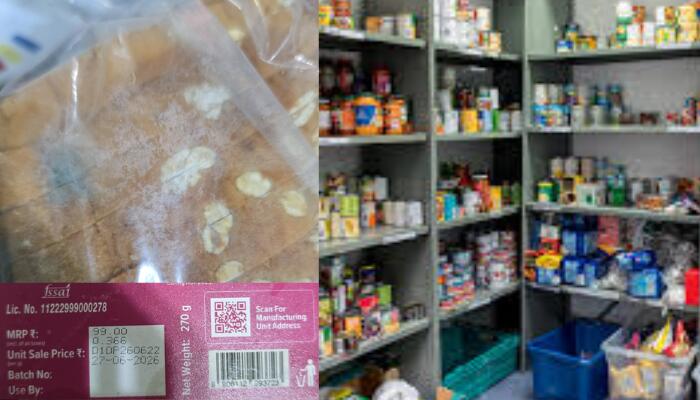
India’s quick commerce boom has fundamentally changed the way consumers shop for groceries. Speed has become the industry’s biggest selling point, with platforms competing to deliver everyday essentials in a matter of minutes. Yet a recent viral complaint has once again highlighted an uncomfortable reality: convenience loses its value the moment consumer safety is compromised.
The debate was triggered after social media user Ashwani Verma reported that a packet of protein bread ordered through Swiggy Instamart arrived with visible black mould despite being close to its expiry date. Sharing photographs of the product on X, Verma termed the incident a serious threat to consumer health rather than a routine delivery error.
Tagging Swiggy Instamart, Swiggy Cares, the Food Safety and Standards Authority of India (FSSAI), and the government’s consumer awareness initiative, Jago Grahak Jago, he sought an immediate investigation and demanded accountability. He also urged consumers to inspect every packaged food item carefully before consumption.
A Single Complaint, A Larger Question
The incident has reignited concerns that extend far beyond one grocery order. It has once again placed the spotlight on quality assurance practices within India’s rapidly expanding quick commerce ecosystem.
The responsibility of these platforms does not end with delivering products on time. It extends to ensuring that every food item reaching a consumer’s doorstep is safe for consumption. Products approaching their expiry date require stricter monitoring, while any visible sign of spoilage should immediately remove them from the supply chain.
If such lapses occur, they raise broader questions about inventory management, storage conditions, warehouse inspections and the effectiveness of quality control systems operating before products are dispatched.
Public Health Is Not Negotiable
Food safety cannot become collateral damage in the pursuit of faster deliveries. Contaminated food products have the potential to cause serious health complications, particularly among children, elderly citizens, and individuals with weakened immunity. Even an isolated incident, if substantiated, is sufficient to erode consumer confidence in digital grocery platforms.
The episode also reinforces the importance of robust regulatory oversight. Food delivery platforms, suppliers, and warehouse operators share a collective responsibility to uphold food safety standards. Whenever allegations involving unsafe food products emerge, they warrant prompt scrutiny by the concerned authorities to protect consumer interests and maintain public confidence.
At the time of reporting, no official response from Swiggy regarding Verma’s allegation had been publicly issued. The post triggered widespread discussion, with many users calling for stricter quality checks across the quick commerce industry.
India’s quick commerce sector has earned consumer trust by redefining convenience. Preserving that trust, however, demands more than rapid logistics. It requires uncompromising adherence to food safety standards and a zero-tolerance approach towards negligence. Fast deliveries may define the business model, but public health must remain its first priority.