
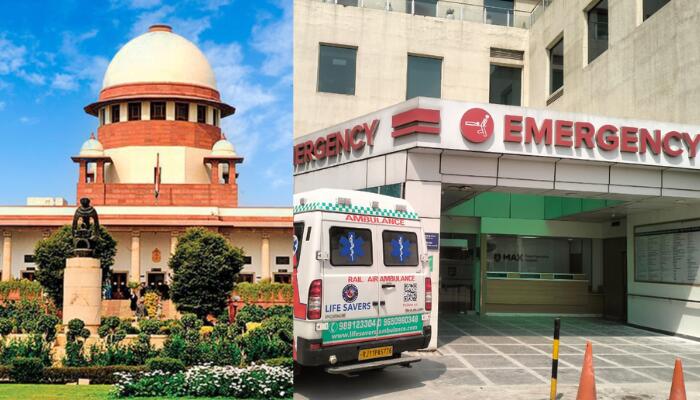
The Supreme Court has ruled that access to trauma care is an intrinsic part of the Right to Life under Article 21 of the Constitution. It has ordered a nationwide overhaul of India’s emergency medical response system. The judgment applies to all 36 states and Union Territories.
The ruling was delivered in SaveLIFE Foundation & Anr. vs Union of India & Ors on May 26. It extends constitutional protection to all forms of trauma, including road accidents, burns, falls, drowning, fires, explosions, industrial accidents and disaster-related injuries. The court has placed emergency response squarely within the state’s constitutional duty.
The decision comes against the backdrop of a heavy trauma burden. NCRB data placed before the court shows nearly 4.67 lakh accidental deaths annually. Road crashes account for about 1.77 lakh deaths. The court noted that many of these deaths are preventable with timely medical intervention.
The Law Commission’s 201st Report found that nearly half of road accident fatalities could be avoided if care arrives quickly. The NITI Aayog and AIIMS Emergency and Injury Care Report (2021) stated that delays contribute to at least 30 per cent of trauma deaths. Despite this, the court observed that India still lacks a unified emergency care system.
Fragmented emergency system under scrutiny
The bench examined responses from 34 states and Union Territories. It found a fragmented structure marked by multiple helplines, uneven ambulance standards and weak trauma data systems. The court said this inconsistency results in avoidable loss of lives.
Single emergency number 112 within three months
The court ordered the integration of all emergency helplines into a single number, 112. The deadline is three months. The numbers 100, 101, 102, 108, 1033 and 1091 must be merged into this system. States must also run public awareness campaigns to ensure smooth adoption.
Ambulance standards and Good Samaritan safeguards
All ambulances must comply with the National Ambulance Code. They must also install GPS tracking and integrate with the 112 network. States must audit response time, equipment and patient outcomes regularly.
The court directed states to create grievance redress systems for Good Samaritans. It noted that fear of police questioning still discourages people from helping accident victims, despite existing legal protection under the Motor Vehicles Act.
States must adopt the standardised Emergency Medical Technician curriculum within three months. The court said trained personnel remain essential for effective emergency response.
Trauma registries, hospital grading and cashless treatment
The court ordered the creation of state trauma registries linked to a national database. This is intended to improve planning and accountability. It also directed hospitals to be graded based on trauma-care capacity.
This framework will apply across national highways, state roads, district roads and urban areas. The court also ordered full implementation of the PM RAHAT cashless treatment scheme within eight weeks. It warned that non-compliance would breach the Motor Vehicles Act.
Chief secretaries of all states and Union Territories must submit compliance reports. The Supreme Court will review the matter again in four months. The ruling establishes enforceable constitutional standards for emergency medical care in India for the first time.