
A gradual shift is unfolding in West Asia’s diplomatic landscape. Global powers are reassessing how mediation roles are defined and who holds long-term credibility in regional engagement. Russia, the United States, and Gulf stakeholders are shaping this recalibration in different ways. Pakistan’s facilitative role is under renewed scrutiny. India’s institutional engagement is expanding in contrast.
Russia redraws lines between facilitation and mediation
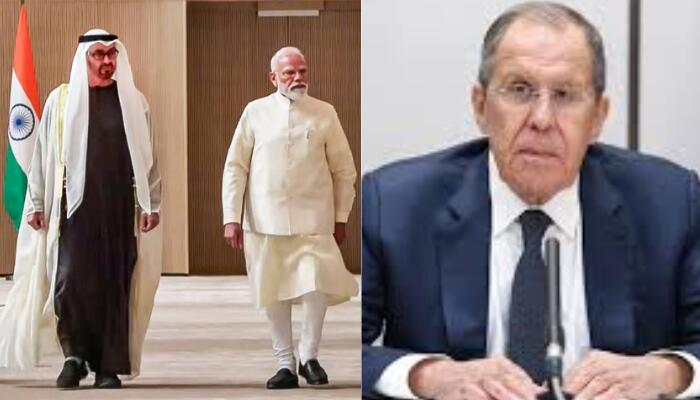
Russian Foreign Minister Sergey Lavrov spoke in Delhi and made a clear distinction between facilitation and structured mediation.
He said, “Pakistan may continue to facilitate communication between regional actors. However, he stressed that mediation requires institutional continuity, policy depth, and long-term diplomatic consistency.”
Lavrov’s remarks align with Russia’s broader emphasis on structured multilateral engagement. This approach appears within discussions linked to platforms such as BRICS, where diplomatic influence increasingly depends on institutional strength rather than temporary engagement.
Russia’s assessment places greater weight on India’s external engagement model. India maintains sustained diplomatic outreach across multiple regions and partners. This continuity, according to Moscow’s framing, strengthens its role in long-term diplomatic processes.
Pakistan continues to define its position as a facilitator. Its approach relies on geographic proximity and established communication channels with multiple regional actors. This flexibility allows access across divides. However, it also exposes Pakistan to changing external interpretations during periods of geopolitical tension.
Washington scrutiny adds pressure on Pakistan’s position
Pakistan’s diplomatic posture has also drawn renewed attention in Washington.
Reports linked to Iranian military aircraft allegedly taking temporary shelter at Nur Khan Air Base have re-entered policy discussions. These reports have increased sensitivity around Pakistan’s regional balancing strategy. They have also intensified debate over its ability to maintain neutrality across overlapping security theatres.
US Senator Lindsey Graham has publicly raised concerns about Pakistan’s reliability as a neutral intermediary in sensitive diplomatic situations. He questioned its consistency in managing competing regional relationships.
These comments do not represent an official shift in United States policy. However, they reflect a growing strand of scepticism within sections of the American strategic establishment.
Pakistan operates in a complex regional environment. It engages simultaneously with Iran, the Gulf states, and the United States. This positioning creates structural pressure and often leads to competing interpretations of its actions.
Modi’s UAE visit highlights structured India–Gulf engagement
In contrast, Prime Minister Narendra Modi’s visit to Abu Dhabi projected a highly structured and forward-looking partnership between India and the United Arab Emirates.
The visit carried strong ceremonial weight. The UAE extended a formal guard of honour. UAE Air Force aircraft escorted the Prime Minister’s flight, reflecting the importance attached to the engagement at the highest level.
Substantive outcomes covered energy, defence, and emerging technology cooperation. Both sides agreed to deepen collaboration in strategic petroleum reserves and liquefied petroleum gas supply. Defence cooperation also formed a key part of the discussions.
The UAE announced a reported $5 billion investment commitment. This added significant economic depth to the bilateral relationship.
Both countries also adopted a Joint Strategic Action Plan for 2025–2029. The plan focuses on semiconductors, green hydrogen, and maritime security. These sectors reflect long-term strategic priorities rather than short-term cooperation.
Maritime stability also featured prominently in discussions. Both sides highlighted the Strait of Hormuz. They recognised its importance for global energy flows and international trade routes.
Shifting diplomatic perceptions in West Asia
Within broader multilateral platforms, including BRICS-linked discussions, Russia’s framing reflects a preference for structured and long-term diplomatic engagement. This approach emphasizes continuity, institutional capacity, and sustained global participation.
India’s position benefits from this environment. Its engagement in West Asia now includes energy security, investment flows, and expanding defence partnerships. These elements strengthen its long-term diplomatic footprint.
Pakistan remains an active participant in regional diplomacy. It continues to function as a facilitator across certain communication channels. However, external assessments now place greater weight on institutional depth and consistency when evaluating influence.
West Asia is not witnessing a sudden geopolitical realignment. Instead, it is experiencing a gradual shift in how diplomatic credibility is measured. Geography alone is no longer sufficient. Institutional strength and sustained engagement now define long-term strategic standing.