
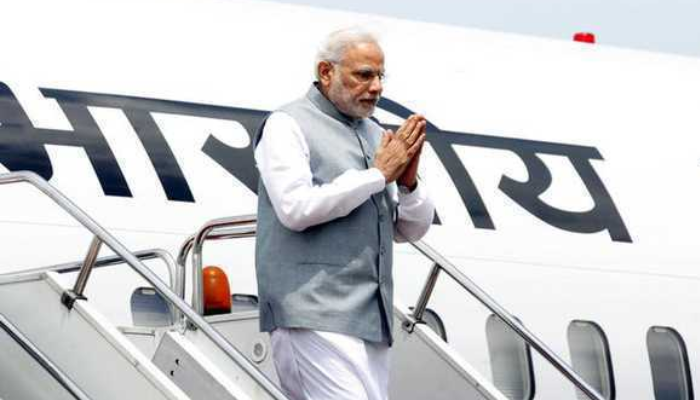
Prime Minister Narendra Modi will visit five countries from May 15 to May 20. The tour includes the United Arab Emirates, the Netherlands, Sweden, Norway and Italy. It comes at a time of rising global oil prices. The Middle East crisis has added pressure on India’s foreign exchange reserves. Energy security now sits at the centre of India’s diplomatic agenda.
The Ministry of External Affairs has described the visit as a dual-focused engagement. It aims to stabilise energy ties in the Gulf. It also seeks to expand trade and technology partnerships in Europe. The timing follows domestic calls for fuel conservation and reduced imports. The government has warned of global economic strain driven by energy volatility.
UAE: Energy security takes priority
The visit begins in the United Arab Emirates on May 15. Modi will meet President Mohamed bin Zayed Al Nahyan. Energy cooperation will dominate the talks. Regional stability will also be discussed.
The UAE remains one of India’s most important energy suppliers. It provides crude oil, LNG and LPG under long-term agreements. The partnership has expanded beyond energy. It now includes investment, infrastructure and renewable energy cooperation.
More than 4.5 million Indians live in the UAE. This gives the relationship a strong human dimension. It also strengthens long-term political and economic ties.
Europe focus on trade and technology
After the UAE, Modi will travel across four European countries. The focus will be on trade, investment and innovation. The visit builds on the India-EU Free Trade Agreement framework.
The Netherlands will see discussions on semiconductors, green hydrogen and defence cooperation. It remains one of India’s key investment partners in Europe.
Sweden will focus on artificial intelligence and clean energy. Both sides are also expected to review technology and defence collaboration.
Nordic engagement gains strategic weight
Norway marks a historic moment in the visit. It is the first visit by an Indian Prime Minister in 43 years. Modi will also attend the India-Nordic Summit in Oslo. Leaders from Denmark, Finland, Iceland, Sweden and Norway will participate.
The summit will focus on sustainability, renewable energy and the blue economy. Arctic cooperation and defence technology will also be discussed.
Italy to conclude the tour
The final stop is Italy. Modi will meet Prime Minister Giorgia Meloni and President Sergio Mattarella. The talks will focus on implementing the Joint Strategic Action Plan 2025–2029.
India and Italy are expanding cooperation in defence, clean energy and technology. Trade and investment will also feature prominently.
Overall, the tour reflects a clear shift in India’s external strategy. Immediate energy security concerns are being addressed alongside long-term economic and technological ambitions.