
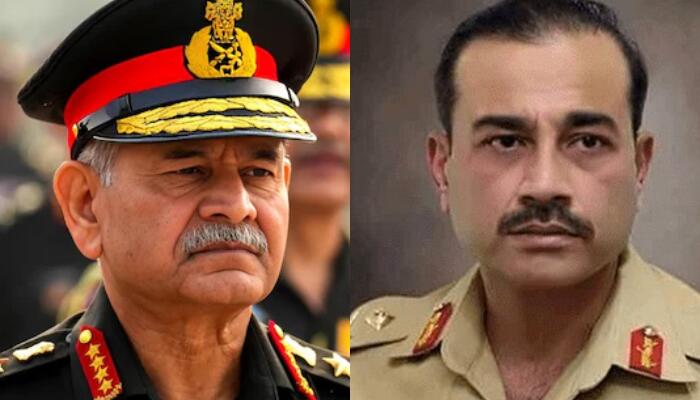
He made the remarks during an interactive session at the Manekshaw Centre in New Delhi. Notably, he was responding to a question on how India would react if situations similar to those preceding Operation Sindoor arise again.
“If it continues to harbour terrorists and operate against India, then they have to decide whether they want to be part of geography or history or not,” he said.
Overall, his statement reinforced India’s hardened security posture. At the same time, it underscored continuity in India’s strategic messaging after Operation Sindoor.
Operation Sindoor as the Strategic Backdrop
Importantly, the Army Chief’s remarks come just over a week after India marked the first anniversary of Operation Sindoor.
India launched the operation on May 7 last year in response to the Pahalgam terror attack on April 22. Subsequently, Indian forces carried out precision strikes on terror launchpads and infrastructure in Pakistan and Pakistan-occupied Kashmir.
In retaliation, Pakistan launched counter-offensives that lasted nearly four days. Meanwhile, India responded with its own counter-strikes under Operation Sindoor, escalating the confrontation between the two nuclear-armed neighbours.
Eventually, the military standoff lasted around 88 hours. Both sides agreed to a ceasefire on May 10. According to the Indian Army, Pakistan’s Director General of Military Operations initiated contact and requested de-escalation.
Pakistan Revives Dialogue Signals
Meanwhile, the Army Chief’s warning comes at a time when Pakistan has once again signalled interest in dialogue with India.
Pakistan recently welcomed remarks from within India that supported keeping communication channels open. In particular, former Army Chief General MM Naravane backed RSS leader Dattatreya Hosabale’s position that dialogue should remain an option, provided national security is not compromised.
Additionally, Hosabale emphasised that engagement must not come at the cost of India’s self-respect or security concerns.
Reacting to this, Pakistan’s foreign office spokesperson Tahir Andrabi called such internal Indian voices a “positive development”. He further said Pakistan hoped “sanity will prevail in India” and indicated that Islamabad would watch for any official response from New Delhi.
India Reasserts Strategic Red Lines
However, India’s strategic position remains unchanged.
Defence Minister Rajnath Singh had earlier warned Pakistan over the Sir Creek region. He stated that any attempt to alter the status quo would “change history and geography”.
Taken together, these statements reflect a consistent approach from India’s security establishment. On the one hand, dialogue is not formally ruled out. On the other hand, it is clearly separated from the issue of terrorism.
Ultimately, General Dwivedi’s remarks reinforce this doctrine. They underline that cross-border terrorism remains the decisive factor shaping India’s future engagement with Pakistan.