
World Book Day and Copyright Day 2026 are being observed on April 23 across more than 100 countries. UNESCO established the observance in 1995. Since then, it has consistently brought together authors, publishers, libraries, schools, and readers. Together, they promote reading and protect intellectual creation.
Importantly, the day reinforces one key idea. Books continue to shape how societies think and imagine. Moreover, they remain central to cultural memory, even as digital media expands rapidly.
Why April 23 carries literary significance
April 23 holds symbolic weight in global literature. It marks the death anniversaries of William Shakespeare, Miguel de Cervantes and Inca Garcilaso de la Vega. Consequently, the date connects major literary traditions across continents.
In addition, writers such as Vladimir Nabokov and Halldor Laxness are also linked to this date. As a result, its literary significance extends beyond a single region or tradition.
The origins trace back to Spain in the 1920s. At that time, people exchanged books and roses to celebrate knowledge and affection. Later, UNESCO formalised this tradition into a global observance. Therefore, it became a structured initiative focused on literacy and copyright protection.
Rabat 2026 and the multilingual shift
In 2026, Rabat in Morocco serves as the UNESCO World Book Capital. The city is actively expanding access to books. It is also strengthening publishing systems. Meanwhile, it promotes reading across all age groups.
Notably, this year’s focus centres on North African and Arabic literature. At the same time, UNESCO has placed multilingualism at the core of its theme. The objective is clear. It aims to expand access to knowledge across languages and reduce linguistic barriers.
In this context, India fits naturally into the global framework. It already operates within a deeply multilingual ecosystem. For instance, Hindi, Tamil, Bengali, Urdu, and Sanskrit coexist within its literary landscape. Therefore, India reflects multilingualism not as a policy, but as a lived cultural reality.
India’s literary journey across time
India’s literary tradition stretches back to ancient manuscript cultures. Initially, knowledge was preserved on palm leaves and birch bark. Simultaneously, oral storytelling played a central role in transmitting ideas across generations.
Over time, foundational texts such as the Vedas, Upanishads, and epics like the Mahabharata and Ramayana shaped its literary identity. Together, they form one of the world’s oldest continuous knowledge systems.
Subsequently, the arrival of the printing press during the colonial period transformed access to written material. As a result, regional publishing networks expanded significantly.
Gradually, cities such as Kolkata, Mumbai, and Chennai emerged as major literary centres. They developed strong ecosystems of writing, publishing, and intellectual exchange. Consequently, India’s literary infrastructure became both diverse and regionally rooted.
Today, India stands among the world’s largest publishing markets. It produces books across multiple languages. Moreover, its reading culture reflects both scale and cultural diversity.
Reading in a fast-changing world
Meanwhile, World Book Day continues to stress the importance of reading in a digital-first environment. Books encourage sustained attention. They also support critical thinking and deeper reflection.
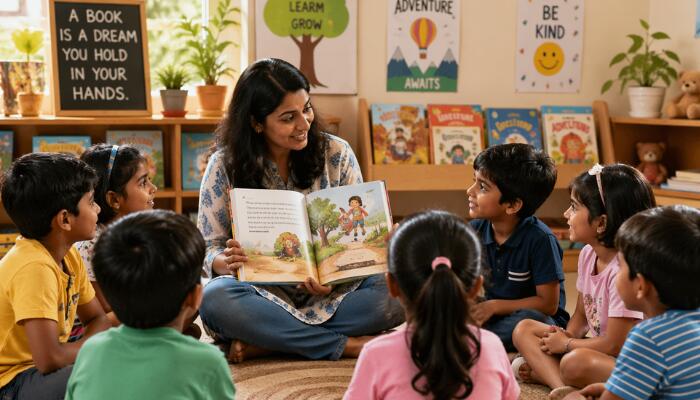
Across countries, the day is marked through book fairs, storytelling sessions, and author interactions. In addition, schools organise reading activities. Libraries, meanwhile, conduct donation drives and literacy programmes.
As a result, the observance functions not only as a celebration but also as an outreach.
A growing global literary ecosystem
Globally, an estimated 150 to 170 million unique books exist. In addition, around 2.2 million new titles are published each year. Reading communities continue to expand across both physical and digital platforms.
Notably, the Diamond Sutra, dated 868 CE, remains the oldest known printed book. It is preserved in the British Library.
From ancient manuscripts to modern publishing systems, books continue to carry knowledge forward. Ultimately, they preserve memory while also expanding imagination.
Final takeaway
In conclusion, World Book Day 2026 reinforces a simple but powerful truth. Books remain structurally important to human knowledge systems. At the same time, UNESCO’s multilingual push reflects the need for wider access. Meanwhile, India’s long literary continuum demonstrates how deeply reading is embedded in cultural life. Across languages and centuries, books continue to connect societies in ways no other medium fully replicates.