
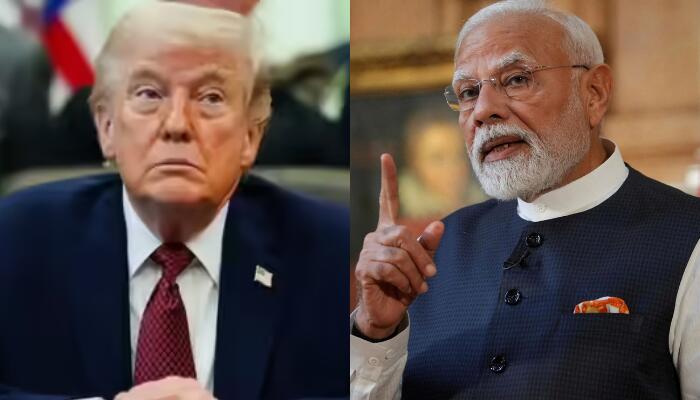
US President Donald Trump has found himself at the centre of a diplomatic storm after reposting inflammatory remarks targeting India. The post prompted a sharp response from New Delhi and a hurried clarification from Washington. Iran also joined the backlash with a pointed public taunt.
The controversy erupted after Trump shared content from conservative commentator Michael Savage. In the podcast, Savage attacked America’s birthright citizenship regime and referred to India and China as “hellholes”. The remarks went further, deploying derogatory stereotypes about immigrants from both countries. That triggered outrage in India and among the diaspora.
India responded more sharply than its initial measured reaction suggested. The Ministry of External Affairs called the remarks “uninformed, inappropriate, and in poor taste”. It stressed that such language does not reflect the reality of India-US ties, which remain rooted in mutual respect and shared interests.
This was not merely a rebuttal. It was a signal that India would not remain silent when insulted, even by a strategic partner.
Washington Moves Into Damage Control
As backlash mounted, the US Embassy in New Delhi moved swiftly. It sought to contain the fallout with a statement saying that Trump considers India “a great country” and that there is a “very good friend” at the top, widely understood to be Prime Minister Narendra Modi.
The clean-up, however, only underlined how damaging the original post had been.
The episode also came at a sensitive moment. India and the United States are negotiating a trade understanding after tariff tensions. At the same time, both sides are expanding cooperation in the Indo-Pacific. Trump’s post risked injecting avoidable turbulence into a relationship Washington often describes as indispensable.
Birthright Politics Meets Diplomatic Blowback
Trump’s post was tied to his wider campaign against birthright citizenship, now caught in legal battles before the US Supreme Court. But by amplifying rhetoric portraying Indians as opportunistic migrants, he touched a nerve far beyond domestic American politics.
Nearly 5.5 million people of Indian origin live in the United States. Critics saw the remarks not merely as offensive rhetoric, but as an insult to a community central to America’s rise in technology, medicine and enterprise.
Opposition leaders in India also seized on the issue. They called the remarks anti-India and pressed the Modi government to register a stronger objection at the highest level.
Iran’s Swipe Adds Geopolitical Twist
In a striking twist, Iran’s consulate in Mumbai mocked Trump and suggested he needed a “cultural detox”. It challenged him to visit India before passing judgment. The barb may have been humorous, but it reinforced the scale of embarrassment the episode generated.
For all of Washington’s attempts at repair, the incident has left behind an uncomfortable question. Can a partnership sold as strategic and civilisational remain insulated when rhetoric from the highest office in America insults India itself?
Trump may have tried to reopen America’s citizenship debate. Instead, he triggered a diplomatic backlash and handed India another reason to assert that respect in partnerships is non-negotiable.