
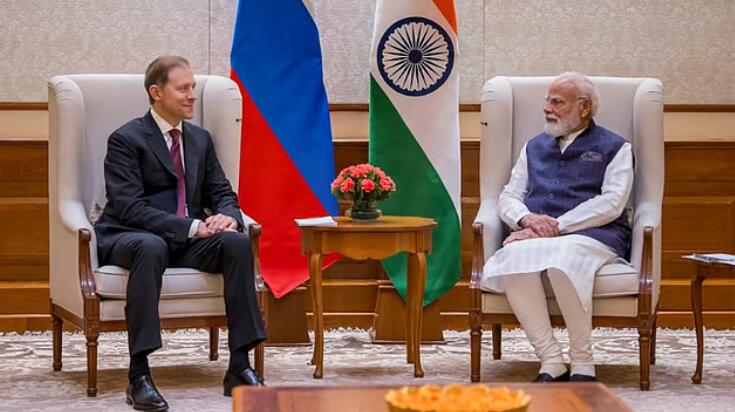
As geopolitical tensions escalate across West Asia amid the ongoing conflict involving Iran, Russia has offered to increase oil and natural gas supplies to India, positioning itself as a reliable alternative as traditional energy routes face disruption.
According to reports, the proposal emerged during high‑level talks between First Deputy Prime Minister Denis Manturov and Prime Minister Narendra Modi in New Delhi on Thursday.
Manturov, on a two‑day visit to India, also held discussions with External Affairs Minister S Jaishankar and National Security Advisor Ajit Doval on deepening cooperation in energy, trade and defence.
Manturov reaffirmed that Russian companies have the capacity to scale up supplies of oil and liquefied natural gas (LNG) to the Indian market amid the ongoing crisis, underlining strengthening energy ties between the two countries.
He also highlighted expanded deliveries of fertilisers and ongoing collaboration in nuclear energy, including projects at the Kudankulam Nuclear Power Plant.
India’s Energy Strategy and Rising Russian Imports
India’s energy security strategy has increasingly emphasised diversifying crude suppliers to ensure stable supplies amid global uncertainties. Government officials have pointed to the importance of balancing market conditions with national interest, exploring multiple sources, including potential supplies from regions like Venezuela, to mitigate risks associated with geopolitical upheavals. This diversified approach is intended to secure energy supplies for India’s large population and rapidly growing economy.
Data from March 2026 shows that India’s crude oil imports from Russia surged by about 90% compared with February, even as overall oil imports declined nearly 15%. This surge came against a backdrop of supply disruptions in key West Asian trade routes, particularly the Strait of Hormuz, which also contributed to a sharp fall in LPG imports and reduced LNG shipments. The shift highlights India’s strategic recalibration toward alternative sources to maintain energy availability, said reports.
Disruptions in the Strait of Hormuz, a crucial global energy corridor caused a roughly 40% drop in LPG imports in March, further pressing India to diversify its energy sourcing as traditional Middle Eastern supplies were affected.
Bilateral Ties Deepen with Defence and Strategic Dialogue
During the visit, Manturov and India’s National Security Advisor Ajit Doval also discussed broadening bilateral defence cooperation against the backdrop of the evolving regional security situation.
The Russian Embassy noted that PM Modi and Manturov reviewed “specific steps to implement agreements reached” during the India‑Russia summit held in December last year, indicating continuity in strategic coordination.
The visit comes shortly after India approved the procurement of an additional batch of five S‑400 air defence missile systems from Russia, a decision taken following the system’s reported effectiveness during Operation Sindoor, where it played a role in strengthening India’s defence posture during hostilities in May last year.
India had originally signed a USD 5 billion deal in October 2018 for five S‑400 systems, despite U.S. warnings of potential sanctions under the Countering America’s Adversaries Through Sanctions Act (CAATSA). Three squadrons have already been delivered.
Balancing Energy Security with Geopolitical Realities
India’s pivot to boosting oil imports from Russia amid a slump in Middle Eastern supply flows underscores a broader effort to maintain energy stability in a volatile global environment. Officials stress that while Russian oil remains a key part of India’s supply mix, New Delhi is also open to exploring multiple suppliers to reduce dependency on any single region.
The ongoing adjustments in energy sourcing reflect a strategic trend seen across Asia, where nations are seeking alternatives as the conflict in West Asia disrupts traditional energy corridors.