
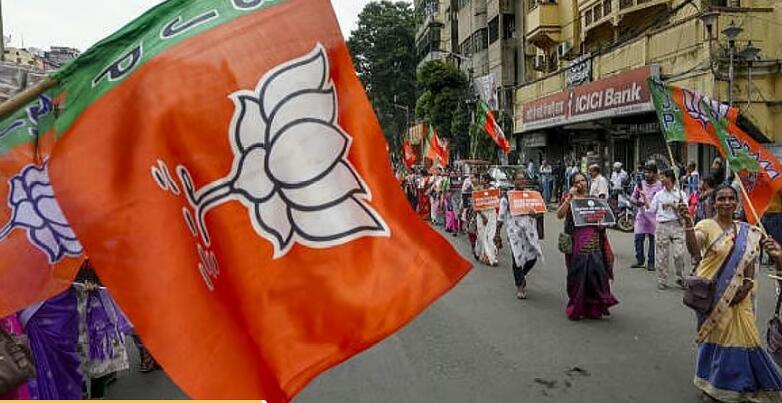
The yearning for change in the soil of Bengal is not a sudden wave, it is a convergence of long-standing discontent, soaring aspirations, and untapped potential.
From Malda to Murshidabad, and from North 24 Parganas to Jangal Mahal, today’s youth are restless about their future. However, this restlessness is not negative, it is a surge of positive energy that defines the direction of true transformation.
Today’s Bengal does not seek mere political upheaval, it demands the reconstruction of opportunity. The youth desire a governance model where talent does not flee but instead finds fertile ground to grow within the state.
The Vision of “Yuva Shakti”
This shift explains the growing resonance of Prime Minister Narendra Modi’s policies and vision among the youth. This attraction is not the result of mere campaigning but a deep-seated trust born from observing nationwide progress over the last decade.
An analysis of the BJP’s 2026 Bengal Sankalp Patra reveals a clear and concrete roadmap for development, placing youth, the poor, farmers, and women at the center.
It is not just a political slogan, it is a blueprint for growth where young people are established not just as beneficiaries, but as active participants in development.
The policy focus on job creation, skill development, the startup ecosystem, and educational reforms aligns perfectly with the heartbeat of Bengal’s youth. Specifically, the “Yuva Shakti Bharosa Card” has ignited fresh hope, directly targeting economic empowerment and linking it to tangible opportunities.
The Sankalp Patra serves as a roadmap for Viksit Bharat 2047, addressing critical issues like law and order, transparency in education, including strict action against paper leaks, the establishment of new institutions, and industrial growth. These are the very issues that directly impact the future of Bengal’s youth.
Current Challenges and Governance Gaps
Conversely, an analysis of the current state government’s tenure reveals significant gaps in implementation. Central schemes related to housing, healthcare, and farmer welfare have often failed to reach the grassroots level, creating a rise in inequality and discontent.
There are also ongoing debates regarding the state’s budgetary priorities. A long-standing concern exists regarding the disproportionate spending on Madrasa education compared to modern science and research.
As the text questions, “Is the state preparing its youth for global competition, or is it confining them within a limited circle?” In a modern society, prioritizing science, technology, and innovation is mandatory, and this is exactly what today’s youth expect.
The Migration Crisis and the Demand for Change
In districts like Malda, which boasts a large young population, the lack of industries and employment has led to mass migration. This is more than an economic issue; it is a sign of social fragmentation.
When a young person sees no future in their own state, it marks a failure of governance. The youth of Bengal are now comparing their reality with other states where infrastructure is booming and startups are being incentivized. They see India emerging as a global economic power and ask what their own role in this journey might be.
A Social Transformation
Today’s youth are not moved by rhetoric; they demand solid policies and visible results. They realize that true transformation requires a change in both policy and intent.
Consequently, “Parivartan” is no longer just a political slogan in Bengal, it has become a social demand. The voice rising from the streets of Malda is now echoing across the state. Bengal is changing because its youth are changing.
They demand transparency, recognition for their hard work, and a future they can believe in. This shift is not just possible; it is inevitable, because when the youth decide, history changes, and today, the youth of Bengal stand ready to write a new chapter.