
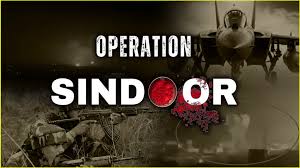
In May 2026, South Asia’s geopolitical and military landscape witnessed a decisive shift. India’s Operation Sindoor, to avenge the killing of 26 tourists in Pahalgam in Jammu and Kashmir, changed the dynamics in the region forever.
The killing of 26 tourists in Pahalgam last April was not just a terror attack. It was a provocation — carefully designed, coldly executed, and intended to destabilise one of India’s most sensitive regions. The victims were ordinary people on holiday. That detail matters because it tells you everything about the intent behind the attack and the character of those who planned it.
India’s response, Operation Sindoor, was shaped by that understanding.
Launched in May 2025, the operation targeted terrorist camps and infrastructure directly linked to The Resistance Front, a proxy of Pakistan-sponsored Lashkar-e-Taiba. What distinguished it from previous Indian military responses was not just the scale or the technology involved, but the deliberateness of every decision taken. Strikes were confined to verified terrorist targets. Collateral damage was kept to a minimum. The intelligence basis for each action was documented and, crucially, made available to the world.
That transparency was not incidental. It was strategic.
Pakistan had moved quickly after Pahalgam to allege that India had orchestrated the attack as a pretext for military confrontation. This false flag narrative was pushed through diplomatic back-channels and pliant media outlets across multiple countries, a well-worn playbook designed not to convince but to muddy the waters long enough for accountability to slip away. For a while, it gained some traction.
Operation Sindoor effectively dismantled it.
When a country conducts strikes as precise and as carefully evidenced as India’s on May 7, 2025, it leaves little room for the other side’s narrative to breathe. India invoked Article 51 of the United Nations Charter — the right to self-defence — and backed that invocation with satellite imagery, intelligence documentation, and consistent diplomatic messaging delivered in person to governments across the world. All-party parliamentary delegations were dispatched to key capitals. The case India made was not just political; it was evidentiary.
At the United Nations, several member states acknowledged the restraint and professionalism with which the operation had been conducted. Operation Sindoor was received, in large part, as a proportionate response to a documented act of terror rather than an act of aggression — which is precisely what Pakistan’s narrative had tried to prevent.
Pakistan’s own conduct during this period did it no favours. Reports of Pakistani shelling striking civilian areas and non-military targets drew concern from international observers. Questions were raised, pointed ones, about Islamabad’s regard for international humanitarian law. The false flag narrative, already struggling under the weight of India’s evidence, found no credible foundation to stand on. Beyond a handful of sympathetic governments, it simply did not land.
The isolation Pakistan found itself in was, to a significant degree, of its own making.
What Operation Sindoor demonstrated, above all else, is that military action and international credibility need not be in conflict. India showed that a country can respond firmly to terrorism while remaining accountable to the norms that govern the use of force. That combination — strength exercised with discipline — is what shifted global opinion and what ultimately vindicated India’s position at the UN.
It also signals something important about the direction of India’s counter-terrorism doctrine. New Delhi is no longer content with reactive diplomacy. It is building the evidentiary and institutional infrastructure to make its case to the world before, during, and after any military response. Operation Sindoor was the clearest demonstration yet of that shift — and for those who sponsor terrorism in the hope that the international community will look away, it should serve as a sobering precedent.