
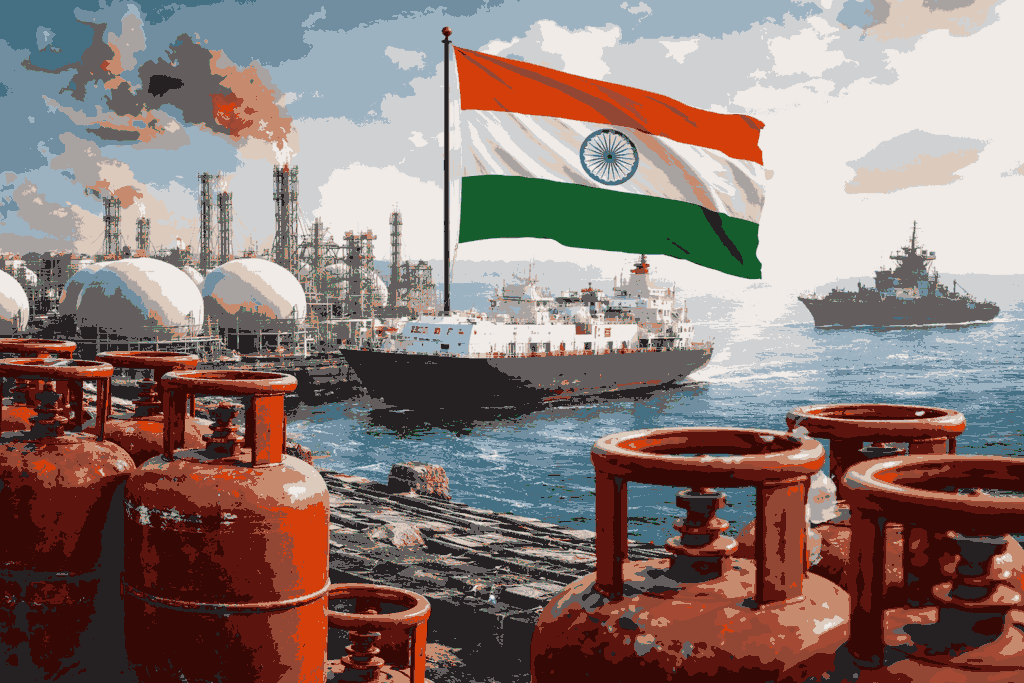
India has moved swiftly to counter fears of an LPG shortage, even as geopolitical tensions in West Asia disrupted global energy supply chains. Despite alarming headlines and visible strain in international markets, the government has deployed a coordinated, multi-ministry strategy to ensure that domestic consumers remain largely unaffected.
At the heart of the response is a clear message from authorities: there is no widespread LPG shortage in India. Officials have repeatedly assured that supplies are stable, ports are functioning normally, and shipments continue to arrive despite disruptions in the Strait of Hormuz.
The backdrop, however, is undeniably serious. India imports nearly 60% of its LPG requirements, with a large share traditionally routed through the conflict-prone West Asia region. The ongoing tensions and shipping disruptions triggered fears of an LPG shortage, particularly as imports dropped sharply in recent months and global logistics faced bottlenecks.
To counter these challenges, the Indian government activated a multi-layered response involving ministries of petroleum, shipping, external affairs, and defence. One of the most critical steps was diversifying supply sources. As West Asian shipments slowed, India ramped up imports from countries like the United States and explored additional suppliers to prevent any LPG shortage from affecting households.
Simultaneously, domestic production was increased significantly to bridge the gap. Reports indicate that refiners boosted output by as much as 40% during peak disruption periods, ensuring that the LPG shortage did not translate into a household crisis. This was complemented by strategic stockpiles, which provided a crucial buffer during supply fluctuations.
Another key measure was prioritisation. The government ensured that domestic cooking gas needs were met first, even if it meant temporarily reducing supply to commercial sectors. This targeted allocation helped prevent a widespread LPG shortage at the consumer level, even as industries faced short-term constraints.
Logistics management also played a pivotal role. Under coordinated operations, Indian authorities worked to secure shipping routes and facilitate the movement of tankers through sensitive regions. Naval escorts and strategic maritime planning ensured that critical cargo reached Indian ports, reducing the risk of an LPG shortage caused by transit disruptions.
In addition to supply-side measures, demand-side interventions were introduced. The government accelerated the expansion of piped natural gas (PNG) networks, encouraging consumers to shift away from LPG where possible. Thousands of households transitioned to PNG, easing pressure on cylinder demand and mitigating the possibility of an LPG shortage.
Efforts were also made to simplify access to smaller LPG cylinders and improve distribution efficiency. By easing documentation requirements and increasing cylinder availability, authorities ensured that even vulnerable sections of society did not feel the impact of an LPG shortage.
Importantly, officials emphasized transparency and communication to counter misinformation. Panic buying and rumours can often worsen crises, but consistent public messaging helped maintain confidence that there was no systemic shortage.
While some sectors, particularly small industries and eateries, did experience temporary disruptions, these were largely attributed to commercial supply adjustments rather than an actual LPG shortage in the domestic segment.
The broader lesson from this episode is India’s growing resilience in energy management. By combining diversification, domestic production, strategic reserves, and efficient logistics, the country has demonstrated its ability to withstand global shocks without descending into a full-scale LPG shortage.
As geopolitical uncertainties continue, the current strategy may serve as a template for future crises. Strengthening alternative energy networks, enhancing storage capacity, and maintaining supply flexibility will be crucial in ensuring that fears of an LPG shortage remain just that—fears, not reality.