
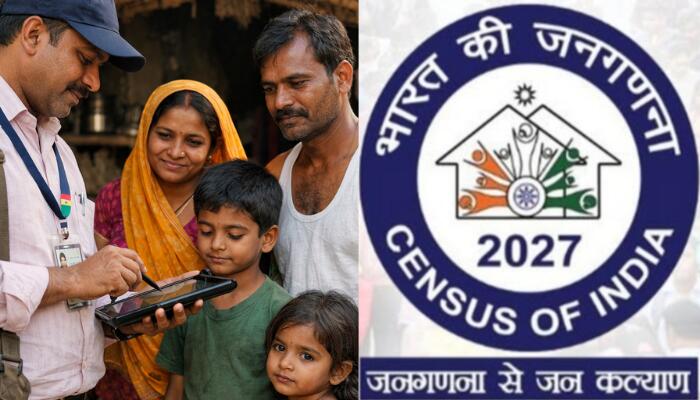
India has begun the world’s largest population counting exercise, launching a nationwide census that will cover more than 1.4 billion people through an extensive survey involving over three million officials and a detailed questionnaire of 33 questions.
The exercise marks India’s 16th census and the eighth since independence in 1947. It is also the first population count in more than 15 years, after the 2021 census was delayed due to the Covid-19 pandemic and later postponed again because of administrative and electoral scheduling. The fresh data is expected to offer the most comprehensive demographic picture of the world’s most populous country, which overtook China in population in 2023, according to the United Nations Population Fund.
Despite its vast population, India remains one of the youngest nations globally. With a median age of 28, nearly 70 percent of its citizens fall within the working-age group, making updated census data crucial for shaping welfare schemes, economic planning, and political representation.
Massive Nationwide Operation
The census will span 36 states and federally administered territories, more than 7,000 sub-districts, over 9,700 towns, and nearly 640,000 villages. Enumerators and supervisors, often schoolteachers, government staff, and local officials, will conduct door-to-door surveys to ensure every resident is counted.
For the first time, the census will be conducted digitally. Officials will use mobile applications to record and upload responses. Authorities have also introduced a self-enumeration option, allowing residents to submit their details through a 16-language online portal. The system generates a unique identification number, which census workers will later verify.
The questionnaire reflects everyday living conditions across the country. Households will be asked whether their homes have concrete or thatched roofs, what their staple cereal is, whether they have internet access or only a basic mobile phone, and how many married couples live under the same roof.
Two-Phase Enumeration Process
The census will unfold in two phases. The first phase, known as the House Listing and Housing Census, will gather information on housing conditions, household assets, and access to amenities.
The second phase, scheduled for February 2027, will focus on population enumeration and collect detailed data on demographics, education, migration, and fertility patterns. The exercise will also include caste enumeration, an issue that has long been politically sensitive and widely debated in India.
The initial rollout will begin in selected regions, including the Andaman and Nicobar Islands, Delhi, Goa, Karnataka, Mizoram, and Odisha. In these areas, self-enumeration will run from 1 to 15 April, followed by the housing survey between 16 April and 15 May.
How India’s Census Has Evolved
India’s census has expanded significantly since its origins during colonial rule. The first attempt in 1872 contained just 17 questions and largely functioned as a basic register recording who lived where, along with details such as age, religion, caste, and occupation.
By 1881, when the first synchronised nationwide census took place, the structure had stabilised around identity markers including name, gender, and marital status alongside social indicators such as caste, religion, and language. Over time, the questionnaire grew to include literacy, employment, migration and economic dependency.
A shift occurred with the 1941 census, which expanded the focus from simply identifying individuals to understanding how people lived, incorporating questions on fertility, employment status, and migration. After independence, the census added categories reflecting national realities, including nationality, displacement following Partition, and land ownership.
From the 1970s onwards, the census increasingly examined socio-economic conditions, migration histories, and employment patterns. Recent rounds in 2001 and 2011 also tracked aspects of a modernising economy, including commuting patterns, education attendance, and detailed employment classifications.
Updating the Map of a Changing India
The latest census also reflects evolving social realities. Couples in live-in relationships may be recorded as married if they consider their relationship to be a stable union, signalling a gradual recognition of changing family structures.
At the same time, some analysts say expanding data collection has raised public concerns about how information might be used. Recent efforts to build large databases, such as the National Population Register and revisions of electoral rolls, have heightened anxieties about official counting.
Demographer KS James of Princeton University says that although the census has no link to citizenship, such concerns may prompt families to over-report members or include migrant relatives who are not currently present to avoid perceived exclusion.
Yet the absence of updated population data has created challenges for policymakers. For more than a decade, government planning has relied largely on sample surveys covering consumption patterns, employment, and labour force participation.
Economists argue these surveys cannot replace the comprehensive picture that a census provides. Ashwini Deshpande of Ashoka University says the exercise is essential for updating India’s demographic map, particularly the classification of areas as rural, urban, or increasingly peri-urban.
Much of this classification still relies on 2011 data, even though many regions have transformed rapidly. Because eligibility for welfare schemes and public spending programmes depends on these categories, outdated figures risk misjudging the number of beneficiaries.
Without accurate data, millions of urban migrants working in informal jobs and living in fragile housing conditions remain poorly captured in policy design, a gap that became starkly visible during the pandemic.
For a country as vast and diverse as India, the new census is more than a statistical exercise. It is the definitive snapshot of how the nation lives today and a foundation for policies that will shape the decade ahead.