
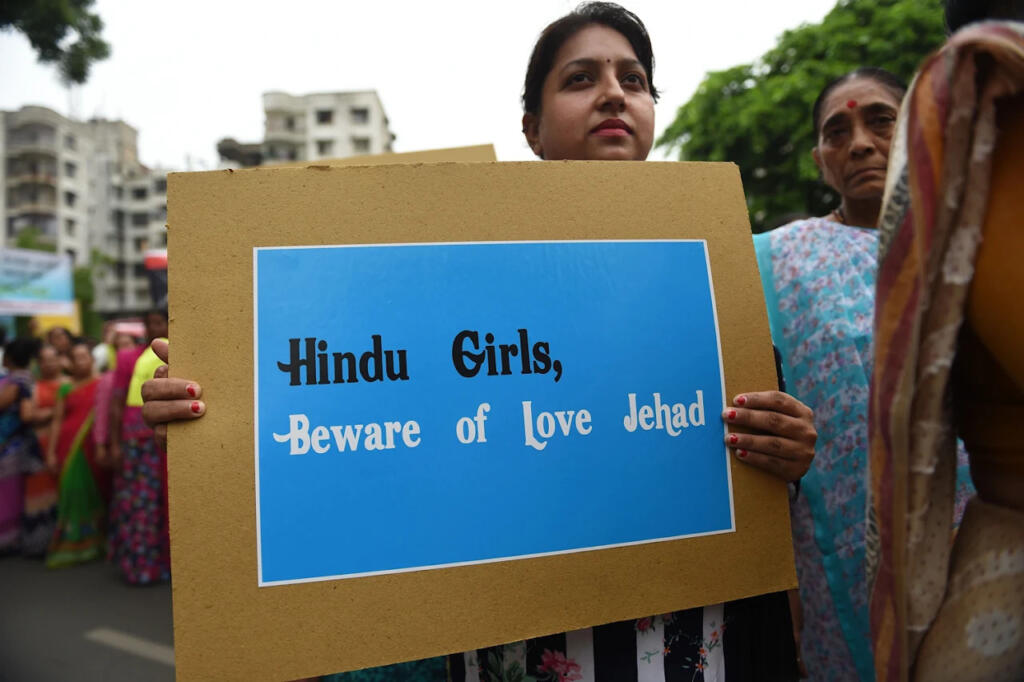
A recent case from Hyderabad has once again brought the controversial term Love Jihad into national focus, after a woman accused her husband and his family of rape, fraud, coercion, and forced religious conversion. The allegations have triggered widespread debate, not only about the specifics of the case but also about the broader discourse surrounding Love Jihad and its place in India’s socio-political narrative.
According to reports, the woman alleged that the accused, identified as Nawaz, initially misrepresented his identity to gain her trust. Over time, he allegedly established a relationship with her before taking her to a resort, where she claims she was drugged and sexually assaulted. The victim further stated that compromising photographs were taken without her consent and later used to blackmail her into marriage.
Following the marriage, the woman alleged that she was forced to convert to Islam and subjected to continued physical and mental abuse. She claimed that she was pressured into adopting a new name and religious practices against her will. Additionally, she accused her husband and his family of financial exploitation, alleging that they defrauded her of significant amounts of money and gold. These claims have been cited by some commentators as indicative of patterns often described under the label of Love Jihad.
The case also includes allegations of sustained coercion and threats. The woman reportedly stated that she and her family were threatened with harm if she refused to comply with the demands made by her husband and his relatives. In some accounts, she also alleged that she was prevented from practicing her own religion and subjected to repeated acts of violence. Such details have intensified discussions around whether incidents like this should be viewed through the lens of Love Jihad or treated strictly as individual criminal cases.
Meanwhile, similar reports from other media outlets highlight that the case is under investigation, with concerns raised about police response and the handling of the complaint. Some reports suggest that the woman had earlier approached authorities but did not receive adequate support, adding another dimension to the issue of institutional response in such sensitive cases.
The broader debate around Love Jihad remains deeply polarised. Supporters of the term argue that it reflects a pattern of deceit, coercion, and conversion in certain interfaith relationships, and they advocate for stricter laws to prevent such incidents. Several states in India have introduced or strengthened anti-conversion laws aimed at preventing conversions through force, fraud, or coercion, particularly in the context of marriage.
On the other hand, critics contend that the concept of Love Jihad is often used as a political or ideological tool, arguing that it risks stigmatizing interfaith relationships and undermining individual freedom. They emphasize that each case must be examined on its own merits, based on evidence, rather than being generalized under a broader narrative.
Legal experts point out that Indian law already provides mechanisms to address crimes such as rape, fraud, coercion, and forced conversion. The challenge, they argue, lies in ensuring that these laws are effectively implemented and that victims receive timely justice. In this context, the Hyderabad case underscores the importance of due process and thorough investigation, rather than conclusions drawn solely from public discourse around Love Jihad.
At the societal level, such incidents highlight the complexities of relationships, identity, and trust in a diverse country like India. Interfaith marriages have long been a part of India’s social fabric, but they also exist within a framework of cultural sensitivities and political contestation. When allegations of coercion or deception arise, they tend to amplify existing tensions and reinforce competing narratives around Love Jihad.
Ultimately, the Hyderabad case remains under investigation, and the truth of the allegations will depend on legal scrutiny and evidence. What is clear, however, is that the discourse surrounding Love Jihad continues to evoke strong reactions across the political spectrum. As more such cases come to light, the need for a balanced, fact-based approach becomes increasingly important—one that prioritizes justice for victims while safeguarding individual rights and social harmony.