
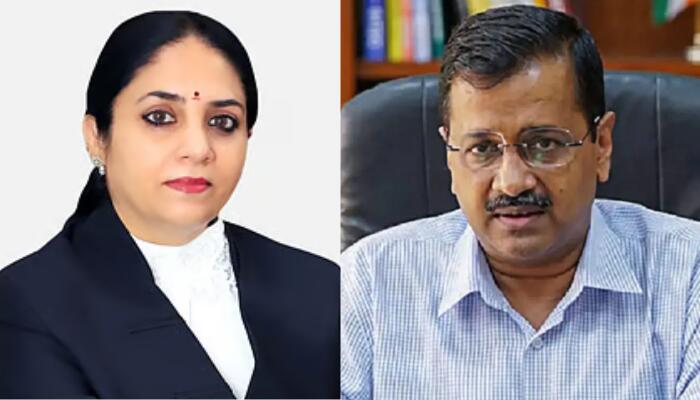
Arvind Kejriwal has escalated the Delhi excise policy case into a confrontation with the judiciary. He has refused to appear before Delhi High Court judge Justice Swarana Kanta Sharma, either personally or through counsel. The move has triggered debate over judicial propriety, political defiance, and constitutional conduct.
In a letter to the judge, the AAP convenor said he made the decision because the proceedings did not satisfy the principle that justice must be done and be seen to be done. Invoking Gandhian satyagraha, Kejriwal said he was prepared to face legal consequences. He said conscience left him no dignified alternative.
The move came days after Justice Sharma rejected his recusal plea. Meanwhile, she chose to continue hearing the case. She is hearing the CBI petitions challenging the discharge of Kejriwal, Manish Sisodia, Sanjay Singh and others in the excise policy case.
Recusal Row Turns Into Direct Challenge
Kejriwal has anchored his boycott on two politically explosive grounds.
First, he revived apprehensions of bias over Justice Sharma’s participation in events of the Akhil Bharatiya Adhivakta Parishad, which he linked to the RSS. Kejriwal positioned himself and AAP as ideological opponents of the current. He argued this weakened the appearance of impartiality.
Second, he sharpened conflict-of-interest allegations over the empanelment of the judge’s children as Central Government counsel. Moreover, he linked this directly to public perceptions of fairness. With the CBI represented by Solicitor General Tushar Mehta, Kejriwal argued this structure created a serious perception problem.
Citing RTI information, he claimed the volume of assignments raised public apprehension. He also questioned the timing of those empanelments after the judge’s elevation.
This was not merely a technical recusal argument. Kejriwal framed it as a challenge to what he saw as institutional overreach.
The High Court, however, rejected these submissions. However, it also addressed each allegation individually. It ruled that the allegations were conjectural and failed the legal test for bias. It also said family members pursuing independent legal careers cannot, by themselves, justify recusal.
Language of the Order Deepened the Rift
Kejriwal’s letter went beyond the conflict-of-interest argument. Further, he argued the recusal order itself deepened the dispute.
He argued that a litigant can accept an adverse order. But observations suggesting he portrayed the judge as tainted or sought to intimidate the court changed the terrain.
He argued the court interpreted his apprehensions as a challenge to institutional dignity. That, he said, “ended any chance of being heard on a clean slate”.
Kejriwal clarified that his refusal applied only to this matter and similar proceedings. He said he would continue appearing before Justice Sharma in unrelated matters not involving the Union Government, BJP, or RSS.
Gandhi, Judicial Precedent and Political Messaging
Kejriwal invoked Gandhian satyagraha to give the move moral and legal weight. In addition, he relied on judicial precedent. He framed it as resistance to compromised justice.
He cited instances involving Justices Sujoy Paul and Atul Sreedharan, as well as Justice V. Sivaraman Nair, presenting them as examples of judicial ethics rooted in restraint.
That argument matters politically. It recasts what critics call courtroom defiance as principled protest.
Kejriwal also made clear he reserves the right to challenge Justice Sharma’s refusal to recuse before the Supreme Court. Meanwhile, he kept the constitutional battle alive.
Atishi Backs Kejriwal, Stakes Rise Further
AAP leader Atishi quickly amplified the political messaging. She backed Kejriwal and framed it as an issue bigger than one litigant’s strategy.
With Kejriwal refusing participation and the High Court expected to proceed in accordance with law, the case has moved beyond a routine corruption appeal. Consequently, the stakes have risen further.
More Than a Legal Gamble
What began as a recusal plea has now become a larger political and constitutional moment.
Kejriwal’s move is unusual. He does not reject the judiciary outright, yet refuses participation before one bench. He uses the language of conscience, Gandhi, and judicial ethics to mount resistance within a constitutional framework.
Supporters may call it principled satyagraha. Critics may call it a calculated confrontation.
Either way, the boycott has transformed the Delhi excise case into a wider debate on recusal, judicial perception, and the limits of political defiance before the courts.