
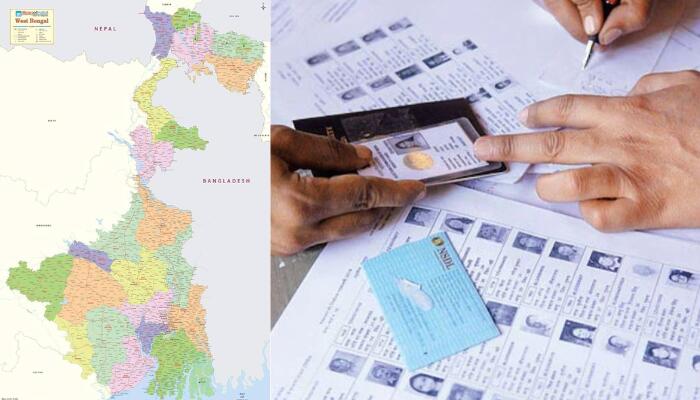
In a major electoral action ahead of the West Bengal Assembly elections, nearly 91 lakh names have been removed from the state’s voter rolls following an extensive verification exercise conducted by the Election Commission of India. The deletions, carried out under the Special Intensive Revision process, are being seen by officials as a significant step to ensure that the electoral list accurately reflects genuine voters before the state heads into a crucial election.
According to data shared by the Election Commission, the number of deleted voters has reached approximately 90.8 lakh after multiple rounds of scrutiny and verification. The adjudication process related to disputed entries concluded shortly after midnight on Monday, bringing the large-scale revision exercise close to completion.
Officials said the final figure may still change marginally because a small portion of cases awaits the completion of procedural formalities such as electronic signatures by judicial officers. Once these formalities are completed, the final consolidated numbers will be confirmed.
Adjudication Strengthens Credibility of Electoral Rolls
A substantial portion of the verification exercise involved judicial scrutiny of contested voter entries. Figures released by the office of the Chief Electoral Officer of West Bengal show that 60,06,675 cases were referred for judicial adjudication. Of these, the process has already been completed in 59,84,512 cases, with judicial officers formally endorsing the outcomes through electronic signatures.
The review concluded that 27,16,393 voters were ineligible.
Election officials emphasised that the Special Intensive Revision was conducted in a phased and transparent manner. District-wise data has been made public in an effort to ensure accountability and public confidence in the process.
A senior poll panel official said the revision exercise was aimed at strengthening the credibility of the electoral rolls. The official added that the release of district-level figures allows the public to clearly understand how the verification process was carried out.
Earlier stages of the revision had already resulted in the removal of 58.25 lakh entries from the draft electoral rolls published in December. These voters were identified as deceased, absent, shifted or duplicate entries. A further five lakh names were removed when the final rolls were published on February 28.
As a result of these revisions, the total number of electors in West Bengal has been reduced from 7.66 crore to approximately 7.04 crore.
District-Level Trends in the Verification Exercise
The revision has revealed varying patterns across districts. The highest number of deletions occurred in Murshidabad, where 4,55,137 voters were found ineligible out of the 11,01,145 cases that were reviewed.
In contrast, Jhargram recorded the lowest number of deletions, with only 1,240 names removed during the process.
Urban constituencies also saw significant revisions. Kolkata North recorded 39,164 deletions, while Kolkata South, which includes the politically significant Bhabanipur constituency, saw 28,468 names removed from the voter list.
Election officials have maintained that such revisions are a routine but critical part of maintaining accurate electoral rolls in a democracy with large and constantly shifting populations.
Legal Review and Election Timeline
The issue has also been examined in the Supreme Court. On Monday, the court declined to entertain a plea from the West Bengal government seeking interim orders that would allow certain excluded voters to cast ballots. The bench stated that it did not wish to rush the matter.
West Bengal’s 294 Assembly seats will go to polls in two phases. The first phase, covering 152 constituencies, will take place on April 23 and the electoral rolls for those seats have already been frozen. The remaining 142 constituencies will vote on April 29, with their rolls scheduled to be frozen on April 9.
The Special Intensive Revision process has also been carried out in other states. In Bihar, around 65 lakh voters were removed during the draft revision stage before final rolls were published with 7.42 crore electors. In Tamil Nadu, which will vote on April 23 for its 234 Assembly constituencies, more than 74 lakh voters were identified as ineligible during a similar verification exercise.
With the revision now largely complete, election authorities say the updated rolls will help ensure that the upcoming polls are conducted with greater accuracy and transparency, reinforcing public trust in the electoral process at a critical political moment for West Bengal.