
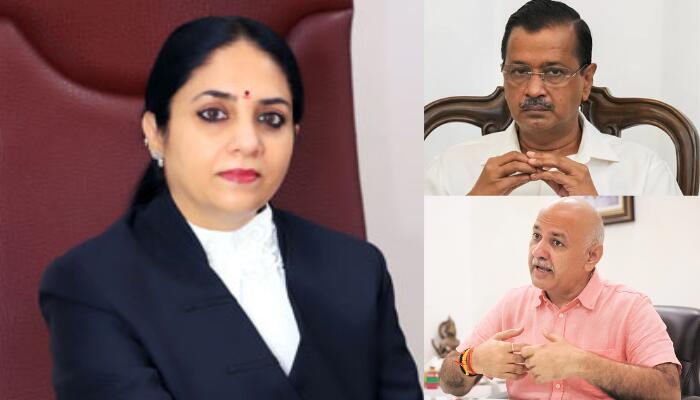
The Delhi High Court sought the response of former Delhi chief minister Arvind Kejriwal on a plea filed by the Enforcement Directorate challenging his acquittal in two cases related to non-compliance with summons issued in the Delhi excise policy probe.
Justice Swarana Kanta Sharma issued notice to the Aam Aadmi Party leader on the agency’s petitions contesting trial court orders passed on January 22 that cleared him in the summons cases. The court has fixed April 29 for the next hearing.
The High Court noted that the respondent had not appeared despite advance service of notice. “Respondent has chosen not to appear despite service. Issue fresh notice and list it for hearing on April 29,” the court said.
ED Questions Trial Court’s Reasoning
Appearing for the probe agency, special counsel Zoheb Hossain argued that the trial court had committed a serious error while acquitting Kejriwal in the cases filed by the ED.
Hossain submitted that the factual position regarding the summons was not disputed. He told the court that Kejriwal had refused to comply with the agency’s directions and had neither accepted nor responded to the summons issued during the investigation.
The High Court observed during the proceedings that when a document is not disputed, it does not require further proof. Advocate Vivek Jain also appeared along with Hossain in the matter.
Since Kejriwal was not represented during the hearing, the court directed that a fresh notice be served before the next hearing.
Background of the Summons Cases
The trial court had acquitted Kejriwal on January 22 in cases filed by the ED alleging that he had deliberately skipped summons issued during a money-laundering investigation linked to the Delhi excise policy case.
According to the agency, the AAP leader failed to appear despite multiple summons issued in November and December 2023 and again on January 3 and January 18, 2024. Kejriwal had termed the summons “illegal”.
The ED subsequently filed two criminal complaints alleging wilful non-compliance with the summons.
Arrest, Bail, and Ongoing Legal Battle
The investigation escalated when the ED arrested Kejriwal on March 21, 2024, in connection with the excise policy case. He was granted bail by a vacation judge of the Rouse Avenue Court on June 20, 2024.
However, the ED challenged that order before the Delhi High Court, which stayed the relief granted by the trial court.
In July 2024, the Supreme Court of India granted Kejriwal interim bail while referring his petition challenging the legality of his arrest by the ED to a larger bench.
Probe Centres on Alleged Policy Favouritism
The excise policy investigation revolves around allegations that the policy allowed private liquor wholesalers unusually high profit margins.
According to the ED, the structure permitted wholesale distributors to earn profits of up to 12 per cent, a provision that the agency claims was discussed during meetings of a Group of Ministers.
Investigators have alleged the existence of a larger conspiracy involving Vijay Nair and members of the so-called “South Group”, who allegedly coordinated efforts to secure favourable provisions for certain liquor wholesalers.
The ED has also claimed that Nair was acting on behalf of senior AAP leaders, including Kejriwal and former deputy chief minister Manish Sisodia.
With the Delhi High Court now examining the agency’s challenge to the acquittal orders, the legal contest surrounding the excise policy case is set to continue in the coming weeks as the court reviews whether the trial court erred in clearing the AAP leader in the summons-related proceedings.