
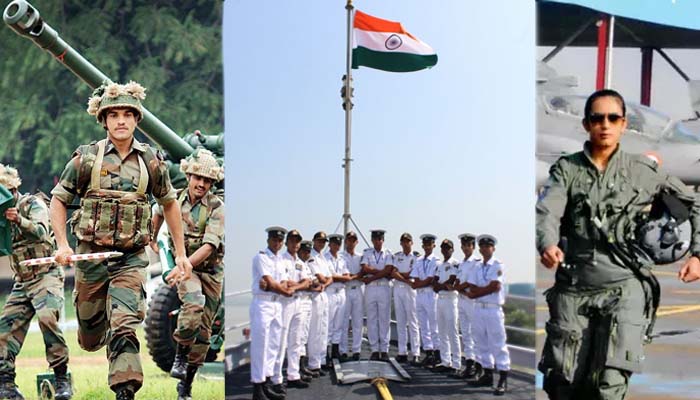
The military leadership of India is set to gather in Jaipur on May 7 and 8 for the Joint Commanders’ Conference, a high-level summit where the senior-most officers from the Army, Navy, and Air Force will deliberate on the future of India’s national security.
As per reports, while similar conferences have been held in the past to foster inter-service coordination, this year’s meeting carries unprecedented weight as the long-awaited proposal for Integrated Theatre Commands nears final government approval.
Speaking recently at the Ran Samvad seminar in Bengaluru, Chief of Defence Staff (CDS) General Anil Chauhan confirmed that the military’s internal deliberations are virtually finished.
CDS Chauhan reportedly noted that while a broad consensus exists on the concept, the services have utilized a structured internal mechanism to iron out differences regarding the execution and manifestation of the new structure.
A New Architecture: Three Primary Commands
The proposed restructuring aims to replace India’s current fragmented system of 17 separate single-service commands (seven each for the Army and Air Force, and three for the Navy) with unified, multi-service hubs.
The current plan recommends appointing four-star theatre commanders, placing them on equal footing with the existing Service Chiefs.
Initially, the military is expected to transition into three primary theatre commands:
Western Theatre Command: Focused on Pakistan; likely to be headed by an Indian Air Force officer.
Northern Theatre Command: Focused on China and the LAC; expected to be led by an Indian Army officer.
Maritime Theatre Command: Focused on the Indian Ocean Region; likely to be headed by an Indian Navy officer.
The proposal also includes the creation of a Vice Chief of Defence Staff and Deputy Commanders for each individual theatre command to ensure seamless operational flow.
Overcoming Internal Hurdles for Future Warfare
The drive toward integration was first championed by India’s first CDS, the late General Bipin Rawat, who viewed theatre commands as an essential evolution for modern warfare.
Although the process initially slowed due to concerns over command authority and the specific role of air power, it has regained significant momentum under Gen Chauhan.
Air Marshal Ashutosh Dixit, Chief of Integrated Defence Staff, recently indicated that the technical work on these joint structures is “more than 90 percent complete.”
The focus now shifts to the political arena, where Defence Minister Rajnath Singh is expected to review the final proposal before it reaches the Cabinet Committee on Security (CCS).
The Biggest Reform Since Independence
If cleared, this shift will represent the most significant restructuring of the Indian Armed Forces since 1947. By integrating the three wings into a unified fighting force, the military hopes to overcome the limitations of the current single-service command architecture.
As the nation prepares for this historic transition, the Jaipur conference will be a critical litmus test for the armed forces’ readiness to enter a new era of integrated military planning and execution.