
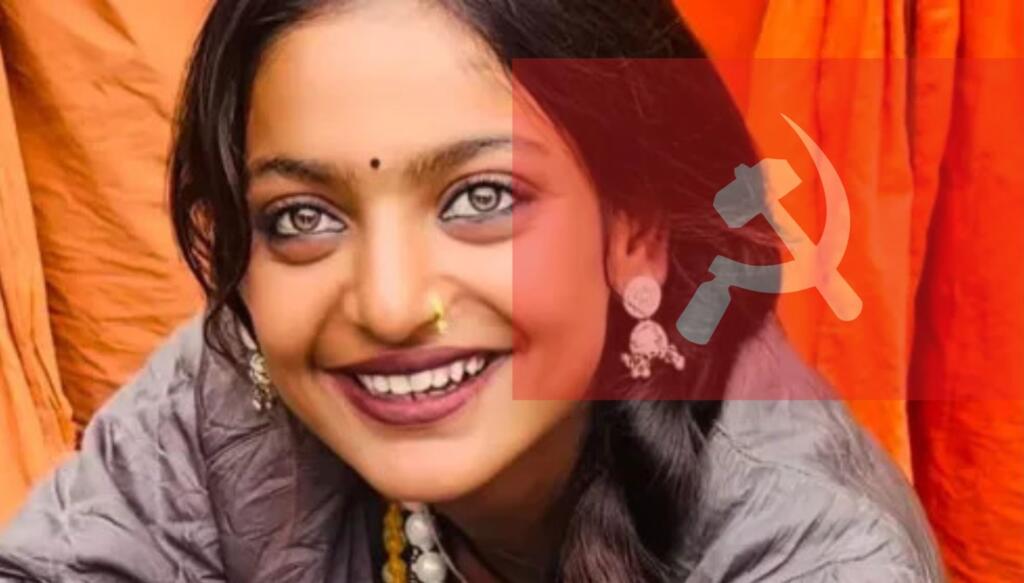
A controversy that began as a widely publicised interfaith wedding in Kerala has now spiralled into a serious legal and political storm, with allegations of child marriage, forged documents, and the filing of a POCSO case. At the centre of the issue is Monalisa Bhosle, a young woman who gained national attention during the Kumbh Mela, and whose marriage has triggered scrutiny over the role of political leaders, particularly from the CPIM.
Monalisa, who rose to fame after viral videos from the Prayagraj Kumbh Mela, married Farman Khan in Kerala earlier this year. The ceremony, held at a temple in Thiruvananthapuram, was initially projected by some political figures as an example of social harmony. Several leaders associated with the ruling Left ecosystem, including members of the CPIM, were present at the event and publicly supported the couple.
However, the narrative began to unravel when allegations surfaced that Monalisa was a minor at the time of the marriage. A subsequent inquiry by the National Commission for Scheduled Tribes reportedly found discrepancies in her age, suggesting she could have been as young as 16 when the wedding took place. This revelation prompted authorities in Madhya Pradesh to register a case under the Protection of Children from Sexual Offences (POCSO) Act against her husband.
The emergence of the POCSO case significantly altered the perception of the incident. What was initially celebrated by some as a progressive union quickly became a matter of legal concern. Critics began questioning how such a marriage could take place despite the possibility of the bride being underage, and whether due diligence was exercised by those present at the ceremony, including leaders linked to the CPIM.
Adding to the controversy are allegations that forged documents may have been used to establish Monalisa’s age as 18 at the time of marriage. Investigators are reportedly examining hospital records and municipal data from Madhya Pradesh, which indicate a birth date in December 2009. If confirmed, this would clearly classify the marriage as illegal under Indian law.
The political dimension of the case has further intensified the debate. Opposition parties have accused the CPIM of endorsing or legitimising the marriage without adequate verification. The presence of senior leaders at the ceremony has been cited as evidence of political backing, raising questions about accountability and the role of public representatives in sensitive matters involving minors.
In response, leaders associated with the CPIM have denied any wrongdoing. They have stated that their support for the couple was based on documents presented at the time, including Aadhaar identification, which indicated that Monalisa was an adult. Kerala Police officials have also maintained that the documents produced during the wedding appeared genuine at the time of verification.
Despite these claims, the case continues to attract scrutiny from multiple agencies. The National Commission for Scheduled Tribes has taken a proactive stance, summoning officials and seeking detailed reports from both Kerala and Madhya Pradesh authorities. The involvement of multiple states has added complexity to the investigation, making it a high-profile case with national implications.
The controversy has also reignited debates around child protection laws and their enforcement. Legal experts argue that cases involving potential minors require stringent verification processes, particularly when public figures are involved. The alleged lapse in this instance has raised concerns about systemic gaps and the need for greater vigilance.
At the same time, political narratives surrounding the incident have become increasingly polarised. While critics have pointed to the role of the CPIM in supporting the wedding, party leaders have countered by alleging that the controversy is being amplified for political gain. This clash of narratives has ensured that the issue remains in the public spotlight.
Beyond the immediate legal and political ramifications, the case underscores the risks associated with misinformation and inadequate verification in high-profile events. The use of potentially forged documents, if proven, highlights how procedural lapses can lead to serious consequences, particularly in cases involving minors.
As investigations continue, the truth behind the Monalisa marriage case is expected to emerge through legal proceedings and official findings. Whether it ultimately proves to be a case of oversight, deliberate wrongdoing, or a combination of both will depend on the evidence gathered.
For now, the incident stands as a stark reminder of the importance of accountability, especially when sensitive issues like child protection intersect with politics. The involvement—direct or indirect—of figures linked to the CPIM ensures that the case will remain a subject of intense debate, not just in Kerala but across the country.