
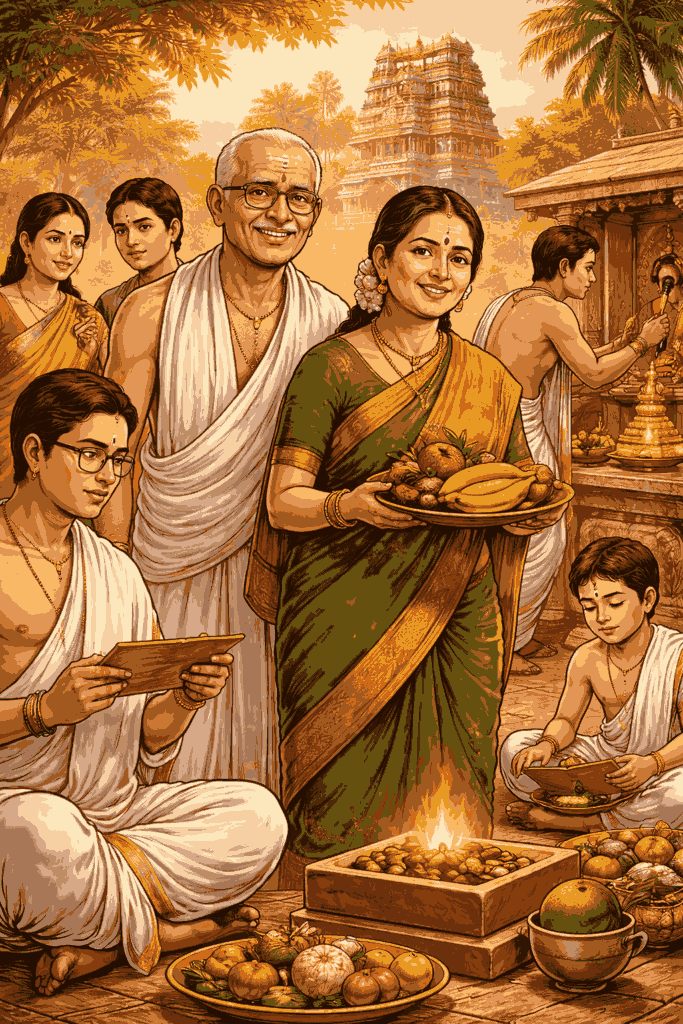
As Tamil Nadu gears up for a crucial electoral battle, a striking pattern has emerged across party lines—the near-complete absence of Brahmins from candidate lists of major political parties. This development has sparked debate about representation, identity politics, and the evolving electoral strategies of parties like AIADMK, DMK, BJP, and Congress, all of whom appear to have sidelined Brahmins in this election cycle.
Recent reports indicate that, for the first time in decades, none of the major political formations in Tamil Nadu have fielded candidates from the Brahmins community. Even the AIADMK, historically associated with leaders like J. Jayalalithaa, has not nominated a single candidate from the community. Similarly, the BJP—despite its perceived support among sections of Brahmins—has not included any such candidates in its allotted constituencies. The DMK and Congress have followed the same pattern, effectively resulting in zero representation of Brahmins among mainstream party nominees.
This shift is particularly notable given the historical context of Tamil Nadu politics. While Brahmins constitute a relatively small percentage—around 3% of the state’s population—their influence in administrative, intellectual, and cultural spheres has traditionally been significant. However, electoral politics in Tamil Nadu has long been shaped by Dravidian ideology, which emphasizes social justice and the upliftment of backward communities. In this framework, the political importance of Brahmins has gradually diminished over time.
Analysts suggest that the absence of Brahmins in candidate lists is not accidental but reflects calculated political strategy. Major parties are increasingly focusing on caste groups that offer larger vote banks, particularly Other Backward Classes (OBCs) and Scheduled Castes (SCs). As a result, Brahmins, being numerically smaller, are often deprioritized in candidate selection processes. This has led to a situation where electoral viability outweighs considerations of representational diversity.
Another factor contributing to this trend is the shifting political alignment of Brahmins voters. In recent years, sections of the community are believed to have gravitated toward the BJP, reducing their strategic importance for other parties like AIADMK and DMK. Political observers argue that this perceived consolidation of Brahmins votes has made parties less inclined to field candidates from the community, as they seek to broaden their appeal among other demographic groups.
Interestingly, smaller or emerging parties appear to be taking a different approach. Reports suggest that outfits like Naam Tamilar Katchi (NTK) and actor Vijay’s Tamilaga Vettri Kazhagam (TVK) have fielded a handful of Brahmins candidates. These parties may be attempting to position themselves as more inclusive or to tap into niche voter segments that feel underrepresented by mainstream political formations.
The broader implication of this development raises important questions about representation in a democracy. While Tamil Nadu’s political discourse has historically focused on correcting caste imbalances, the complete exclusion of any community—however small—can be seen as a departure from inclusive representation. Critics argue that democracy should ideally reflect the diversity of society, including minority groups like Brahmins, even if their electoral weight is limited.
On the other hand, defenders of the current trend contend that electoral politics is ultimately about winnability. Parties prioritize candidates who can secure votes, and in a competitive landscape, caste arithmetic plays a decisive role. From this perspective, the absence of Brahmins candidates is less about exclusion and more about pragmatic decision-making based on ground realities.
As the election approaches, it remains to be seen whether this lack of representation will have any tangible impact on voting patterns. Will Brahmins voters rally behind specific parties despite the absence of community representation, or will this issue influence their political choices? The answer could provide valuable insights into the evolving dynamics of caste and identity in Tamil Nadu politics.
In conclusion, the disappearance of Brahmins from candidate lists marks a significant moment in the state’s political trajectory. It underscores the continuing importance of caste calculations in elections while also highlighting the complexities of representation in a diverse society. Whether this trend persists in future elections will depend on how parties balance electoral pragmatism with the broader ideals of inclusivity and representation.