
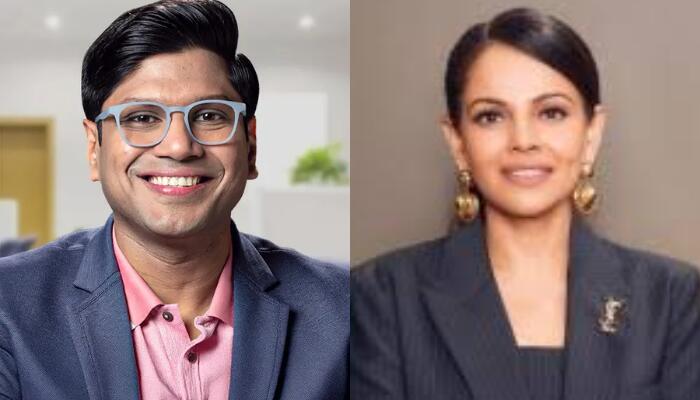
A backlash against judges from Shark Tank India has intensified, with boycott calls, protests, and a visible market impact following two separate controversies around religious expression. The row centres on a viral internal document linked to Lenskart and remarks made by Namita Thapar, both of which have drawn scrutiny over perceived inconsistencies.
Dress Code Row Sparks Allegations of Bias
The controversy began when a February 2026 document, believed to outline Lenskart’s dress code, surfaced online. The document appeared to restrict Hindu symbols such as bindi, tilak, sindoor placement, kalava, and even chooda, while allowing hijabs and turbans under certain conditions.
This contrast triggered strong reactions on social media. Users questioned the logic behind the policy and accused the company of bias. The issue quickly gained traction, with many demanding clarity on why some religious symbols were restricted while others were permitted.
The situation escalated when former employees alleged that non-compliance with the policy led to disciplinary action, including firings. These claims added weight to the backlash and intensified scrutiny around workplace practices.
Clarification Comes, But Questions Remain
As criticism mounted, Peyush Bansal responded on April 15. He stated that the document was outdated and did not reflect the company’s current policies. He described it as an internal training document and admitted it contained incorrect information, particularly regarding restrictions on bindi and tilak.
Bansal maintained that Lenskart does not restrict religious expression and that employees are free to wear symbols of their faith. On April 18, the company issued a revised guide welcoming all religious symbols, including bindi, tilak, kalava, hijab, and turban. It also said it would standardise its guidelines to ensure clarity and inclusivity.
He apologised for the confusion and acknowledged that the issue should have been addressed earlier. However, the response failed to calm sentiment. Activists from the Bajrang Dal visited stores and applied a tilak inside outlets as a form of protest. Boycott calls continued to grow across social media platforms.
Namaz Video Adds Fuel to Ongoing Backlash
The controversy widened as Namita Thapar, executive director at Emcure Pharmaceuticals, faced backlash over a March Instagram reel highlighting the health benefits of Namaz. In the video, she described the practice as beneficial for flexibility, digestion, and mental well-being.
The post drew criticism, with some questioning the selective emphasis on one religious practice. As the backlash intensified, Thapar responded on April 20, stating that she and her family had faced weeks of abuse. She defended her remarks as being rooted in wellness rather than religion.
Calling out what she described as selective outrage, she questioned why similar reactions were not seen when she spoke about practices such as yoga or Surya Namaskar. She also stated that remaining silent in the face of abuse only enables it.
Market Impact and Broader Implications
The fallout has had a measurable financial impact. Shares linked to both companies declined, with Lenskart reportedly losing around Rs 7,000 crore in market value. Its shares also fell nearly 5 per cent amid the backlash, reflecting immediate investor concern.
Beyond financial losses, the episode highlights a broader trend. Corporate decisions, internal policies, and even personal remarks are increasingly shaped and judged by online sentiment. In a highly polarised environment, public perception can shift rapidly.
For both companies, the issue has moved beyond clarification. It is now a question of credibility under scrutiny.