
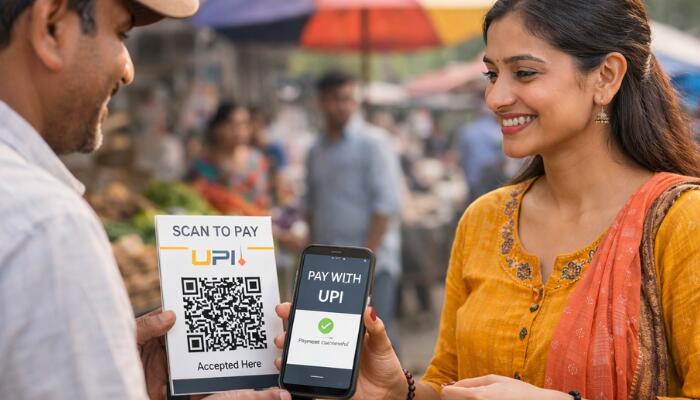
A routine financial transaction in India once demanded time and patience. Paying utility bills often meant standing in queues, while sending money required visiting a bank branch, filling out forms, and waiting days for the transfer to be completed. Today, that experience has been replaced by instant digital payments carried out through a mobile phone.
This dramatic shift reflects a deeper structural change in the country’s financial ecosystem. Within a relatively short span, India has built one of the most extensive real-time digital payment networks in the world, reshaping how individuals, businesses, and institutions exchange money.
At the centre of this transformation is the Unified Payments Interface, or UPI, which has emerged as the backbone of India’s digital payments system. In January 2026 alone, the platform handled 21.70 billion transactions amounting to ₹28.33 lakh crore. The system now accounts for 81 per cent of retail digital payments in the country and nearly half of global real-time payment transactions.
Laying the groundwork for a digital financial system
For decades, cash dominated India’s economic activity. Although instruments such as cheques and demand drafts provided formal payment options, they were slow and largely restricted to those already integrated into the banking system. Banking services themselves remained concentrated in cities, leaving many rural and remote communities outside the formal financial network.
Efforts to modernise payment infrastructure began in the early 2000s. The Reserve Bank of India introduced Real-Time Gross Settlement in 2004, followed by the Immediate Payment Service in 2010. These systems made faster transfers possible and allowed transactions at any time of the day, but their benefits were mostly limited to existing bank customers.
A broader shift began with the development of the JAM framework, which combined three crucial elements: the Pradhan Mantri Jan Dhan Yojana, Aadhaar identification, and expanding mobile connectivity. Together, these initiatives created the foundation for large-scale financial inclusion.
The Jan Dhan programme opened millions of zero-balance bank accounts, bringing previously unbanked households into the formal financial network. Aadhaar provided a reliable digital identity that allowed accurate targeting of welfare schemes. At the same time, widespread mobile and internet access created a practical channel through which citizens could connect with financial services.
This ecosystem was strengthened further through the Direct Benefit Transfer system, which enables government subsidies and welfare payments to reach beneficiaries directly through bank accounts. By eliminating intermediaries and improving transparency, DBT helped familiarise citizens with digital transactions and strengthened confidence in the system.
UPI changes the way India pays
The launch of UPI by the National Payments Corporation of India in 2016 marked a decisive moment in India’s payments evolution. The platform simplified digital transfers by allowing users to connect bank accounts through a virtual payment address rather than entering detailed banking information.
Instead of remembering long account numbers or IFSC codes, individuals can transfer funds using a mobile number or UPI ID secured by authentication through their phones. Payments are processed instantly and remain available round the clock across multiple banks and applications.
A key reason behind UPI’s rapid growth is interoperability. The system connected 216 banks in 2021, and by January 2026, that number had expanded to 691. This broad network has allowed customers to move money seamlessly between banks and platforms, creating a unified national payments grid.
Digital payments reach the grassroots
The impact of this system extends far beyond statistics. Across India, digital payments have become a routine part of daily commerce, particularly in the informal sector.
Auto-rickshaw drivers routinely display QR codes for passengers, small shops accept mobile payments alongside cash, and vendors in local markets can settle transactions instantly. Workers who migrate between states can now send money home within seconds through their phones.
New features are further expanding the platform’s capabilities. UPI Lite supports quick small-value transactions, while UPI AutoPay allows automatic deductions for recurring payments such as subscriptions and utility bills. Credit features are also opening new pathways to pre-approved credit through digital channels.
Financial institutions, NBFCs and fintech firms are building lending and financial services on top of this infrastructure, broadening access to credit, savings and insurance products for millions who previously had limited options.
A payment model gaining global recognition
India’s digital payments architecture has attracted international attention for both its scale and inclusiveness. Organisations such as the International Monetary Fund and the World Bank have acknowledged the system’s effectiveness in expanding financial access while maintaining efficiency.
UPI is also beginning to extend its reach beyond India’s borders. The system is operational or linked with payment networks in countries including the United Arab Emirates, Singapore, Bhutan, Nepal, Sri Lanka, France, Mauritius, and Qatar. These collaborations are helping simplify cross-border transfers and remittances.
In less than a decade, India has developed an indigenous payments platform that now serves as a benchmark for real-time digital transactions. The shift from cash counters to QR-based payments illustrates how technology and inclusive policy design can transform the financial landscape of a nation.