
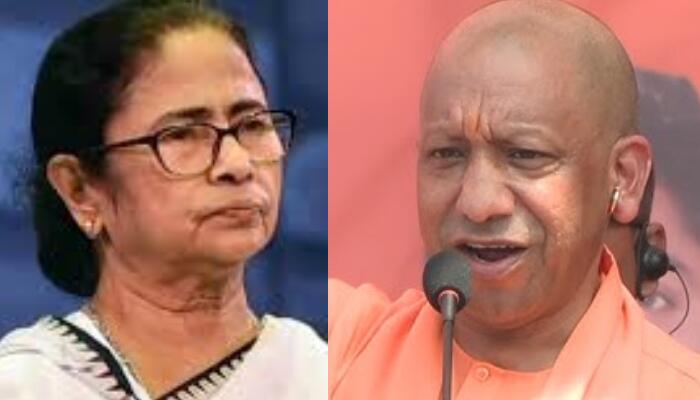
West Bengal’s election contest sharpened as Uttar Pradesh Chief Minister Yogi Adityanath addressed a high-energy rally in Nadia district. During campaigning for the Nabadwip Assembly seat, he accused the Trinamool Congress government of enabling what he described as “mafia raj”, citing corruption, intimidation, and administrative decline over the past 15 years.
He said that political violence has become structurally embedded in the state. Referring to the killing of BJP worker Sanjay Bhowmik, he claimed that opposition workers continue to face threats and attacks, which he linked to a growing atmosphere of fear.
At the same time, Yogi pointed to voter turnout in the early phase of polling. According to him, the participation reflected a clear desire for change. He further argued that it indicated rising support for a BJP-led “double-engine government”.
Cultural identity and political framing
Meanwhile, Yogi shifted focus to Bengal’s cultural landscape. He said the state, once central to India’s intellectual and nationalist movement, is now facing an “identity crisis”.
In this context, he invoked Bankim Chandra Chatterjee, Swami Vivekananda, and Subhas Chandra Bose. He connected their legacy to Bengal’s role in the freedom struggle and the significance of “Vande Mataram”.
However, he claimed that this legacy is under strain. He also referred to disruptions during Durga Puja, stating that the Calcutta High Court had to intervene in some cases to restore order.
Governance contrasts with Uttar Pradesh
In contrast, Yogi highlighted developments in Uttar Pradesh since 2017. He stated that law and order have improved significantly and asserted that riots and curfews are no longer part of the state’s reality.
Additionally, he pointed to infrastructure expansion. This included expressways, ropeways, and the Ram temple project in Ayodhya. According to him, these projects reflect a governance-driven model of development.
Furthermore, he referred to action against organised crime. Using the bulldozer as a symbol, he described it as a tool used to remove illegal encroachments and dismantle mafia structures.
Intensified political attack
On the political front, Yogi accused the TMC government of allowing criminal networks to operate freely. He cited cattle, sand, and land mafias as examples of what he called systemic governance failure. He also alleged misuse of central funds sent to the state.
In addition, he referred to the Citizenship Amendment Act debate. He claimed that opposition to the law stems from resistance to granting citizenship to persecuted minorities from neighbouring countries. He also drew comparisons in how religious practices are managed in Uttar Pradesh and West Bengal.
Subsequently, he positioned the BJP as an alternative capable of restoring governance efficiency, cultural confidence, and administrative stability in Bengal. He framed the election as a decisive turning point in the state’s political direction.
As the campaign intensifies, the contest in West Bengal is increasingly shaped by themes of governance, identity, and law and order, setting the stage for a high-stakes electoral outcome.