
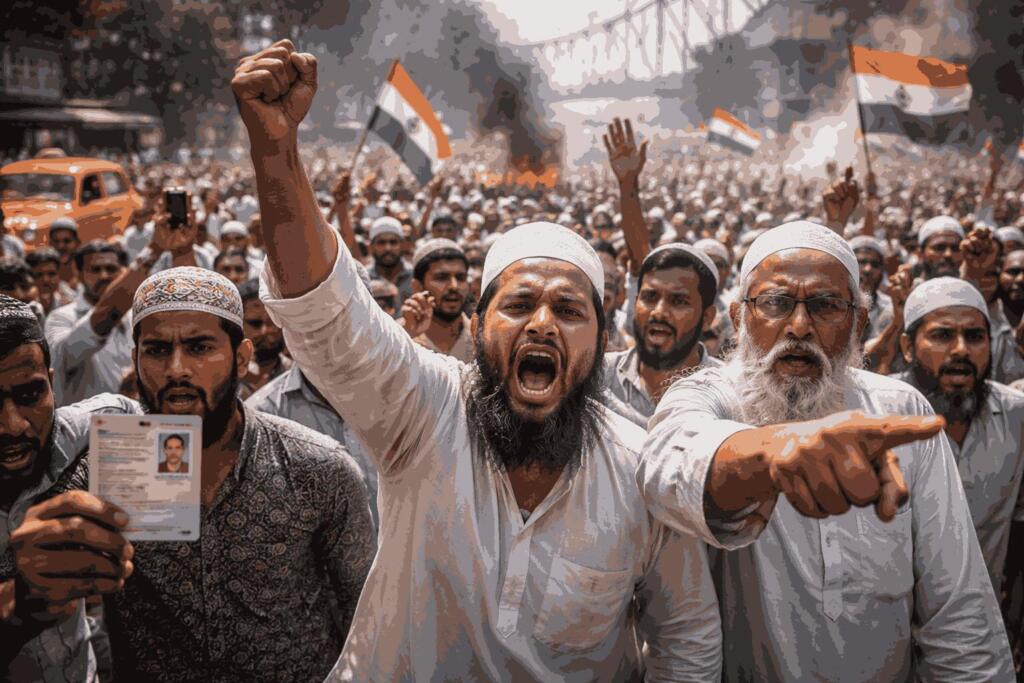
The debate over West Bengal’s Special Intensive Revision (SIR) of electoral rolls has taken a sharp turn, with BBC reporting on alleged Muslim exclusion even as counter-claims question the framing of the issue. The controversy revolves around the deletion of nearly 90 lakh voter names, a development that has triggered political, legal, and media scrutiny across the spectrum.
At the heart of the matter is a report by the BBC, which suggested that the voter roll revision disproportionately affected Muslims, feeding into a broader narrative of marginalisation. However, critics argue that the BBC presentation overlooks crucial procedural and statistical details, thereby constructing a one-sided account. The issue has since evolved into a wider debate on media framing, electoral integrity, and political narratives in a sensitive pre-election climate.
According to available data, the SIR exercise was aimed at removing duplicate, deceased, or ineligible voters from electoral rolls. Officials have maintained that the process followed established guidelines and included judicial oversight. Reports indicate that over 27 lakh cases flagged during the revision underwent scrutiny under the supervision of judicial officers, suggesting that deletions were not arbitrary but part of a systematic verification exercise.
Despite this, the BBC report emphasised the perception of targeted exclusion, highlighting concerns raised by opposition parties and sections of civil society. This portrayal, critics argue, amplifies a selective narrative without sufficiently acknowledging that electoral roll clean-ups are routine administrative processes carried out across states.
Adding complexity to the issue are conflicting data points emerging from different sources. While some reports claim that Muslim voters were disproportionately affected in certain regions, broader figures indicate a more mixed picture. For instance, one dataset suggests that a significant percentage of those removed from voter rolls were Hindus, complicating the claim of targeted exclusion. Such discrepancies underline the importance of nuanced reporting—something detractors say the BBC coverage lacked.
The political backdrop further intensifies the controversy. West Bengal, a state with a substantial minority population, has long been a battleground for competing narratives around identity, migration, and electoral politics. Allegations of illegal immigration, particularly from neighbouring Bangladesh, have frequently surfaced in political discourse, influencing how voter verification drives are perceived and reported.
In this charged environment, the BBC report is seen by critics as reinforcing a narrative aligned with certain political positions. They argue that by foregrounding claims of Muslim victimhood without equal emphasis on procedural safeguards or broader demographic data, the BBC risks contributing to polarisation. Supporters of the report, however, maintain that highlighting concerns of vulnerable communities is a legitimate journalistic function.
The controversy also reflects a larger global debate on media credibility and bias. International outlets like the BBC often command significant influence, and their reporting on domestic issues can shape global perceptions. This places an added responsibility on such organisations to present balanced, well-contextualised accounts—especially on matters as sensitive as electoral participation and minority rights.
Meanwhile, developments on the ground continue to fuel competing narratives. Political parties have traded accusations, with some alleging deliberate disenfranchisement and others defending the SIR as a necessary step to ensure electoral integrity. The absence of Muslim candidates in certain party lists and broader representation debates have further intersected with the issue, adding layers to the discourse.
The BBC coverage, therefore, sits at the intersection of fact, perception, and political interpretation. Whether it represents a legitimate critique of electoral processes or an instance of selective reporting remains a matter of perspective. What is clear, however, is that the controversy underscores the need for careful, data-driven journalism in an era where narratives can quickly shape public opinion.
As West Bengal approaches a crucial electoral phase, the stakes of such narratives are particularly high. Media reports—whether by the BBC or others—have the potential to influence both domestic discourse and international understanding of India’s लोकतান্ত্রিক processes. Ensuring accuracy, context, and balance will be key to maintaining trust in both electoral institutions and the media that covers them.
Ultimately, the debate is less about a single report and more about how complex socio-political developments are communicated. The BBC episode serves as a reminder that in a deeply polarised environment, every narrative is contested—and every omission, real or perceived, can become a point of contention.