
Eyewear company Lenskart has issued a public clarification after a document outlining employee grooming rules went viral online, triggering widespread criticism and raising questions about religious expression in the workplace.
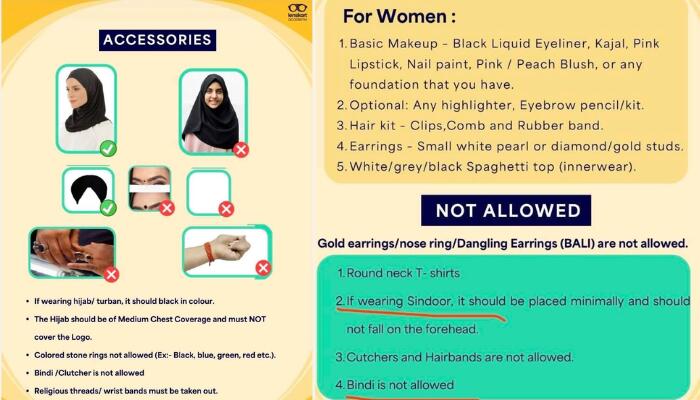
The controversy began when a document described as the “Lenskart Staff Uniform and Grooming Guide” started circulating on social media. The guide appeared to restrict certain religious symbols commonly associated with Hindu traditions while allowing others under specific conditions. The apparent disparity quickly drew strong reactions online, forcing the company’s founder and chief executive, Peyush Bansal, to address the matter publicly.
According to the document shared online, employees were advised that bindis were not allowed and that sindoor, a mark traditionally worn by married Hindu women, should be minimal and must not fall on the forehead. The document also referred to restrictions on religious threads such as kalawa.
At the same time, the guidelines allowed the wearing of hijabs and turbans.
The apparent contrast between the treatment of different religious symbols led to a wave of criticism on social media, with many users questioning whether the rules reflected Hinduphobia within the company’s workplace policies.
Social Media Outcry Triggers Company Response
As the document spread online, criticism intensified, and the issue quickly gained traction across digital platforms. Several users demanded clarification from the company, asking why certain symbols appeared restricted while others were permitted.
Facing mounting criticism, Bansal responded through posts on the social media platform X, stating that the viral document did not represent Lenskart’s current policies. He said, “Our policy has no restrictions on any form of religious expression, including bindi and tilak.”
In a subsequent clarification, Bansal said the document circulating online was an outdated internal training guide rather than an official human resources policy. He acknowledged that the material contained an incorrect line regarding restrictions on bindi and tilak and admitted that it should never have appeared in the document, accepting the lapse.
Debate Over Workplace Religious Expression
Despite the clarification, the controversy has continued to fuel debate online about how companies frame policies on cultural and religious expression in the workplace. Critics argue that the presence of such wording in internal documents raises questions about how corporate guidelines are drafted and monitored.
Lenskart, one of India’s largest eyewear companies, achieved unicorn status in 2019 and has grown rapidly ever since. People know Peyush Bansal as one of the Sharks from the Shark Tank India TV programme.
Even as the company highlights its rapid expansion, the controversy has placed its workplace policies under scrutiny, demonstrating how quickly internal corporate practices can become a subject of public debate in the era of viral social media.