
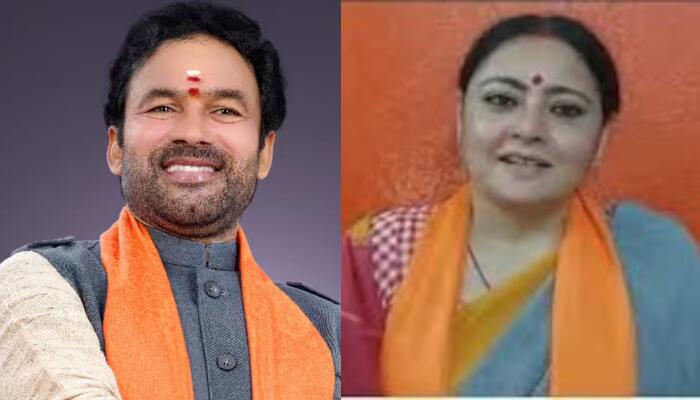
With the West Bengal Assembly elections around the corner, the Bharatiya Janata Party has gone on the offensive in the state’s industrial belt, projecting a sweeping victory in Asansol. Union Minister G. Kishan Reddy has asserted that the BJP is set to win all seven Assembly seats in the region, claiming that the mood on the ground reflects a decisive shift against the ruling All India Trinamool Congress.
Polling in the state will take place in two phases on April 23 and April 29, with counting scheduled for May 4. As campaigning intensifies, the BJP is positioning Asansol as a crucial battleground where it hopes to convert growing public dissatisfaction into electoral gains.
Reddy did not hold back in his criticism of the Trinamool Congress. He said that Bengal has suffered under years of “hooliganism” and “mafia rule,” arguing that such governance has eroded public trust. He further flagged the issue of infiltration, claiming that the problem has deepened under the current regime. According to him, the electorate is no longer willing to tolerate the status quo and is now rallying behind the promise of development and stability.
Industrial Belt Turns Political Flashpoint
The Asansol Lok Sabha constituency, a key part of the state’s industrial backbone, has emerged as a high-stakes arena in this election. Comprising seven Assembly segments, i.e., Pandabeswar, Raniganj, Jamuria, Asansol Dakshin, Asansol Uttar, Kulti, and Barabani. The region is central to West Bengal’s coal, iron, and steel economy. Its location within the Asansol-Durgapur industrial zone makes it not just economically significant but politically decisive.
The battle in Asansol Dakshin is particularly intense. Agnimitra Paul, the BJP’s sitting MLA and one of its most visible faces in the state, is seeking to retain her seat. Known for her strong organisational presence, Paul is up against Tapas Banerjee of the Trinamool Congress, a seasoned leader who has previously represented the constituency and currently serves as the MLA from Raniganj. The contest encapsulates the broader ideological clash between the two parties.
BJP Looks to Build on 2021 Gains
The BJP’s confidence in Asansol is rooted in its performance in the 2021 Assembly elections, where it emerged as the principal opposition in the state. While the All India Trinamool Congress secured a dominant victory with 213 seats and a 48.5 per cent vote share, the Bharatiya Janata Party made significant inroads, winning 77 seats and securing 38.5 per cent of the vote.
With the majority mark in the 294-member Assembly set at 148, the BJP is now seeking to expand its footprint by targeting regions where anti-incumbency sentiment appears to be strongest. Asansol, with its mix of industrial concerns and political churn, has become central to that strategy.
Reddy’s remarks reflect a broader narrative the BJP is pushing across Bengal, that the time for change has arrived. Whether this pitch translates into a clean sweep in Asansol will soon be tested at the ballot box, but for now, the party is leaving little room for ambiguity in its ambitions.